60-years-of-experience

60+ Years of Experience

satisfaction-guarantee

Satisfaction Guarantee

short-lead-times

Short Lead Times

Why Your Equipment Needs Graphic Overlays

The machinery you operate has to be protected from the environment in which you are operating it. Whether you’re working in a factory filled with dust or an operating room in the ER, you have to depend on your equipment every day.

This is why it has to be guarded. Essentially, there are two types of protection for electronic equipment: panel covers and overlays. Although both have their features and benefits, graphic overlays are often preferred over panels. There are several practical reasons for this.

Let’s explore them.

Key Takeaways:

  • Graphic overlays shield panels from dust, liquids, chemicals, and abrasions, increasing durability and reducing maintenance.
  • Intuitive design, tactile feedback, and quick-access controls improve workflow, reduce errors, and boost productivity.
  • including lighting, Braille, IP ratings, and branding, making them suitable for any industry or device.
  • Affordable to produce and install, overlays also meet safety and regulatory standards while reinforcing brand identity.

What Are The Determining Factors?

Before covering the advantages of graphic overlays, it’s important to understand the conditions in which they are a better option than standard panel covers.

Consider the following checklist:

  • Does your electronic device require a switch or a button to operate?
  • Is your work area filled with dust and debris
  • Do the buttons on the device require greater pressure?
  • How vulnerable is the panel to surrounding activity?
  • How vulnerable is the panel to chemicals or other substances?
  • Is the panel area raised or recessed?
  • Does the device require heavy-duty buttons?

By answering these questions, you can make an assessment of which option, a panel cover or an overlay, is better for you.

Benefits of Graphic Overlays

Graphic overlays do more than just enhance the appearance of your product; they protect, simplify, and elevate how users interact with your equipment. Whether used in industrial machinery, medical devices, or consumer electronics, overlays combine functionality with design flexibility.

Below are some of the key benefits that make graphic overlays an essential component for improving performance, durability, and user experience.

benefits of graphic overlays

1. Durability and Protection

If buttons control your device, then an overlay is a more suitable option. Graphic overlays keep dust, debris, and liquids from penetrating the panel surface.

Graphic overlays are often made from high-performance materials that resist:

This resilience keeps your device’s surface looking professional and readable even after years of use.

Whether the overlay is exposed to UV light, solvents, or industrial cleaning agents, the overlay preserves both function and appearance. The long-lasting durability means fewer replacements and repairs, resulting in a lower total cost of ownership.

2. Reduced Maintenance and Easier Cleaning

Cleaning and sanitizing a panel cover is always a hassle. The greatest challenge is keeping dust and cleaning agents from getting under the cover while cleaning it.

Graphic overlays eliminate this problem by creating a seamless protective surface over the panel. The smooth surface is easy to clean because there are no knobs or buttons protruding from the panel.

3. Unmatched Versatility

The options available for graphic overlays are nearly endless. Beyond design and customization, there are also other choices available to the user.

Some of these include:

  • A wide array of finishes, including polycarbonate and polyester.
  • RFI/ESD/EMC Shielding
  • Environmental and UV sustainability
  • Embossing and Braille
  • LED lighting and fiber optic background lighting
  • Key legends can be switched out per function
  • IP65, IP67, IP68 rated

This adaptability makes graphic overlays suitable for a wide range of industries, from medical devices and aerospace systems to industrial equipment and consumer technology.

With thoughtful design, overlays can even enhance accessibility by incorporating raised buttons, Braille text, or contrasting colors for better visibility and inclusivity.

4. Cost-Effective

When compared to conventional panel covers, graphic overlays are a more affordable choice. It takes less effort in both design and construction to produce an overlay. Most graphic covers are made from less expensive materials than traditional panel covers.

They are also less costly to attach to a panel. Overlays simply require an adhesive. Overall, your company will save money by utilizing graphic overlays.

5. Personalized Customizations

You can have graphic overlays designed according to your precise specifications. Custom features are valuable for companies that have machines that are unique in both design and construction.

No matter what type of electronic device panel you have, manufacturers can create a graphic overlay for it. If you need a certain color, pattern, font, or other features, companies such as Hallmark Nameplate can produce it exactly the way you want it.

6. Improve Usability

In fast-paced environments, precision and response time are everything. Traditional knobs and switches can slow operations and increase user error.

Graphic overlays streamline control by providing instant access to panel functions, allowing employees to operate equipment with confidence and speed. In settings where speed and precision are critical, such as production floors or laboratories, graphic overlays help reduce errors, enhance workflow, and improve overall performance.

Their design enhances usability through tactile feedback, intuitive layouts, and color-coded controls, all working together to improve performance and safety.

Tactile Feedback for Confident Control

One of the most valuable features of graphic overlays is tactile feedback, the physical response users feel when pressing a button. Raised or embossed keys confirm inputs without needing to look away from the task.
This feature is especially useful in low-visibility or high-pressure environments, where quick, accurate commands matter most. Tactile response helps reduce accidental presses and keeps workflows running smoothly and efficiently.

Intuitive Design and Ergonomic Layouts

Graphic overlays are built for clarity and ease of use. Clear labeling, logical button placement, and ergonomic spacing help users quickly locate and operate controls with minimal effort.

This thoughtful design reduces the learning curve, minimizes fatigue, and ensures consistent, accurate operation, even during long or demanding shifts.

color overlays

Color-Coding for Instant Recognition

Color-coding adds another layer of safety and efficiency. Bright, distinguishable hues help operators find the right control at a glance. For example, a red STOP button immediately signals emergency action, while green or blue may indicate safe operation.
Because the brain processes color faster than words, this design feature shortens reaction time and helps prevent errors, an advantage that can be critical in industrial or medical settings.

7. Enhance Branding

Graphic overlays also serve as a branding tool. They give companies the ability to display their logo, color palette, and design language directly on the product interface. This not only reinforces brand identity but also creates a professional and cohesive look across your product line.

A well-designed overlay makes a lasting impression on users and clients, enhancing both brand recognition and perceived quality.

8. Meet Compliance and Safety Standards

For industries that require adherence to strict regulations, such as medical, military, or industrial sectors, graphic overlays can be designed to meet compliance and safety standards.

They can include features like flame retardancy, anti-microbial coatings, and chemical resistance, ensuring your devices remain safe, functional, and legally compliant in demanding environments.

Manufacturers can produce overlays using materials and processes that comply with these standards.

graphic overlay compliance

UL (Underwriters Laboratories) Compliance

Ensures that materials meet strict safety and performance standards, including electrical and fire safety. UL-certified overlays reduce the risk of hazards and give operators confidence in the equipment’s reliability.

RoHS (Restriction of Hazardous Substances) Compliance

RoHS guarantees that overlays are free from certain harmful chemicals, such as lead, mercury, cadmium, and other restricted substances. This protects both the environment and users, particularly in sensitive industries like medical and electronics manufacturing.

ISO (International Organization for Standardization) Compliance

Confirms that overlays are produced under internationally recognized quality management standards, such as ISO 9001. ISO-compliant processes ensure consistent quality, reliability, and traceability across manufacturing, giving customers confidence in the durability and performance of their products.

Get High-Quality Graphic Overlays for Your Equipment

If you’re looking for a reliable and experienced graphic overlay manufacturer, Hallmark Nameplate is the partner you can trust. We specialize in producing customized overlays tailored to your exact specifications, whether you need enhanced durability, tactile feedback, color-coded designs, or branding features.

Our team works closely with you to ensure that each overlay not only protects and extends the life of your equipment but also improves usability, safety, and overall performance. From industrial machinery to medical devices and consumer electronics, we can create a solution that meets your unique needs.

Don’t compromise on quality or functionality. Let us help you design overlays that combine precision, durability, and style. Contact us today to get started on your custom graphic overlay project.

Printed Circuit Boards (PCB) Uses: They’re Everywhere

Do you ever stop to think about everything modern electronics make possible? When you consider how much more we can do now compared to just a few years ago, it’s truly astonishing.

Take, for example, the Internet. To most people, doing some research on the Internet involves only making a few keystrokes on a computer, and voila! Information at your fingertips.

And that’s only the beginning. It doesn’t matter whether you want to talk about using the Internet or turning on your television; it’s all too easy.

The truth is that no matter how easy it may seem to call up information on your computer, flip channels on your television, or accomplish any number of other tasks, it’s anything but easy. Regardless of the level of your actions, behind all of that seemingly wizardry is electronics, and if it involves electronics, chances are very good that it involves circuit boards of some type.

You might not see them, but they are there.

Circuit Boards are Everywhere

Before you say, “Surely, they’re not everywhere,” they are. In fact, it doesn’t take much looking before you will find a circuit board in literally every electronic device you use

They could be simple or highly complex, but they are there, each performing its functions to bring to you all the marvels you need at the command you issue.

PCB Uses

Printed circuit boards are found in nearly every modern electronic device. In fact, many products contain several PCBs working together to power different functions.

pcb uses

1. Consumer Goods

PCBs are essential in everyday household electronics.

Computers

Your computer likely contains multiple PCBs, one in the main system unit, another inside the keyboard, one in the mouse, and several more inside components like the monitor and storage devices.
These boards manage everything from processing information to delivering power to connected peripherals.

Cameras & Smart Devices

Digital cameras, smartphones, tablets, and smart home devices rely on small, densely packed PCBs. Their compact size makes it possible to fit powerful technology into slim, portable designs.

PCBs also replace the need for bulky wiring, making devices more reliable and visually streamlined.

2. Medical Devices

Modern healthcare depends heavily on PCBs for accuracy and safety. They power critical equipment such as:

  • Heart rate monitors
  • MRI and CT scanners
  • Pacemakers
  • Insulin pumps
  • Diagnostic tools

Medical-grade PCBs must meet strict standards for precision, cleanliness, and reliability, as even small errors can impact patient health.

3. Aerospace

Aerospace applications require PCBs that can withstand extreme temperatures, vibration, and radiation. They are used in:

  • Navigation systems
  • Communication equipment
  • Control panels
  • Satellites
  • Flight instrumentation

These PCBs often use high-performance materials designed for durability in demanding environments.

4. Automotive

Modern vehicles rely heavily on electronics, and PCBs help control many of their advanced systems, including:

Automotive PCBs must be rugged and resistant to heat, moisture, and vibration.

5. Telecommunications

PCBs are critical to fast, reliable communication networks. They support devices such as:

  • Routers and modems
  • Cell towers and 5G equipment
  • Radio systems
  • Satellite communication devices

They’re designed to handle high-frequency signals with minimal interference.

6. Military & Defense

Military electronics require high-reliability, ruggedized PCBs that meet strict standards like ITAR compliance. They are used in:

  • Guidance and targeting systems
  • Radar and communication equipment
  • Drones and surveillance devices
  • Armored vehicle electronics
  • Weapon control systems

These PCBs must perform flawlessly in harsh and unpredictable conditions.


Circuit boards are not only everywhere, but they are also essential to many of the tasks that we call on them to do every day.

Why They Are Used Everywhere

Printed circuit boards are essential to modern life. Without them, most of the technology we rely on, both at home and in industry, simply wouldn’t function.

Even products that don’t appear “electronic” often depend on equipment built with PCBs during the manufacturing process. Their efficiency, reliability, and versatility are what make PCBs the universal choice across industries.

pcb benefits

Compact Design

PCBs make it possible to fit complex electronic functions into incredibly small spaces. Compared to older point-to-point wiring, which took up a lot of room and was prone to failure, PCBs allow manufacturers to place many components on a single compact board.

This miniaturization is what enables slim smartphones, lightweight medical devices, compact automotive sensors, and small yet powerful consumer electronics.

Cost-Effective Manufacturing

PCBs help companies reduce production costs without compromising performance. Because they can be manufactured in large quantities with consistent quality, they eliminate the labor and time involved in manually wiring components.

Their efficiency also means:

  • Fewer materials needed
  • Lower assembly costs
  • Fewer errors and defects
  • More affordable end products for consumers

This is why PCBs are integral to making electronics smaller, cheaper, and easier to produce at scale.

Easy to Install & Maintain

Using a circuit board is much easier to install than literally any other method. Manufacturers can design boards that slide into compartments, snap into place, or attach with minimal fasteners.

For technicians and engineers, PCBs are also easier to:

  • Integrate
  • Troubleshoot
  • Upgrade
  • Repair
  • Swap out when components fail

Their standardized formats and clear labeling make them user-friendly for both assembly lines and field maintenance.

Get High-Quality PCBs

Whether you realize it or not, chances are good that your life is being made easier by the use of this technology. In fact, it’s probably a safe bet that, whether you know it or not, chances are good that many things in your home or office employ circuit boards.

And if they don’t, chances are very good that they will in the near future. Whoever might not be using the technology now will be driven to do so in the future to keep up with their competition.

Need a high-quality PCB? With decades of experience, we can design and manufacture the perfect PCB for all uses.

5 Ways Nameplates Can Improve Your Business

Small details can improve your business. One of the most overlooked yet impactful tools? Nameplates.

This durable form of product identification is very important to display on your products for many reasons. Nameplates are used on so many products to identify the manufacturer, the brand, the product name, as well as important specifications like RPMs (revolutions per minute) or voltage, for instance.

Studies show that products with clear, durable labeling reduce user errors and improve maintenance efficiency. That’s proof that something as simple as a nameplate can measurably improve your business.

Need more proof?

Let’s dive deeper into how nameplates can improve your business and how important they can be to your bottom line. From enhancing brand presence to improving operational efficiency, these small yet powerful tools offer measurable benefits that can help your business thrive.

Key Takeaways:

  • Small details can make a big impact, and nameplates are one of the most overlooked yet powerful tools for your business
  • Nameplates communicate vital product information clearly, helping reduce errors and improve compliance
  • Durable and cost-effective, nameplates simplify maintenance, repairs, and inventory tracking
  • Well-designed nameplates build trust, enhance operational efficiency, and support long-term customer satisfaction

nameplates improve business

1. Delivers Vital Information

Nameplates play a critical role in quickly conveying essential information about your products or equipment. This includes:

  • Classifications: Product type, category, or usage designation.
  • Specifications: Key technical details such as voltage, RPM, weight, or material.
  • Operating Instructions: Step-by-step guidance to ensure proper use.
  • Serial Numbers: Unique identifiers for tracking, warranty, and inventory purposes.
  • Warnings: Safety alerts to prevent accidents or misuse.
  • Schematics: Diagrams or charts that assist with installation or troubleshooting.
  • Endorsements from Regulatory Bodies: Certifications from organizations such as UL, CSA, or ISO.

By displaying this information clearly and permanently, nameplates reduce user error, ensure proper usage, and help your business stay compliant with industry standards.

Example

Industrial machines often require detailed instructions and safety information to prevent accidents. A well-designed nameplate ensures that anyone interacting with your product can access the information they need instantly, improving safety and reducing the risk of costly mistakes.

Serial numbers and certification marks also make it easier to track products for recalls, maintenance, or warranty purposes.

2. Branding

Nameplates aren’t just functional; they’re a subtle but powerful branding tool. A high-quality, visually appealing nameplate can make your product stand out from competitors while reinforcing brand identity.

Whether you’re showcasing a logo, product name, or corporate colors, strategically placed nameplates enhance recognition and convey professionalism.

  • Make a Good First Impression: A well-designed nameplate is often the first thing customers notice, leaving a memorable impression and enhancing brand recall.
  • Increase Brand Awareness: Consistent logos, colors, and design elements on nameplates help customers quickly recognize your brand and improve business top-of-mind.
  • Enhance Product Identification: Nameplates provide essential details like serial numbers and model codes, helping customers safely use your products while differentiating them from competitors.
  • Build Customer Relationships: High-quality, consistent visuals signal professionalism and reliability, fostering trust, loyalty, and repeat business.
  • Elevate Your Brand: Premium materials and design choices increase perceived value, showcase quality, and strengthen brand equity in the market.

For example, luxury appliance manufacturers often use engraved metal plates to signal premium quality, creating a perception of value that extends beyond the product itself.

3. Safety and Compliance

Nameplates also serve a critical role in safety and regulatory compliance. By clearly displaying hazard warnings, certification marks, and safety instructions, nameplates help your business comply with OSHA regulations and other industry-specific requirements.

Proper labeling not only helps you avoid costly fines or legal liabilities but also demonstrates a proactive commitment to workplace safety and responsible manufacturing practices.

Certifications like “UL” or “CSA” reassure customers that your products have been independently tested for quality and safety. In addition, clear labeling simplifies maintenance, repairs, and replacement of parts, which reduces downtime for your customers and builds trust in your brand.

ul nameplate

A well-designed nameplate communicates not only compliance but also care and reliability, an investment in both safety and customer satisfaction.

4. Affordability

Nameplates are a cost-effective way to provide permanent identification without the need for expensive manufacturing processes.

Their production includes labels and overlays that don’t require embossing or extensive engineering. Compared with graphic overlays, nameplates offer faster production and lower cost without sacrificing quality, and yet they have staying power!

They provide lasting visibility for key product details such as serial numbers, model numbers, voltage ratings, and amperage specifications. These details remain legible even in harsh environments, ensuring your products are properly identified throughout their lifecycle without incurring high costs.

5. Enhance Efficiency & Inventory Tracking

For businesses managing physical assets, nameplates are invaluable for inventory tracking and asset management. Tagging equipment and products allows businesses to monitor property, prevent loss, and conduct accurate audits.

Nameplates can incorporate barcodes, QR codes, or RFID tags to simplify maintenance scheduling, repairs, and lifecycle valuation.

Examples:

  • A manufacturer can use nameplate-based tracking to monitor machinery depreciation, plan preventive maintenance, or schedule replacements, ultimately improving operational efficiency.
  • Retailers or warehouses can track inventory movement, reduce misplacement, and quickly locate high-value items.

By integrating nameplates into inventory systems, businesses gain actionable insights that reduce downtime, minimize unnecessary expenditures, and optimize overall asset management.

barcode improve business

Work With a Certified Nameplate Manufacturer

As you consider your nameplates to improve your business, rest assured that your project will be in good hands with Hallmark Nameplate. We will gladly walk through the entire development process to make sure you have the right nameplate for your specific needs.

Being known for exceeding customer expectations, our talented in-house engineering and graphic teams are available to assist you at any time.

We produce nameplates for any company looking for the right partner, including medical, computer, telecommunications, OEM, military, and aerospace industries. We are certified as an ISO 9001:2008 registered manufacturer of industrial nameplates and are listed as an approved supplier with CSA, UL, and ITAR.

At Hallmark Nameplate, we have been achieving our goal of producing quality products for our customers in a timely manner, at the best price, for over 55 years. Get in touch today to get started!

The 10 Key Elements of Manufacturing Overlay Graphics

When it comes to manufacturing overlay graphics, there are more factors to consider than you might think. They may get overlooked from time to time, but they have a significant purpose for serving customers that should not be taken for granted.

You most likely encounter these graphic overlays on a regular basis, but have you ever stopped to consider what goes into their creation? Probably not, so we are here to tell you everything you need to know about the manufacturing of overlay graphics.

First, we should discuss the purpose of graphic overlays and how they are used. Let’s dive right in.

What Are Overlay Graphics Used For?

In a world of advanced technology, we have developed a need for a way to connect a machine to its user. The complexity of our technology must be simplified in a way that people can understand and actually put it to use, and that is where graphic overlays come into play.

With overlay graphics, the functionality of a machine is effectively outlined to make it easily accessible and navigable by its users. Picture a TV remote with no numbers or dials on it. It would be pretty useless to the average user, right?

That’s why graphic overlays, also known as nameplates, are important for establishing the functionality of a machine. Without them, it would be almost impossible to decipher the purpose of electronics such as keypads, display boards, switches, speakers, and much more.

Usually, overlay graphics are composed of thin layers of plastic or polymer material that are placed over an electronic device. These display the printed material, text, or other graphics that indicate how to use the device or machine.

Custom Graphic Overlay Design Considerations

When companies need specific overlay graphics for their products, there are a few elements they need to consider to achieve the optimal design for the product’s application. So, let’s explore some of the main design elements for choosing the perfect graphic overlay.

Size Specifications

Before delving into the numerous design possibilities, you need to calculate the size, shape, and placement of your overlay graphics. Doing this early on is beneficial because it influences key aspects of the decision-making process.

Also, another element to consider is the thickness of the overlay material because this will affect how the user interacts with the product.

Environmental Durability

It is important to determine the practical use of the product before picking your design. As a part of the manufacturing process, you need to consider the environment that the device will be used in.

Since graphic overlays are used in countless settings, the environmental condition plays a key role in choosing the material and design components. With countless applications in indoor, outdoor, and sterile environments, the durability of the graphic overlay depends on these conditions.

Features and Functionality

Customized graphic overlays can include features that enhance company branding and improve the users’ experience. For example, add-ons like tactile switches, dead-front panels, and LED illumination are all options that augment the user interaction with the device.

The 10 Key Elements of Manufacturing Overlay Graphics

So, now that we’ve established some of the uses and factors to consider with overlay graphics, let’s discuss the important elements of graphic overlay printing.

overlay graphics process

1. Material

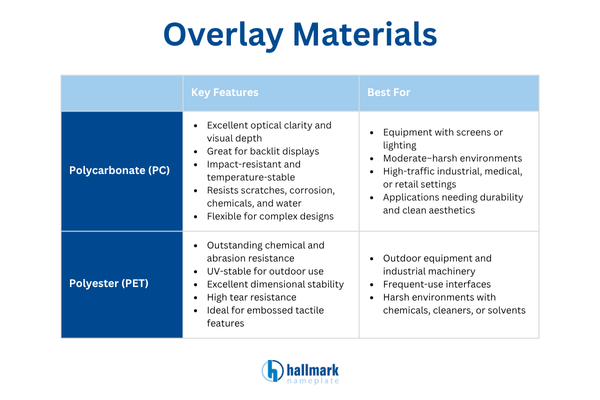
Choosing the right material depends largely on the environmental conditions in which the device will operate, including temperature, moisture, exposure to chemicals, and general wear and tear. Selecting the correct material ensures durability, longevity, and optimal performance for the specific application.

materials

Polycarbonate

  • Suitable for both indoor and outdoor use
  • Offers excellent optical clarity for clear displays and visual depth effects
  • Allows flexible design options for complex shapes and graphics
  • Highly impact-resistant, protecting against accidental drops or mechanical stress
  • Performs well in extreme temperatures
  • Resistant to scratches, corrosion, chemical abrasion, and water, making it ideal for demanding environments

Polyester

  • Ideal for harsh indoor and outdoor environments
  • Provides strong UV resistance to prevent fading over time
  • Electrically resistant, making it safe for electronic applications
  • Can withstand extreme temperatures, water exposure, abrasion, and chemicals
  • Resistant to tears, ensuring long-lasting durability
  • Commonly used in commercial and industrial applications where reliability is critical

Working closely with your manufacturing partner can help you evaluate your operational environment and determine which material best meets the needs of your overlay application. Proper material selection not only improves the lifespan of the overlay but also enhances the overall user experience.

2. Printing

The printing method shapes the look, durability, and cost of your graphic overlay.

Digital Printing

Perfect for high-resolution, full-color designs and short runs. Offers fast setup, unlimited colors, and precise details, ideal for prototypes, limited editions, or overlays with variable information like QR codes.

Screen Printing

Best for long runs and heavy-use environments. Delivers bright, durable colors, fine details, and special effects like metallic inks or tactile finishes, making it ideal for industrial or commercial applications.

3. Custom Fabrication

All of the following considerations will touch on different customizations that occur in the manufacturing stage of graphic overlays. Custom fabrications, especially font style and size, are key components that affect the user interface.

Since the purpose of a graphic overlay is to facilitate effective interactions with the device, using legible fonts and easily comprehensible language is of the utmost importance.

4. Color Management

screen printing process

The colors used in your overlay graphics should be consistent with your company’s branding and support the user experience. Consider using contrasting colors to make the important elements of the overlay stand out. There are two main types of color printing for graphic overlays: process color printing and Pantone color matching.

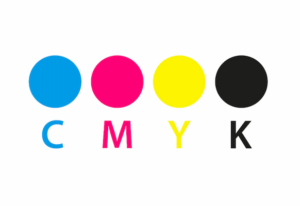
Process color is more cost-effective and involves a printing process similar to ink cartridges for printers that creates layers of four base colors: cyan, magenta, yellow, and black. Pantone color matching systems (PMS) use exact matching, which is a great option for companies that need precise colors on their overlay graphics.

5. Embossing

Embossing is a design functionality used in graphic overlays that incorporates raised elements to make certain features more prominent and tactile. By adding a physical dimension to the overlay, embossing enhances both the visual appeal and usability of the device, guiding users’ attention to important areas.

overlay graphic embossing

There are several types of embossing commonly used:

  • Pad Embossing: Creates isolated raised areas for buttons or key features, allowing for precise tactile feedback
  • Perimeter (Rim) Embossing: Highlights the edges of a feature or panel, making boundaries clear and visually distinct
  • Dome Embossing: Produces a rounded, dome-like effect for buttons or icons, offering an ergonomic and noticeable touch point
  • Braille Embossing: Improves accessibility compliance and serves visually impaired users

Embossing is especially valuable in situations where users rely on touch as much as sight, such as control panels or industrial equipment. It not only improves functionality by making key details easier to find but also adds a professional, premium look to your overlay graphics.

This subtle design enhancement can draw attention to details that might otherwise go unnoticed, improving both user experience and operational efficiency.

6. Windows and Cutouts

Including a window or cutout on your overlay can increase user efficiency and allow visual access to important information on the machine. Windows and cutouts can help indicate a click-on or off button, or device status, such as a low battery.

These can come in colored tints and different finishes, like glossy, semi-gloss, anti-glare, dead-front, translucent, or frosted.

7. Adhesive

To ensure your graphic overlay is durable for years to come, you need an adhesive that guarantees lasting and effective use. Some elements of the adhesive to consider are surface energy, bonding material (plastic or metal), and surface conditions (smooth, textured, etc.).

As the final layer of your graphic overlay, it is crucial to incorporate spaces to ensure the adhesive has corresponding spaces for windows, embossed buttons, and cutouts. To allow an easier application of the adhesive, use back-splitting to peel back one side of the liner.

Your overlay graphic manufacturer should provide guidance on which adhesive will be best for your product.

8. Lighting

Both internal and external lighting will have an impact on your overlay graphics. External lighting coincides with the environmental conditions in which the device will be placed. These include exposure to UV light, intense lighting, or dim lighting, which would all affect the display of the overlay graphics.

Internal lighting refers to the light that comes from inside the device. Backlighting can help improve legibility for buttons and add functionality like the window indicators we mentioned in the section above.

9. Finishes

The finish of your graphic overlay will set the stage for the user’s first impression of the device or machine. Surface finishes like protective coatings, metallic finishes, anti-glare, textured, and antimicrobial coatings can be applied for practical and aesthetic purposes.

finishes

Finishes also contribute to the durability and appearance of the overlay, so be sure to determine one that suits the purpose of your product.

10. Adhesive

Every graphic overlay should go through thorough quality control before leaving the facility. This includes checking adhesion strength, resistance to environmental factors like heat, moisture, UV, and chemicals, print quality, embossing accuracy, and overall dimensions.

Rigorous testing ensures each overlay performs reliably and meets all industry standards and specifications.

Choose an Experienced Manufacturer For Printing Graphic Overlays

Now that we have covered the most important aspects of your overlay graphics, you can see that there are a lot of considerations that go into your final product. Although the choices can be overwhelming, having an experienced graphic overlay printing professional on your side is helpful.

At Hallmark Nameplate, we specialize in nameplates and graphic overlay printing for numerous industries, such as aerospace, food service, medical fields, automotive industries, telecommunications, and more.

We use advanced systems and technologies to develop custom applications, so your equipment turns out exactly how you want it to be. Fill out a comprehensive, FREE quote to find a solution that will meet your specific needs, and we will be happy to work with you.

The Difference Between a Non-Tactile and Tactile Membrane Switches

Choosing the perfect switch for your business’s equipment is vital to efficient operations. When creating a custom membrane switch, you want to consider how the operator uses the machine.

Depending on what best suits their needs, you can begin constructing the membrane switch. One of the first things you need to decide is whether you want to select a non-tactile or tactile switch.

Keep reading to learn the differences between the two so you can create the perfect membrane switch for your equipment.

Key Takeaways

  • Tactile switches provide physical feedback when pressed, while non-tactile switches do not, relying on visual or auditory confirmation.
  • Tactile switches use metal domes and overlays for haptic feedback, whereas non-tactile switches are self-contained and can last longer.
  • Tactile switches are ideal for momentary actions like typing or adjusting settings, while non-tactile switches are perfect for activating backlighting or indicators.
  • Tactile switches are common in household electronics and remotes, while non-tactile switches are often used in gaming devices, medical equipment, and in combination with tactile switches for enhanced visibility.

Membrane Switches

Printed circuit boards typically rely on membrane switches to turn parts of the device off and on. There are two main membrane switches in use today on printed circuit boards. One is referred to as a tactile membrane switch, and the other is called a non-tactile membrane switch.

Each switch performs a different function on the printed circuit board. Here is an overview of the differences between a tactile and a non-tactile membrane switch.

Key Differences Between a Non-Tactile and a Tactile Switch

tactile vs non tactile switches

1. Construction

When designing a membrane switch, understanding how it is built is essential. The construction determines not only the durability of the switch but also how users experience its functionality.

Tactile and non-tactile switches are similar in many ways, but they differ in key design elements that impact performance and feedback.

Tactile Switches

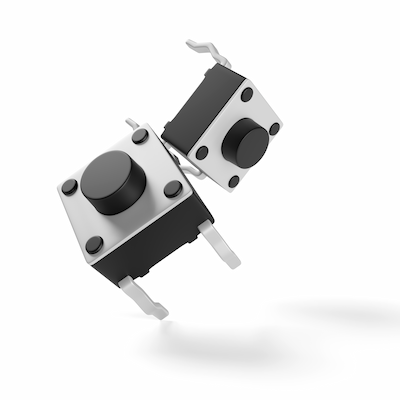
Tactile switches, also called haptic switches, are momentary switches designed to provide a physical response when pressed. They feature an overlay that sits above a metal dome inside the switch.

Overlay Design

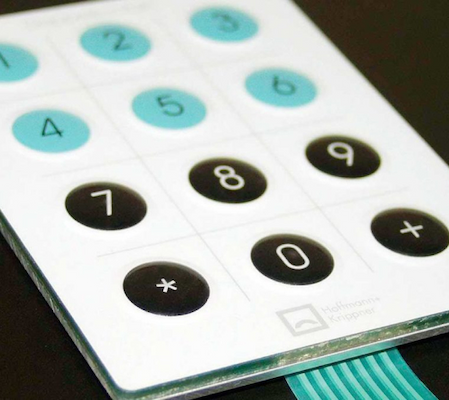
The overlay includes letters, symbols, or designs that indicate the switch’s function.

How It Works

Pressing a symbol pushes the metal dome down onto a conductive footprint, completing the circuit and triggering an action. Once the pressure is released, the dome springs back, breaking the connection.

Materials & Durability

Tactile switches can be made from stainless steel, polyester domes, or hydro-formed domed overlays. They can typically withstand up to a million activations.

Sealing & Protection

These switches are internally vented and sealed to prevent contamination from dust or other particles, ensuring reliable performance.

Non-Tactile Switches

Non-tactile switches function similarly to tactile switches but do not provide physical feedback.

Overlay Design

The bottom of the overlay is connected directly to a conductive pad. When pressed, the pad makes contact with the conductive footprint on the circuit board, completing the circuit.

How It Works

Unlike tactile switches, there is no “click” or physical response when the button is pressed.

Materials & Durability

Non-tactile switches are self-contained units that often include directional arrows or other symbols for controlling a device. They can handle up to five million activations, offering longer operational life in many applications.

2. Purpose

Understanding the purpose of each type of membrane switch helps you choose the right one for your application. The intended function determines whether a tactile or non-tactile switch is the best fit for your device and how users interact with it.

Tactile Switches

A tactile switch is a momentary switch. This means that the switch will only work when it is physically held down.

Once pressure is released, the switch will disconnect, and the action will stop. The best way to understand this is to think about the keyboard on your laptop or personal computer.

When you press a key down, an action will happen. In the case of the lettered and symbol keys, the letter or symbol will appear on the monitor screen. When you lift up on the key, the letter or symbol will stop unless you keep holding the switch down.tactile switch

Non-Tactile Switches

Non-tactile switches are used to activate things like backlighting on a control board monitor. You won’t see anything on the monitor screen when you press a button.

Instead, you’ll see the LED light turn on or hear a beeping sound to let you know you have activated the control board.

3. Use

Knowing where and how each type of membrane switch is typically used can help you select the right switch for your equipment. Tactile and non-tactile switches serve different functions depending on the device and the user interaction required.

Tactile Switches

Tactile membrane switches are widely used in household and consumer devices where physical feedback enhances usability.

Common Applications:

  • Microwave control pads for setting time and heat levels
  • Air conditioners for turning the unit on/off and adjusting settings
  • Remote control devices for changing channels or activating functions

The physical “click” or response ensures the user knows an action has been registered, making the device intuitive and easy to operate.

Non-Tactile Switches

Non-tactile switches are ideal for applications where physical feedback is not necessary, often complementing tactile switches.

Common Applications:

  • Gaming devices
  • Medical equipment
  • Backlighting for control panels to make symbols, letters, and numbers visible

These switches provide visual or auditory confirmation, such as lights or beeps, instead of a physical response. They are particularly useful in enhancing usability alongside tactile switches.tactile switch

Create Custom Membrane Switches with Hallmark Nameplate

Choosing between a tactile and non-tactile membrane switch is more than just a technical decision; it directly affects how users interact with your equipment and the overall functionality of your devices.
Understanding their differences allows you to design membrane switches that enhance usability, reliability, and user satisfaction.

At Hallmark Nameplate, we specialize in creating custom membrane switches tailored to your specific needs. Whether you need tactile switches for consumer electronics or non-tactile switches for industrial or medical applications, our team can guide you through every step, from design to production, to ensure your devices perform exactly as intended.

Contact us today to discuss your project and discover how the right membrane switch can elevate your product’s functionality and user experience.

Membrane Switch vs. Mechanical Switch

When you are designing and constructing a custom electronic device, it is very important that you choose the right switches. This is an often-overlooked component of building a reliable and effective device. You have two main choices in this area.

You can implement membrane switches, which are switches that have the whole assembly sealed. You can also implement mechanical switches, which are the switches that are less sealed.

Which of these options is right for you depends on your situation and the device you’re building.

In this article, we dive into the differences between a membrane switch vs mechanical switch.

Key Takeaways:

  • Membrane switches are sealed, flexible switches ideal for environments where durability, cleanliness, and a smooth interface are important.
  • Mechanical switches use individual moving parts, offering tactile feedback, faster production, and lower cost, but are more exposed to environmental factors.
  • Membrane switches are easier to clean and resistant to debris, but they are more expensive and labor-intensive to manufacture.
  • Mechanical switches are cheaper and quicker to produce, but they are harder to clean and more susceptible to damage from moisture, dirt, or harsh conditions.

Membrane Switches

Membrane switches are thin, flexible electronic switches that form a sealed assembly over the circuitry. Their design makes them ideal for applications where durability and cleanliness are critical.

You’ll often find membrane switches in medical equipment, appliances, control panels, and outdoor devices where a smooth, flat interface is needed.

membrane switch

Benefits of Membrane Switches

Membrane switches offer several advantages that make them ideal for certain applications. Understanding these benefits can help you determine if they are the right choice for your device.

Sealed For Protection

The most obvious benefit of membrane switches is that they’re sealed from the outside environment. As you might imagine, this makes them more reliable.

The fact that these switches are sealed prevents water, dirt, and debris from getting into the little cracks around the switch. This is a common problem with mechanical switches, and it is completely avoided with membrane switches.

Easy to Clean

One other benefit of membrane switches is that they’re easy to clean because there is no gap around the switch. All you have to do is wipe off the switch; you don’t have to worry about getting into the little gap and cleaning out anything that might have fallen into there.

Drawbacks of Membrane Switches

While membrane switches have their advantages, they also come with limitations. Being aware of these potential challenges is crucial when deciding whether to use them.

Higher Costs

Another con is that when comparing a membrane switch vs mechanical switch, membrane switches are more expensive. Exactly how much more expensive depends on the device that the switch is for, the switch itself, and several other factors.

It may not be much more expensive, but the difference may be enough to give you pause if you are planning on producing this device on a large scale.

Labor Intensive Manufacturing

One related drawback of membrane switches is that they’re more labor-intensive to make. Of course, this means they are more expensive, as noted above.

This also means that they take a little bit longer to make. Similar to the greater expense, this drawback is magnified if you’re producing the device on a large scale.

Mechanical Switches

Mechanical switches may seem like they are less high-tech, but this is not necessarily true. They are traditional switches that use individual moving components to complete a circuit.

They are commonly used in applications that require tactile feedback, such as keyboards, industrial machinery, and consumer electronics. They are more suitable for indoor environments or devices where frequent replacement or maintenance is acceptable.

mechanical switch

Benefits of Mechanical Switches

Mechanical switches provide unique advantages, especially for applications requiring tactile feedback or faster production. Knowing these benefits can help you evaluate if they fit your project’s needs.

Cheaper

The most notable benefit mechanical switches have over membrane switches is that they are cheaper.

They may only be $0.05 cheaper per switch, but if you’re building a complex device with a lot of switches, this can add up. This is especially true if you are making many of these devices.

Any savings that you get from making the device can improve your bottom line.

Faster Production

Mechanical switches are also quicker to make. This means you can make more products in a specified length of time.

This, of course, can lead to more profits in the long run. How much quicker mechanical switches are to make depends on the design of the switch and on how the device needs to be constructed.

Drawbacks of Mechanical Switches

Mechanical switches are not without their challenges. Understanding the potential drawbacks can help you plan for maintenance, durability, and device performance.

Harder to Clean

They are noticeably harder to clean. If you are trying to clean a device that has mechanical switches, you need to get into the gaps around the switches in order to properly clean the device.

If you don’t, dirt and debris make it into these little gaps and eventually cause the switch to malfunction. They may even get into the device itself and break the entire thing.

More Susceptible to Damage

On a related note, devices with mechanical switches are more likely to get damaged by environmental conditions. This drawback may be especially evident if your device needs to stay outside.

If it is situated in an area with a great deal of moisture, this could be a serious problem that may lead to the malfunction of the device in short order.

Figuring Out Which Switch is Right for You

If you have just read the previous information and are still not quite sure whether you should choose a membrane switch vs mechanical switch, that’s perfectly fine. Contact our company, and our highly trained and experienced engineers will help you figure out which is right for your application.

All you need to do is give the specifications and details of the device and the situation in which it will be used. We will take all this information and give you an educated opinion. Of course, the final decision is totally up to you.

How Graphic Overlays Keep Your Brand Consistent

Regardless of whether you own or operate a business, or what kind of business you have, one of the best investments of your time, money, and other resources is your brand. It’s a fact that has been ignored by all but the most astute of marketers until recently.

Even those who say they are conscious of their brand and its potential for helping their business grow and maintain its viability as a marketplace contender still overlook aspects of their branding.

There is often little attention paid to the finer points of brand management. This includes, but is not limited to, the consistency of its presentation.

Consistency. Consistency. Consistency.

It’s been said in many different ways, but it’s all the same: the most important element of branding is consistency, consistency, and consistency. Or said another way, it matters little if you have a brand identity if you have a different look to that brand every time a client or customer sees it.

As your visual identity is created to effectively identify you and make you stand out from the multitudes, all of your work is for naught if you neglect how the visuals of your brand are presented.

The good news in this is that not only is it easy to create a visual brand, but it is just as easy to maintain it.

By creating a style guide and establishing boundaries, you give your internal teams all of the tools they need to carry out an effective branding program when developing your equipment’s overlays.

Finding Your Voice

It might seem so elementary, especially to those who have never been responsible for maintaining a brand’s identity, but certain tools, like graphic overlays, can play a huge role in maintaining brand consistency.

Otherwise, it might be easy to say that certain factors will be maintained in the presentation of a brand, but carrying it out is an entirely different and difficult matter.

For example, even among some of the strongest brands in the world, there are slip-ups: incorrect typefaces, different shades of color, unbalanced design elements, and much more. Fortunately, with graphic overlays, these issues can be virtually eliminated.

Marching to the Beat of the Same Drummer

It’s been said that some people march to the beat of a different drummer. That might be fine in encouraging people to be different, but when it comes to brand identification, it can prove disastrous.

When you consider the amounts of time and money that are spent developing these identities, it is easy to understand the concerns with even slight variances of these designs. Furthermore, with graphic overlays that are distributed for use among all users, it should be of little trouble to keep a brand’s identity uniform.

Graphic overlays allow your company’s design choices, whether the final selection is larger logos, different fonts of type, or practically anything else, to guide the final look

graphic overlay branding

Changing Your Brand Seamlessly

Maintaining the success of your brand is only one part of the equation that is made easier by the use of a graphic overlay. Have you ever updated your logo or other brand elements, only to find that others continued using outdated versions, causing confusion and inconsistency?

Graphic overlays virtually eliminate these problems by ensuring everyone is on the same page when a brand is changed.

Just as is the case with so many other parts of the branding game, when you employ the services of a professional and experienced firm in the creation and maintenance of your brand, you can virtually assure yourself that any transition will be a smooth one.

The Role of Graphic Overlays in Branding

Beyond aesthetics, overlays act as a bridge between your brand identity and the user experience. They ensure that every product interaction, whether seen, touched, or used, reinforces your company’s look, feel, and values.

Let’s explore the key ways they do this.

1. Reinforce Visual Identity

Overlays allow you to integrate key brand elements, logos, color schemes, fonts, and icons directly onto your product. This ensures that every touchpoint reflects your brand’s personality, whether sleek and modern, playful, or professional.

2. Enhance User Experience

Well-designed overlays guide users intuitively, making products easier to use. This seamless experience strengthens brand perception, showing that your company cares about both design and functionality.

3. Standardize Across Products

For businesses with multiple products or devices, maintaining a unified look can be challenging. Graphic overlays ensure that your branding is consistent across all products, making your brand instantly recognizable.

4. Durability Preserves Brand Image

High-quality overlays resist fading, peeling, and environmental wear. By keeping products looking professional and polished over time, overlays help maintain a strong, reliable brand image.

5. Differentiate in a Competitive Market

Custom overlays help your products stand out while reinforcing your brand. Thoughtful design details can make a lasting impression and encourage customer loyalty.

Professional Guidance Enhances the Effectiveness of Graphic Overlays

While graphic overlays themselves are powerful, their effectiveness is maximized when created with professional guidance. Experienced designers can craft overlays that account for every branding nuance, such as:

  • Fonts
  • Colors
  • Logo placement
  • And more!

By pairing professional design expertise with graphic overlays, businesses can safeguard their brand while ensuring any updates or expansions are smooth and seamless.

graphic overlay branding

Improve Your Branding With Graphic Overlays

In the world of modern business, maintaining a strong, consistent brand is more critical than ever. Graphic overlays offer a simple yet powerful solution to help businesses achieve this goal.

From enforcing visual consistency to supporting brand evolution, the benefit of graphic overlays extends far beyond aesthetics; it strengthens brand recognition, builds trust with your audience, and protects your investment in your brand identity.

If you’re looking to keep your branding sharp, professional, and consistent, graphic overlays are an essential tool in the modern marketer’s toolkit. Get a quote today!

Factors in Graphic Overlay Design

As your resource for graphic overlays, our engineering and design team collaborate in order to manufacture a product that is not only visually appealing but also protected from the elements. Comparable to nameplates, our graphic overlays are either screen or digitally printed.

However, graphic overlays demand further processing, including trans-colored display windows, selective texturing, or embossing.

Because of their importance in usability and branding, selecting or designing a graphic overlay requires thoughtful consideration. In this blog, we break down the most important factors to keep in mind.

Factors To Consider When Developing A Graphic Overlay Design

When companies need specific overlay graphics for their products, there are a few elements they need to consider to achieve the optimal design for the product’s application. So, let’s explore some of the main design elements for choosing the perfect graphic overlay.

graphic overlay design factors

1. Size, Shape, and Material Thickness

The foundation of a great graphic overlay begins with understanding the physical dimensions. Before exploring design options, it’s essential to determine the size, shape, and placement of your overlay.

These specifications influence almost every other decision in the design process, from the printing method to the type of material used. Additionally, the thickness of the overlay material can significantly affect how users interact with the product, especially if the overlay includes tactile elements like buttons or embossed areas.

2. Environmental Considerations

The environment in which your product will operate plays a significant role in determining the best materials, finishes, and construction for your graphic overlay. Because overlays are used in everything from indoor electronics to outdoor machinery and medical equipment, the conditions they face can vary widely.

graphic overlay environmental factors

Environmental factors to consider include:

  • Temperature extremes: Both high heat and freezing temperatures can cause certain materials to warp, crack, or lose adhesion.
  • Moisture and humidity: Overlays used in damp or wet environments need moisture-resistant materials and strong adhesives to prevent peeling or fogging.
  • UV exposure: Direct sunlight can cause colors to fade or materials to degrade unless UV-stable inks and protective coatings are used.
  • Dust and debris: Overlays in industrial or outdoor settings may need additional durability to resist abrasion and wear.

By understanding these environmental conditions early in the design process, you can choose materials that maintain their appearance, tactile feel, and functionality over time. This ensures your overlay performs reliably, no matter how demanding the environment may be.

3. Chemical Exposure

In certain industries, including medical, industrial, and laboratory settings, graphic overlays are frequently exposed to cleaning agents, disinfectants, solvents, and other chemicals. Without proper material selection, this exposure can lead to fading, discoloration, or even physical deterioration of the overlay over time.

chemical exposure graphic overlay design

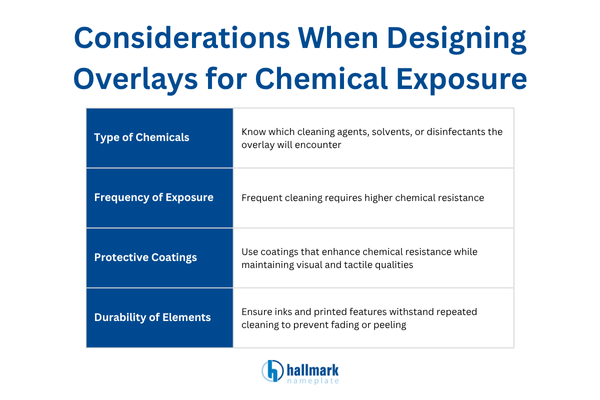
When designing overlays for chemical-prone environments, it’s important to consider:

  • Type of chemicals: Some solvents or disinfectants are more aggressive than others, so knowing which substances the overlay will encounter is essential.
  • Frequency of exposure: Overlays cleaned multiple times per day require higher resistance than those exposed occasionally.
  • Protective coatings: Certain coatings can enhance chemical resistance while preserving the visual and tactile qualities of the overlay.
  • Durability of printed elements: Ensuring that inks and printed features can withstand repeated cleaning or solvent exposure prevents fading or peeling.

By choosing chemical-resistant materials and protective finishes, you can maintain both the appearance and functionality of your graphic overlay, reducing the risk of product failure and prolonging the life of your device in demanding environments.

4. Features and Functional Enhancements

Graphic overlays are not just about aesthetics; they are also about functionality and user experience. Custom features can elevate your product and reinforce your brand.

graphic overlay features and considerations

Some options to consider include:

  • Windows and Display Areas: Should the overlay include a trans-colored display window for LEDs or screens?
  • Selective Texturing: Raised or textured areas can guide user interaction and improve ergonomics.
  • Embossing: Adds tactile and visual depth for branding or functional purposes.
  • LED Illumination and Dead-Front Panels: Enhance usability and make your product more intuitive to operate.

Carefully evaluating the features you need will help you create a product that is both user-friendly and visually striking.

5. Frequency of Use

How often the product will be used also affects design choices. Overlays for high-touch devices need materials that resist wear and fading, while products with lower usage may allow for more decorative elements without sacrificing durability.

High Use

How often your product will be touched or interacted with plays a major role in determining the right materials, finishes, and protective features for your graphic overlay. High-use equipment requires overlays that can withstand repeated contact without degrading, while low-use products offer more flexibility in design.

For high-touch applications, such as control panels, medical devices, or industrial equipment, it’s important to choose:

  • Abrasion-resistant materials that won’t scratch or wear down
  • UV-stable inks that prevent fading over time
  • Hard-coat or textured finishes that protect the print layer underneath
  • Durable embossing that maintains its shape even after thousands of actuations

Low Use

On the other hand, products that experience minimal daily interaction can incorporate more decorative or specialty design elements, such as metallic inks, unique textures, or intricate embossing, without compromising performance.


By assessing how frequently the device will be used, you can select an overlay construction that maintains clarity, functionality, and visual appeal throughout its intended lifespan.

6. Mounting Surface

The surface your graphic overlay will adhere to plays a major role in determining the right material and adhesive system. Different substrates have different bonding requirements, so selecting the correct adhesive ensures long-term durability and prevents lifting or bubbling.

Common mounting surfaces include:

  • Plastics (ABS, polycarbonate, low-surface-energy plastics): May require aggressive adhesives for a strong bond.
  • Metal (aluminum, stainless steel, powder-coated finishes): Typically pairs well with high-surface-energy adhesives.
  • Glass: Often needs adhesives designed for smooth, nonporous surfaces.
  • Curved or textured surfaces: Benefit from flexible materials that can conform without wrinkling.

Evaluating both the surface type ensures your overlay stays firmly in place and maintains a clean, professional appearance throughout its lifespan.

Create Your Graphic Overlay Design Perfectly

Graphic overlays play a vital role in the performance and longevity of your product, which is why they often require more processing time than standard nameplates. From selecting the right materials to incorporating the functional features your users rely on, each step matters in creating a durable and intuitive interface.

At Hallmark Nameplate, we’re committed to guiding you through every stage of the process, from initial concept to finished product. Our team ensures that your graphic overlay not only meets your specifications but also enhances your product’s functionality, branding, and user experience.

We’re ready to help bring your graphic overlay design to life and deliver a final product that performs flawlessly while looking exceptional. Request your quote today!

Applications of A Graphic Overlay in Equipment and Electronics

When it comes to machinery, visual communication is essential. Imagine operating equipment without clear labels, instructions, or branding.

How would you know how to use it safely or efficiently?

Or, if a problem arises, how would you quickly identify the right contact for support?

This is where graphic overlay equipment becomes indispensable. In this article, we will explain why you need graphic overlays for your equipment and which industries leverage them.

Why Your Equipment Needs Graphic Overlays

While some manufacturers imprint information directly onto the machinery, this method can be expensive, time-consuming, and often difficult to read. The aesthetics of such imprints can also fall short, affecting the overall professional appearance of your equipment.

Graphic overlays provide crucial information on machinery, from operational instructions to safety warnings and branding.

  • Safety and Efficiency: Well-designed overlays provide operators with clear, concise instructions, reducing the risk of accidents and improving productivity.
  • Quick Identification: In the event of a malfunction or issue, graphic overlays make it easy to identify the equipment manufacturer and get timely support.
  • Aesthetic Appeal: Custom overlays enhance the professional appearance of your equipment, reflecting the quality of your brand.
  • Versatility: Overlays can include branding, instructions, warnings, or any other information tailored to your needs.

Thanks to modern technology, custom graphic overlays offer a practical, efficient, and visually appealing solution.

Graphic Overlay Equipment Across Industries

Graphic overlays are highly versatile and can be tailored to meet the unique requirements of different industries. Here’s how graphic overlay equipment is used across various sectors.

applications of graphic overlays

1. Aerospace/Aviation

In aerospace and aviation, precision and safety are critical. Graphic overlays on control panels and instrumentation provide pilots and technicians with:

  • Clear instructions
  • Warnings
  • Status indicators

According to the Federal Aviation Administration (FAA), more than 88% of all aviation accidents are due to human error.

These overlays help reduce the risk of human error, improve operational efficiency, and ensure that every system is used according to exact specifications, which is essential in high-stakes flight and maintenance environments.

2. Construction

Heavy machinery and construction equipment rely on durable overlays to communicate operational guidelines, safety warnings, and branding.

These overlays are engineered to withstand harsh outdoor conditions, including:

  • Dirt
  • Moisture
  • UV exposure
  • Extreme temperatures

Clear, resilient overlays help operators avoid accidents and maintain equipment performance on demanding job sites.

3. Fitness

graphic overlay fitness

Gym equipment and fitness machines use graphic overlays to guide users through proper usage, safety precautions, and resistance settings. High-quality, wear-resistant materials ensure that information remains legible despite heavy daily use.

Overlays also help prevent equipment misuse and enhance the overall user experience, which is especially important in high-traffic fitness centers.

4. Manufacturing & Industrial

Industrial machines require overlays that communicate critical instructions, safety warnings, and machine status indicators. Heat-, abrasion-, and chemical-resistant overlays provide long-lasting durability in high-stress manufacturing environments.

They ensure operators can quickly understand equipment functions, reduce downtime, and maintain safe working conditions.

This is especially important, as according to the TWI Institute, every hour of downtime costs about $260,000 in lost revenue.

5. Medical & Dental

Medical and dental equipment depends on overlays for clear operating instructions, hygiene reminders, and regulatory compliance. Chemical- and disinfectant-resistant materials ensure overlays remain intact and readable despite frequent cleaning.

Properly designed overlays support patient safety, help staff operate equipment correctly, and maintain compliance with healthcare standards.

medical graphic overlay


6. Research Laboratories

Lab equipment uses overlays to provide precise operating procedures, safety instructions, and calibration information.

Chemical-resistant and durable materials ensure overlays remain functional in environments with exposure to:

  • Solvents
  • Reagents
  • Other harsh chemicals

This clarity is essential for preventing errors and maintaining consistent experimental results.

7. Transportation

Vehicles, control panels, and transportation machinery utilize overlays for operational guidance, safety notices, and visibility in low-light or high-vibration conditions.

Overlays in transportation applications help operators quickly interpret instructions, reduce errors, and maintain consistent safety practices, even under challenging operating conditions.

8. Agriculture

Farming machinery and agricultural equipment use overlays to communicate operating instructions, maintenance schedules, and safety warnings.

Materials are selected for durability against:

  • Dust
  • Moisture
  • Sunlight
  • Other outdoor elements

Well-designed overlays help farmers operate machinery efficiently, reduce wear and tear, and prevent accidents in the field.

9. Consumer Products

From household appliances to personal electronics, graphic overlays help users navigate controls, settings, and safety instructions.

Sleek, professional overlays not only improve usability but also reinforce brand identity and create a more polished, high-quality product appearance.

10. Food Service

Food processing and commercial kitchen equipment rely on overlays to display operating procedures, cleaning instructions, and safety warnings.

Moisture- and chemical-resistant overlays maintain clarity despite constant exposure to:

  • Water
  • Steam
  • Cleaning agents

Clear overlays help maintain food safety standards while ensuring equipment is used properly.

11. Marine

Marine equipment requires overlays that can withstand water, salt, and UV exposure while providing operational guidance and safety information.

Durable overlays ensure that instructions remain visible and equipment remains functional even in harsh marine environments, reducing the risk of operator error and equipment damage.

12. Military

Military machinery and devices use rugged overlays designed to remain legible under extreme conditions, including heat, vibration, and outdoor exposure.

These overlays communicate:

  • Critical instructions
  • Safety warnings
  • Operational data

This ensures mission-critical equipment functions reliably in even the most demanding environments.

military graphic overlay

13. Retail

Point-of-sale systems, kiosks, and retail machinery utilize overlays to guide staff and customers efficiently. These overlays combine functional instructions with brand messaging, improving usability while enhancing the overall customer experience.

Durable, well-designed overlays also help maintain a professional appearance in high-traffic retail environments.

Choosing the Right Materials for Your Equipment

Just as the mechanical components of your equipment require careful selection of materials, the same attention should be given to printed information.

Using inappropriate materials for graphic overlays can lead to issues such as fading, peeling, or wear over time. These problems could compromise safety and efficiency.

Quality overlays, on the other hand, are durable, readable, and designed to withstand the conditions your machinery operates in.

Expertise Matters

Creating effective graphic overlay equipment requires precision and experience. Your graphic overlay manufacturer should collaborate closely with equipment designers and technical specialists to produce overlays that are not only functional but also visually optimized.

With countless options available for producing overlays, it’s crucial to work with a partner that understands both the technical and aesthetic requirements of your equipment.

Make Your Graphic Overlays Work for You

Whether you bring an initial concept or complete specifications, Hallmark ensures your overlays meet all objectives, saving time, reducing costs, and creating a safer, more attractive workplace.

Hallmark Nameplate, with decades of experience, has been producing high-quality graphic overlays for machinery across a wide range of industries. Whether the purpose is safety, instructions, or branding, Hallmark’s overlays ensure that your equipment communicates effectively with its users.

Hallmark Nameplate has the expertise to transform your goals into high-quality, durable graphic overlays that enhance the performance and safety of your machinery.

Contact Hallmark Nameplate today to see how your graphic overlay equipment can accomplish everything you want for your operations and your customers. With Hallmark, your equipment’s information is clear, durable, and impactful, exactly where it needs to be.

Which Nameplate Substrate is Right for You?

Ever noticed the small tags or plates on products, machines, or equipment that seem to effortlessly communicate vital information? Those are nameplates, and they do much more than identify; they protect, inform, and enhance the user experience.

Choosing the right nameplate substrate can make all the difference in durability, readability, and overall impact. Industry studies show that materials with proper resistance to heat, chemicals, and UV exposure drastically extend the life of a nameplate.

In this guide, you’ll discover the main substrate options, their applications, and how to select the perfect material for your next nameplate project.

Key Takeaways:

  • Choosing the right substrate is essential for durability, readability, and performance in your specific environment.
  • Metal nameplates like stainless steel, aluminum, brass, and bronze offer superior longevity, corrosion resistance, and professional appeal.
  • Different metals excel in different conditions, for example, stainless steel for harsh environments, brass for aesthetics, and aluminum for cost-effective versatility.
  • Working with an experienced manufacturer ensures your nameplates are designed with the ideal material, finish, and thickness for your unique application.

What Is a Nameplate Substrate?

A nameplate substrate is the foundational layer of your nameplate. It’s the surface on which printing, etching, or engraving takes place. This material impacts every aspect of the nameplate, its appearance, resilience, and suitability for your environment.

Think of it as the backbone of your brand identification. The substrate you choose determines whether your nameplate thrives outdoors under the sun, indoors on machinery, or on high-heat equipment.

Let’s break down the five main types of nameplate substrates and how to pick the right one for your needs.

nameplate substrate

1. Substrate: Polycarbonate (Lexan)

If versatility is your top priority, polycarbonate, also known as Lexan, is your best friend. It’s one of the most commonly used substrates for both indoor and outdoor applications.

Why? Because it’s tough, adaptable, and can handle almost anything.

  • Temperature Tolerance: Works across a wide range of temperatures without cracking or discoloration
  • Flame Resistance: Rated from UL VTM-2 to UL94V0, making it suitable for applications where safety and compliance matter
  • Finish Options: Choose between gloss, velvet, or matte for a customized look and feel
  • Thickness Range: From .005” to .025”, depending on your design requirements
  • Best For: Equipment overlays, durable control panels, and outdoor branding

Pro Tip: If you want a clear or textured finish that still holds up to wear and tear, Lexan delivers reliability without sacrificing aesthetics.

2. Substrate: Polyester (Mylar)

Looking for unbeatable resistance to chemicals or harsh sunlight? Go with polyester or Mylar.
Polyester is highly resistant to ultraviolet rays and is used in nameplates that are expected to stay outside in the sun. It also has a high tensile strength that allows the nameplate to be stretched and not break. The lightweight material is easy to cut while still being resistant to scratches and chemicals.

  • Chemical and UV Resistance: Outperforms most plastics in harsh environments
  • Durability: Maintains print clarity even after years of exposure
  • Finish Options: Gloss or matte available
  • Thickness Range: .003” to .010”
  • Best For: Industrial settings, outdoor labeling, or chemical-heavy environments

Mylar substrate is built for performance in tough environments, factories, labs, or outdoor machinery. It resists fading, corrosion, and chemical degradation, maintaining its form and color even under stress.

plastic substrate nameplate

3. Substrate: Vinyl

Need something that bends, literally, to your creative needs? Vinyl substrates are as flexible as your imagination.
This material can be produced as either rigid or flexible, giving you room to play with design and form. It’s highly customizable with various finishes and colors.

  • Thickness Range: .004” to .030”
  • Finish Options: Gloss or matte
  • Application: Primarily indoor, but can be adapted for outdoor use with a UV overlaminate
  • Best For: Product labels, promotional displays, or indoor signage where vibrant visuals matter

While vinyl may not be as rugged as metal, it’s ideal for projects needing eye-catching visuals at an affordable price point.

Destructible Vinyl

Destructible vinyl nameplates are used for special purposes like sealing cargo doors going through customs or door panels on electrical equipment, where you need to tell if an unauthorized person tried to break into an HVAC unit or cargo trailer. The vinyl nameplates are practically impossible to remove without tearing and breaking apart.

4. Substrate: Paper

If you’re producing high-volume items like packaging labels, flyers, or inserts and are looking to add pizzazz, paper substrates might be the perfect fit. While paper isn’t as durable as metal or plastic, it offers unmatched print quality and cost-efficiency for short-term or decorative applications.

  • Available Weights: 60-pound to 100+ pound paper stock
  • Customization: Full-color printing, gloss or matte coatings, and a variety of adhesive backings
  • Best For: Box labels, promotional tags, or informational inserts

Paper substrates let you showcase creativity with vibrant colors and unique finishes, without the engineering complexity of other materials. While labels may seem simple, a manufacturer with in-house design and color experts can ensure every detail is perfect.

5. Substrate: Metal

When your application demands maximum durability, heat resistance, and a premium finish, metal substrates are the way to go. Metals not only deliver unmatched longevity, but they also provide a sleek, professional look that enhances your brand’s visibility.

Whether you need rugged identification plates for industrial equipment or elegant plaques for high-end products, metal nameplates offer a combination of strength, precision, and lasting appeal.

metal nameplate

Here are your metal options.

Aluminum

Aluminum nameplates are typically used for metal appliances and machines since it is a cost-effective option over other metals, while having the versatility to mimic them, so you get the same look you want if you used the other metals.
Aluminum is also malleable, so it can easily be shaped into different designs. The graphics on aluminum nameplates outshine stainless steel in the sharpness of designs embossed onto the material.
They are more “rugged” and can withstand weather, abrasion, and corrosion while maintaining a clean, professional appearance.

  • Thickness Range: .003” to .032”
  • Finish Options: Matte or mill
  • Durability: Pre-anodized for superior resistance to oxidation, corrosion, and fading
  • Best For: Industrial machinery, asset tags, serial plates, or outdoor signage

Pro Tip: Pre-anodized aluminum adds an extra layer of protection, helping your nameplate look new even after years of exposure.

Stainless Steel

Stainless steel is extremely strong, long-lasting, tarnish-proof, and rust-resistant. Its durability and corrosion resistance make it a top choice for demanding applications.

  • Composition: Mostly low-carbon steel with chromium; nickel, titanium, and molybdenum can enhance strength
  • Thicknesses: .018”, .030”, .050”, .062”, .125”
  • Grades: 304 series (common), 316 series (extra corrosion resistance)
  • Best For: Industrial, marine, and high-use environments

Their strength and longevity set them apart from other metals.

Brass

Brass is an attractive and affordable alternative to classic gold nameplates. Made from a copper and zinc alloy, it’s corrosion-resistant and non-sparking, perfect for decorative and industrial uses.

  • Thicknesses: .020”, .025”, .032”, .064”, .125”
  • Finish: Natural golden hue
  • Applications: Plumbing, electrical, and environments where sparks are a concern
  • Best For: Decorative nameplates, functional signage, and non-sparking requirements

Brass nameplates combine aesthetic appeal with practicality.

Bronze

Bronze nameplates are rustproof, tarnish-proof, and highly resistant to saltwater corrosion. Composed mostly of copper and tin, bronze has a reddish tone and is both malleable and dense.

  • Thicknesses: .032”, .064”, .125”
  • Applications: Custom plaques, badges, signage, and marine environments
  • Key Feature: Non-sparking and durable
  • Best For: Seaside applications, high-end plaques, and marine or outdoor signage

Bronze offers longevity and a distinctive look that stands out.

Get High-Quallity Nameplate

The options available for your next nameplate project are aplenty, but that doesn’t mean that the decision-making process has to be confusing for you. We are leaders in the industry and make it our mission to walk you through the entire length of your project, and we won’t leave you wondering which substrate is best.

With more than 55 years of experience in the industry, we’re always thinking of all the options you have when it comes to designing your next nameplate. When it’s time to begin working on your next project, our team will be able to walk through the entire development process with you to ensure that your nameplate is created to suit your specific needs and applications.

Ready to get started? Contact Hallmark Nameplate today and bring your next project to life with precision, expertise, and quality that lasts.