


The Complete Guide to Equipment Nameplates: Types, Materials, and Applications
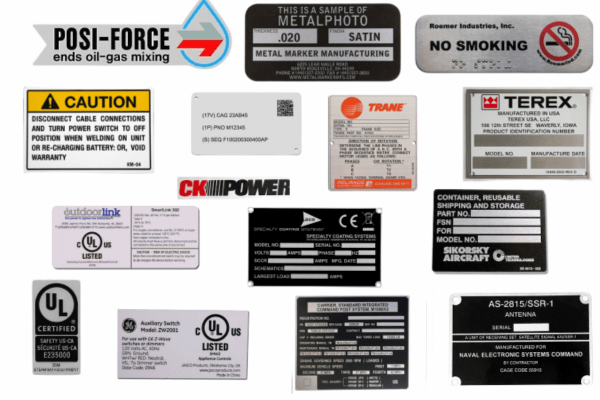
Get a FREE Product Sample Box!
Order a product sample box to feel the quality of our work before deciding to make a batch order.
Small touches can transform ordinary objects into something memorable. When we pore over our favorite gadgets, industrial machines, or even office doors, one of those touches is often a nameplate.
While nameplates may seem boring, they serve an essential purpose. Every element—down to the nameplate itself—signals professionalism, precision, and, above all, safety.
So, where do you begin? This guide covers everything you need to know about equipment nameplates: the different types and materials, how they’re crafted, and where they’re used. Hallmark Nameplate manufactures custom aluminum, stainless steel and durable plastic nameplates at its ISO 9001:2015 certified facility in Mt. Dora, Florida.
Short answer: An equipment nameplate is a durable plate fixed to a machine or product that carries its identity and rating information, such as the manufacturer, model and serial number, ratings, certification marks and warnings. Choose the nameplate material to match the environment the equipment will face: aluminum for general indoor and outdoor use, stainless steel for corrosion, washdown and heat, and polycarbonate, polyester or vinyl for flexible, indoor and overlay applications.
Key Takeaways
- Material Matters: Choosing the right substrate ensures durability and suitability for your environment.
- Printing & Marking Techniques: Screen printing, digital printing, etching, embossing, and Metalphoto each offer unique benefits depending on design, complexity, and longevity needs.
- Visuals & Specifications: High-contrast colors, simple typography, and clear data blocks improve legibility and reinforce branding.
- Mounting Options: Adhesive, screws, rivets, or snap-in holders should match surface type, environment, and exposure conditions.
- Testing Ensures Reliability: UV, chemical, abrasion, and thermal testing confirm your nameplate withstands real-world conditions.
What Are Nameplates?
Nameplates are more than simple labels; they’re the bridge between a product and its user. They identify, instruct, and protect, providing essential information such as serial numbers, branding, operating instructions, and compliance details.
They are designed and manufactured to last as long as the equipment they’re attached to. Whether used in healthcare, aerospace, military, or industrial applications, our nameplates are built to endure heat, moisture, abrasion, and chemicals while maintaining clarity and precision.
Each nameplate functions as a durable user interface, guiding operation and ensuring safety. Beyond functionality, when designed right, they help enhance your product’s appearance and strengthen brand recognition.
Types of Nameplates
Nameplates come in many forms, and their design and durability depend heavily on where they will be used. While many people immediately think of the classic desk nameplate, the reality is that nameplates serve a wide range of functions across industries.
Office Nameplates
Office nameplates are designed to make workplaces more organized and professional. These are the nameplates most people are familiar with, typically displaying names, titles, and departments on desks, cubicles, or office doors.
Often made from engraved metal, acrylic, or laminated plastic, office nameplates can include company logos and brand colors to maintain visual consistency throughout a workspace. Their primary purpose is to improve navigation and create a polished, branded environment for employees and visitors alike.
Industrial Nameplates
Industrial nameplates are built for performance and longevity. They are commonly used in factories, plants, and manufacturing facilities to convey essential data, such as:
- Safety warnings
- Operating limits
- Maintenance instructions
These plates are typically made from materials like aluminum, stainless steel, or polycarbonate that can withstand heat, moisture, vibration, and chemicals. Clear, permanent markings help ensure workplace safety, compliance, and efficiency.
Equipment Nameplates
Equipment nameplates serve as a permanent record of a product’s identity and specifications. Found on machinery, tools, and electronic devices, they display vital details such as:
- Model and serial numbers
- Manufacturer information
- Voltage or capacity ratings
- Operational instructions
- Certification marks
Designed for durability, these nameplates must remain legible for the entire lifespan of the equipment. Techniques like etching, engraving, or Metalphoto imaging are often used to ensure the information resists fading, corrosion, and abrasion.
Graphic Overlay vs Nameplate
Graphic overlays and nameplates often get lumped together, but they differ. A graphic overlay is a printed film or plastic layer placed over controls, buttons, displays, etc. It often has transparent windows or textured regions.
A nameplate is a standalone tag or plate, metal, plastic, or composite, affixed to surfaces. An overlay may be part of a device’s front panel, whereas nameplates are independent identification or branding markers.
Importance of Nameplates
Investing in high-quality nameplates pays off far beyond aesthetics. A well-designed, durable nameplate enhances safety, branding, efficiency, and compliance across industries.
Here’s why they matter.
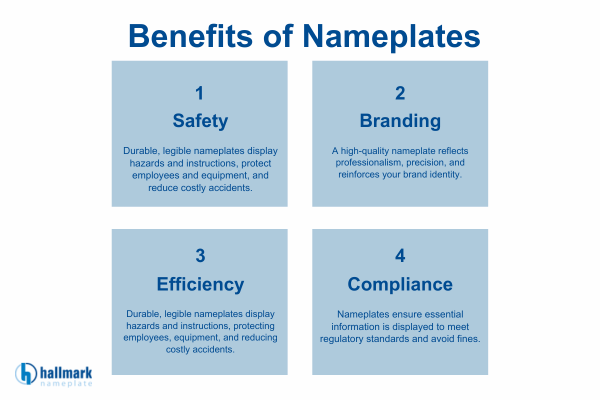
Safety
Nameplates often serve as warning or instructional labels. In industrial or manufacturing settings, failing to clearly display hazards, operating limits, or safety instructions can lead to accidents or equipment damage.
In 2024, OSHA documented more than one million workplace injuries, resulting in costly downtime and potential fines. Durable, legible nameplates ensure critical information is always visible, protecting employees, equipment, and your bottom line.
Branding
A nameplate is more than a label; it’s a tangible representation of your brand. Customers and clients notice the quality, finish, and precision of your nameplates.
A sleek, well-made nameplate communicates professionalism, attention to detail, and trustworthiness, reinforcing your brand’s identity at every touchpoint.
Efficiency
Clear, permanent identification on machines, equipment, or office spaces reduces confusion and streamlines operations.
Maintenance teams can quickly locate the right machinery, parts, or controls, minimizing downtime and preventing costly errors. Nameplates also simplify inventory tracking and record-keeping.
Compliance
Many industries require specific information to be displayed, such as voltage ratings, serial numbers, or safety certifications. Nameplates help companies meet regulatory standards while avoiding fines or legal issues.
By providing a permanent, tamper-resistant method to communicate essential data, nameplates make compliance easier and more reliable.
Signs It’s Time To Update Your Nameplate
Knowing when to replace or refresh a custom nameplate is just as important as designing it correctly in the first place. An outdated or damaged nameplate can be more harmful than no nameplate at all.
Replacing or refreshing your nameplates ensures safety, accuracy, compliance, and professionalism, protecting both your people and your brand.
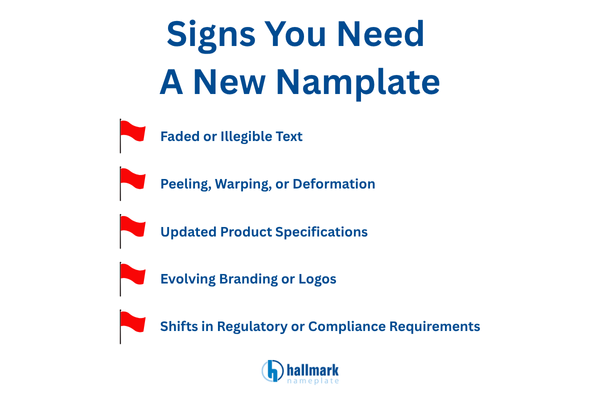
Here are key signs that it’s time for an update:
Faded or Illegible Text
Over time, exposure to sunlight, chemicals, or repeated handling can cause text and graphics to fade. If information is hard to read, it increases the risk of mistakes, slows down maintenance, and may even create safety hazards.
A clear, legible nameplate ensures that vital instructions, serial numbers, or warnings are always visible.
Peeling, Warping, or Deformation
Environmental factors such as moisture, heat, or industrial wear can cause a nameplate to peel, warp, or lose its shape.
Damaged plates not only look unprofessional but may also fail to adhere properly, leaving your equipment or signage unprotected.
Updated Product Specifications
When machinery, electronics, or other equipment undergo changes in model numbers, serial number, or operational specs, the corresponding nameplate must reflect those updates.
Outdated information can lead to operational errors, maintenance issues, or even regulatory violations.
Evolving Branding or Logos
A company’s branding may evolve over time, and nameplates are a tangible representation of your brand identity. Refreshing your nameplates to match updated logos, fonts, or color schemes helps maintain consistency and reinforces a professional image to clients, employees, and visitors.
Shifts in Regulatory or Compliance Requirements
Industries such as medical, industrial, automotive, and aerospace have strict regulatory standards. If regulations or compliance requirements change, nameplates must be updated to reflect the latest certifications, safety marks, or data.
Failure to do so can result in costly fines, legal issues, or safety risks.
Equipment Nameplate Materials Compared
Use this table as a starting point. The material, marking method and environment together determine how long a nameplate stays legible.
| Material | Best for | Typical marking methods |
|---|---|---|
| Aluminum (anodized, Metalphoto®) | Indoor and outdoor machinery, safety plates and branding panels. Metalphoto® for especially demanding identification. | Screen printing, etching, photosensitive imaging (Metalphoto®) |
| Stainless steel (304, 316, 430) | Corrosion, chemical contact, washdown and high-heat environments. 316 where chlorides are a factor. | Etching, engraving, screen printing |
| Brass | Decorative metal appearance where looks matter as much as durability. | Etching, screen printing |
| Polycarbonate | Overlays, panels and nameplates that need impact resistance, such as medical and electronic equipment. | Screen printing, digital printing |
| Polyester (Mylar®) | Flexible overlays on control panels, instruments and electronic devices. | Screen printing, digital printing |
| Vinyl (PVC) | Curved surfaces, adhesive mounting, product labeling and safety instructions. | Printing, digital marking |
Not sure which material fits your equipment? Talk to our engineering team or compare the options for production volumes.
6-Step Process of Manufacturing A Nameplate
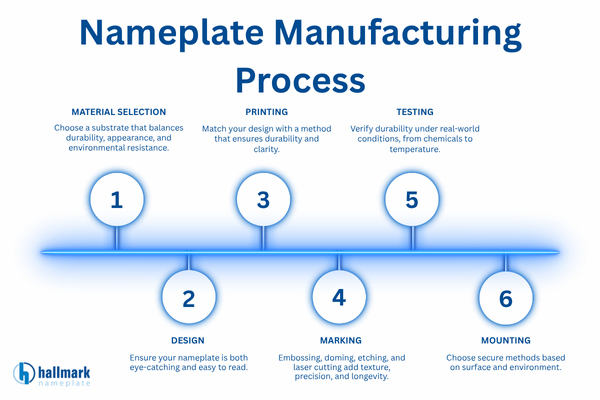
Let’s walk through how a nameplate comes to life, step by step:
1. Material Selection
Choosing the right material is the foundation of a high-quality nameplate. The material determines durability, appearance, environmental resistance, and which printing or marking methods can be used.
Aluminum
Aluminum nameplates are lightweight, corrosion-resistant and extremely versatile. Aluminum can be anodized to improve color adhesion and surface hardness, or screen-printed and etched for sharp, long-lasting graphics. Photosensitive anodized aluminum (Metalphoto®) places the image within the anodized layer for especially demanding identification.
It suits indoor and outdoor applications, from machinery tags and safety plates to branding panels.
Stainless Steel
Stainless steel nameplates are specified when a plate must outlast the equipment it is mounted on. Hallmark offers 304, 316 and 430 grades: 304 for most indoor and outdoor industrial use, 316 where chlorides, saltwater or chemical contact are a factor, and 430 for mild environments or magnetic requirements. Stainless is common in chemical processing, marine, food-service and high-heat applications.
Brass
Brass is an attractive, affordable option when a warm, metallic appearance is the priority. See the types of custom metal nameplates for how brass compares with aluminum and stainless steel.
Polycarbonate
Polycarbonate nameplates are tough, impact-resistant and well suited to overlays, panels and nameplates that need extra durability. Polycarbonate films such as Lexan® offer good clarity, heat resistance and dimensional stability, which makes them a common choice for medical devices, electronics and industrial machinery.
Polyester (Mylar®)
Polyester (Mylar®) is a thin, flexible film often used for overlays and labels rather than heavy-duty tags. It resists tearing, moisture and many chemicals, and it accepts detailed printing. It is commonly applied to control panels, electronic devices and instruments.
Vinyl (PVC)
Vinyl (PVC) nameplates are flexible, work well for bending, wrapping or adhesive mounting, and adhere to curved surfaces. They are often used for product labeling, safety instructions and decorative signage.
Paper
Paper labels are an economical choice for temporary or short-term indoor applications. Paper lacks durability in high-moisture or high-wear environments, so it is not suited to equipment that must carry its data for years.
Not sure which substrate fits? Compare all durable plastic nameplates or talk to our team about your environment.
Each substrate comes with its own set of constraints regarding printing, engraving, or etching. Choosing the right material early in the design process ensures your custom nameplate not only looks professional but also performs reliably over its lifespan.

2. Design & Visuals
The visual elements of your nameplate are just as important as the material and printing process. This is where design meets functionality, ensuring your nameplate is both eye-catching and easy to read.
Color
Color isn’t just decoration; it’s critical for legibility and brand consistency. High contrast between background and text ensures your information can be read quickly and accurately, even from a distance or in low-light environments.
Modern nameplate production often uses computerized color-matching systems, which can replicate almost any color with precision. The result is a faithful reproduction of gradients, photographs, or intricate logos, making it perfect for nameplates that need detailed visuals or corporate branding.
Typography
Font selection plays a major role in a nameplate’s clarity. Simple, clean fonts ensure letters engrave or print sharply.
Overly decorative or intricate fonts may look appealing on-screen but can blur or become unreadable when applied to metal, vinyl, or polycarbonate surfaces. Legibility is the priority, particularly for industrial, compliance, or safety-oriented nameplates.
Specifications
Beyond looks, your nameplate communicates critical information. This may include:
- Serial numbers – for tracking and maintenance
- UL or safety marks – to demonstrate compliance with regulations
- Data blocks – for technical or product specifications
Every detail must be precise and properly placed to meet industry standards and make the nameplate both informative and functional.
3. Printing
Printing is where your chosen material and your design vision come together. The right printing method ensures your nameplate is not only visually striking but also durable enough to withstand real-world conditions.
Screen Printing
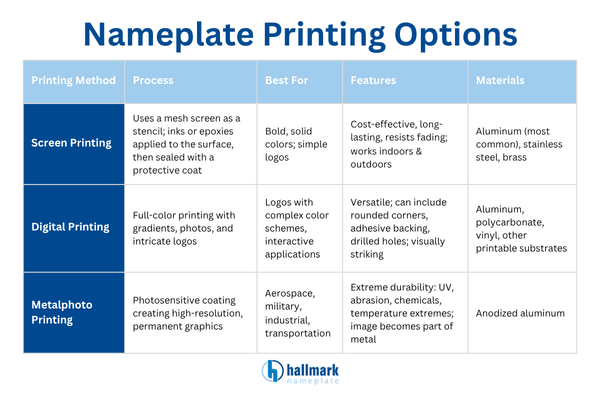
Screen printing is durable, cost-effective, and perfect for bold, solid colors. A mesh screen acts as a stencil, and inks or epoxies are carefully applied to the metal surface.
Once the design is in place, a protective surface coat is applied to seal the color, prevent fading, and significantly extend the nameplate’s lifespan. This method works on stainless steel, aluminum, and brass, with aluminum being the most popular choice.
Screen-printed nameplates are designed to endure harsh environments, making them ideal for both indoor and outdoor applications. Whether it’s an industrial machine, safety tag, or corporate signage, screen printing ensures long-lasting clarity and visibility.
Digital Printing
Digital printing takes your nameplate to the next level, allowing for full-color designs, gradients, and even photographic-quality images. This method is ideal for logos with intricate color schemes or branding that requires precision.
A big advantage of digital printing is the ability to include dynamic elements like QR codes, barcodes, or Portable Data Files, which can be used for tracking, compliance, or interactive applications.
Many digitally printed nameplates can still be customized with rounded corners, adhesive backing, drilled holes, or other fabrication options, making them versatile for a wide range of applications.
Metalphoto / Photographic Imaging
Metalphoto is a high-tech, ultra-durable option for nameplates that need to survive extreme conditions.
This process uses a photosensitive coating on anodized aluminum to capture high-resolution graphics and text. The result is a plate that is resistant to UV, abrasion, chemicals, and temperature extremes.
Metalphoto nameplates are commonly used in aerospace, industrial equipment, military, and transportation sectors, where longevity and precision are non-negotiable. Unlike other methods, the image becomes a permanent part of the metal, ensuring your branding or critical information remains legible for decades.
4. Marking Methods
The way a nameplate is marked or finished can dramatically affect its appearance, durability, and functionality. Beyond printing, specialized marking methods provide depth, texture, and long-lasting legibility.
Embossing
Embossing raises portions of the nameplate to create a tactile, three-dimensional effect. This method adds both aesthetic appeal and functional clarity.
For example, raised text or logos are easier to feel and read, even in low-light or high-vibration environments.
Doming
Doming takes embossing a step further by adding a clear resin coating over the raised areas. This not only enhances the visual appeal but also protects the printed surface from scratches, chemicals, and UV exposure.
Etching
This is a precision technique that permanently marks or cuts a nameplate with fine detail. Etching uses chemical or mechanical processes to remove surface material, creating crisp, high-contrast graphics or text that can endure extreme conditions.
Laser Cutting
Laser cutting, on the other hand, uses concentrated light beams to cut shapes, letters, or patterns into metal or other durable substrates. This method is especially common for aluminum and stainless steel nameplates, where precision and longevity are critical.
5. Testing
Ensuring your custom nameplate can withstand the environment it will face is critical. High-quality manufacturers don’t just create nameplates; they rigorously test them to guarantee durability, legibility, and performance over time.
By conducting these tests, manufacturers ensure your nameplate not only looks great but also performs reliably under real-world conditions. From industrial machinery to outdoor signage, testing guarantees longevity, safety, and peace of mind for your investment.
UV Resistance
UV resistance is essential for nameplates exposed to sunlight. Prolonged exposure can cause fading, discoloration, or degradation of inks and coatings.
Testing ensures your nameplate maintains vibrant colors and sharp graphics, even after years in direct sunlight.
Chemical and Solvent Resistance
Industrial, medical, and outdoor applications often involve exposure to chemicals, cleaning agents, or lubricants. Chemical resistance testing ensures your nameplate won’t smudge, peel, or erode when exposed to harsh substances, keeping important safety and operational information readable.
Abrasion and Scratch Testing
Frequent handling, friction, or contact with tools can wear down a nameplate over time. Abrasion and scratch testing simulate real-world wear, ensuring raised text, graphics, and coatings remain intact, legible, and professional in appearance.
Thermal Cycling
Extreme temperatures can cause materials to expand, contract, or warp. Thermal cycling tests a nameplate’s ability to endure repeated heating and cooling cycles, ensuring that adhesives, coatings, and substrates remain stable in hot or cold environments.
6. Mounting
How your nameplate is attached affects durability and performance. Common methods include:
- Rivets or Screws: Secure and permanent, ideal for industrial or heavy-duty applications.
- Adhesive Backing: Clean, screw-free installation. Pressure-sensitive adhesives (PSA) can be permanent or repositionable, with options for curved or rough surfaces, UV exposure, chemicals, and extreme temperatures.
- Snap-In Holders: Great for removable or modular panels.
Sometimes, a combination of adhesive and fasteners is used for extra security. Proper mounting ensures your custom nameplate stays in place and performs reliably, indoors or outdoors.
6 Common Mistakes When Creating Nameplates
Even small errors in nameplate design or production can lead to costly problems down the line, like fading, peeling, or non-compliance with industry standards. Whether you’re creating labels for industrial equipment or sleek office signage, avoiding these pitfalls ensures your nameplates remain clear, durable, and professional for years to come.
1. Overlooking Edge Finishing
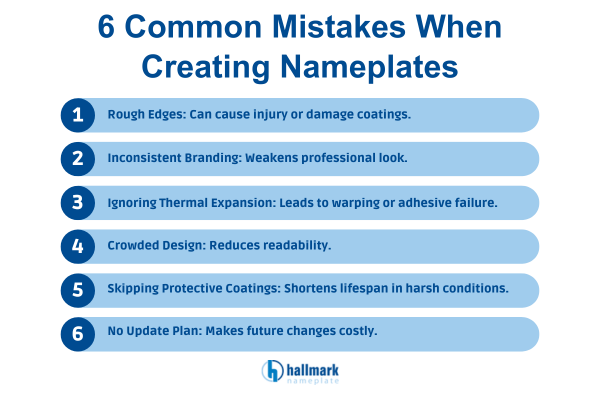
Rough or sharp edges can cause injury, snag clothing, or peel coatings prematurely. Smooth, finished edges are essential for safety and durability.
2. Inconsistent Branding Across Multiple Plates
Using slightly different colors, fonts, or layouts across nameplates can weaken brand consistency. A standardized design ensures a cohesive, professional look.
3. Ignoring Thermal Expansion
Some materials expand or contract under temperature changes. Without accounting for this, adhesives can fail, or plates can warp over time.
4. Inadequate Spacing for Information
Cramped text or overly busy layouts reduce readability. Proper spacing between text, logos, and data blocks is crucial for clarity.
5. Skipping Protective Coatings
Even durable materials benefit from protective coatings, like clear domes or anti-scratch finishes. Skipping this step can shorten the nameplate’s lifespan in high-wear environments.
6. Failing to Plan for Future Updates
Some nameplates are permanent with no easy way to update information. Not considering future changes, like serial numbers, calibration dates, or regulatory info, can lead to unnecessary replacements.
Industries That Need High-Quality Nameplates
Different industries have unique demands for nameplates, and selecting the right type, material, and printing method can make all the difference. Let’s explore some key sectors and how nameplates play a critical role in each.
Aviation
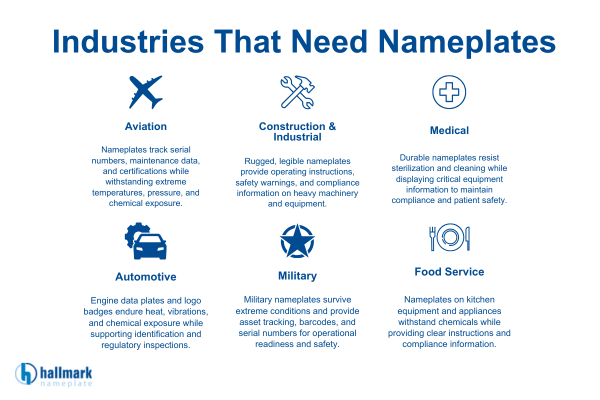
In aviation, every component is meticulously tracked and regulated. Nameplates in this sector display serial numbers, maintenance data, certifications, and regulatory compliance marks.
Materials must withstand extreme temperature fluctuations, high-altitude pressure, and exposure to chemicals or fuels.
Aluminum and metalphoto are often preferred for their durability and precision. These nameplates ensure safety and traceability for aircraft parts and are vital for both commercial and military aviation.
Construction & Industrial
Heavy machinery, industrial equipment, and instrumentation rely on rugged, legible nameplates. These plates must survive harsh conditions, including vibration, dust, moisture, and chemical exposure.
Screen-printed or engraved aluminum plates are commonly used, providing long-term durability and easy readability. Nameplates in construction and industrial settings are not just decorative; they provide critical operating instructions, safety warnings, and compliance information to keep operations efficient and safe.
Medical
Medical environments have strict hygiene and regulatory requirements. Nameplates in hospitals, laboratories, and on medical devices must withstand sterilization processes, cleaning agents, and frequent handling.
Materials like polycarbonate or stainless steel, combined with durable printing methods, ensure clarity and longevity. Medical nameplates often include critical data such as equipment model numbers, calibration dates, and safety warnings, helping healthcare professionals maintain compliance and patient safety.
Automotive
From logo badges to engine data plates, the automotive industry relies on nameplates for branding, identification, and compliance. Engine blocks, chassis, and components often feature metal or aluminum plates with etched or printed information.
These nameplates must endure heat, vibrations, and exposure to oils or chemicals while remaining legible for regulatory inspections and maintenance purposes.
Military
Military nameplates face the harshest conditions, from extreme climates to battlefield environments. These plates must meet strict durability standards, often including barcodes, UID codes, and serial numbers for asset tracking and compliance.
Materials like metalphoto or engraved stainless steel are common, ensuring that the plates survive corrosion, abrasion, UV exposure, and high-impact situations. Military nameplates are essential for equipment accountability, safety, and operational readiness.
Food Service
In the food service industry, nameplates are essential for safety and efficiency. They appear on kitchen equipment, appliances, and storage units, providing clear operating instructions, maintenance info, and compliance details.
Materials like stainless steel, anodized aluminum, and polycarbonate resist heat, moisture, cleaning chemicals, and daily wear. Legible, durable nameplates help staff follow safety guidelines, track maintenance, and meet regulatory standards, making them a vital part of smooth, safe operations.
Tips for Cleaning and Maintaining Nameplates
A well-maintained custom nameplate not only looks professional but also lasts longer. Regular care helps preserve legibility, color, and durability. Here’s how to keep your nameplates in top condition.
1. Dust and Wipe Regularly
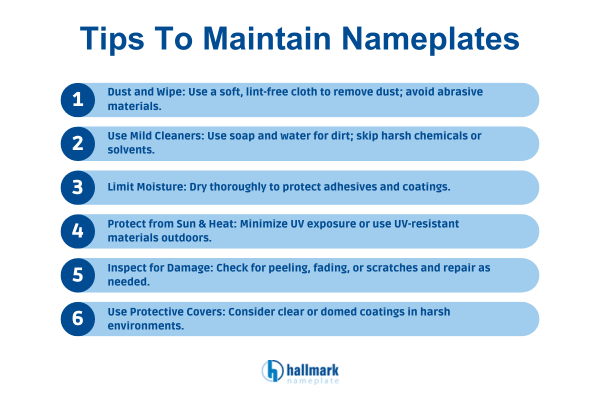
Use a soft, lint-free cloth to gently remove dust and debris. Avoid abrasive materials that can scratch the surface or damage printed text.
2. Use Mild Cleaning Solutions
For more stubborn dirt or fingerprints, use a mild soap and water solution. Avoid harsh chemicals, solvents, or ammonia-based cleaners that can degrade coatings or adhesives.
3. Avoid Excessive Moisture
While many industrial nameplates are moisture-resistant, prolonged exposure to water can affect adhesives or corrosion-resistant coatings. Dry the surface thoroughly after cleaning.
4. Protect From Sun and Heat
UV exposure can fade colors over time. Whenever possible, limit direct sunlight on indoor or outdoor nameplates, or choose UV-resistant materials for outdoor applications.
5. Inspect for Damage
Regularly check for peeling, fading, or scratches. Early detection allows for timely repair or replacement, preventing compromised readability or non-compliance.
6. Use Protective Covers if Needed
In industrial or harsh environments, consider clear protective covers or domed resin coatings to shield the nameplate from abrasion, chemicals, and impacts. Consistent cleaning and maintenance keep your nameplates looking sharp, ensure critical information remains legible, and extend the lifespan of your investment.
How to Choose a Nameplate Manufacturer
Selecting the right manufacturer is one of the most important decisions when creating a custom nameplate. The quality, durability, and overall success of your project hinge on the manufacturer’s expertise, capabilities, and support.
Here’s what to look for.
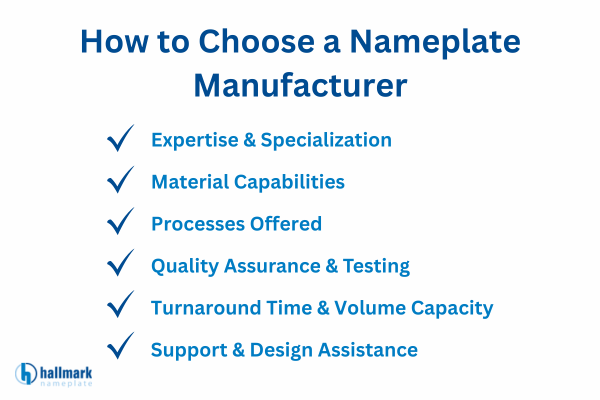
Expertise & Specialization
Not all nameplate manufacturers are created equal. Some specialize in industrial equipment, whereas others specialize in office signage or decorative plates.
Choose a manufacturer experienced in your industry; they’ll understand your unique requirements, compliance standards, and environmental challenges.
Material Capabilities
Your choice of material (aluminum, stainless steel, polycarbonate, polyester or vinyl) determines which manufacturers can serve your project. Make sure the manufacturer works with the materials you need, whether that is lightweight, corrosion-resistant metal or durable, flexible plastic for overlays. Hallmark Nameplate produces aluminum, stainless steel, polycarbonate, polyester and vinyl nameplates.
Processes Offered
Different marking and printing methods produce different results. Ask if the manufacturer offers techniques like:
- Etching / Laser Cutting – for precise, long-lasting graphics
- Photomarking / Metalphoto – for extreme durability and fine detail
- Screen Printing / Digital Printing – for vivid colors and logos
The more processes a manufacturer can offer, the more flexibility you’ll have in creating a custom nameplate tailored to your exact specifications.
Quality Assurance & Testing
Durable nameplates require rigorous testing to ensure they can withstand the intended environment. A reliable manufacturer will have strict quality assurance protocols and conduct tests for:
- UV and weather resistance
- Abrasion and scratch resistance
- Chemical and solvent exposure
- Temperature extremes
Turnaround Time & Volume Capacity
Depending on your project, you may need small quantities of custom plates or bulk orders for large-scale production.
Confirm that the manufacturer can handle your volume requirements without sacrificing quality or deadlines. For production programs, see Hallmark’s bulk and volume nameplate orders.
Support & Design Assistance
Top manufacturers offer more than just production; they provide design guidance, material recommendations, and technical support.
Whether you need help selecting colors, adhesives, or mounting options, strong support ensures your nameplate meets both aesthetic and functional goals.
Get High-Quality Nameplates For Your Business
Now that you’ve journeyed through the world of custom nameplates, you should feel confident in defining, selecting, building, and applying them.
Do you have a project in mind, say, a new piece of machinery, a branded product line, or even office signage, that needs a nameplate?
Let Hallmark Nameplate help you choose the ideal material and provide a design review to ensure your custom nameplates are manufactured to perfection. Start with our aluminum nameplates, stainless steel nameplates or volume orders, or request a quote.
Reach out today, and let’s bring your branding to life, one high-quality nameplate at a time.
Frequently Asked Questions About Equipment Nameplates
What is an equipment nameplate?
An equipment nameplate is a permanent identification plate fixed to a machine, instrument or product. It records what the equipment is and how it must be operated or serviced: manufacturer, model and serial number, electrical or mechanical ratings, certification marks and safety warnings. It is specified to stay legible for the service life of the equipment.
What are the most common nameplate materials?
The most common nameplate materials are aluminum, stainless steel, brass, polycarbonate, polyester and vinyl. Aluminum and stainless steel are used where durability matters most, with stainless chosen for corrosion, washdown and high heat. Polycarbonate, polyester and vinyl suit flexible, indoor and overlay applications.
What is a nameplate?
A nameplate is a durable identification plate attached to a product or piece of equipment that carries information the user or owner needs over the life of that asset: manufacturer name, model and serial number, electrical ratings, certification marks, barcodes or UID data, and safety warnings. Unlike a printed label, a nameplate is usually specified to survive the full service life of the equipment it is attached to.
What types of nameplates are available for businesses?
Nameplates divide first by material. Metal nameplates in aluminum, stainless steel or brass suit harsh environments and long service lives. Plastic nameplates in polycarbonate, polyester or vinyl suit indoor equipment, curved surfaces and cost-sensitive applications. They divide again by marking method: screen printed, digitally printed, chemically etched, mechanically engraved, embossed, or photosensitive processes such as MetalPhoto. The combination of material and marking method is what determines durability, legibility and cost.
Which nameplate material is best for harsh environments?
Match the material to the specific stressor rather than to a general idea of toughness. For sustained outdoor UV and weather, anodized aluminum or MetalPhoto is typically specified, with MetalPhoto rated for 20 or more years outdoors. For saltwater, heavy chemical exposure or washdown, 316 stainless steel is the usual choice. For high heat, stainless or anodized aluminum outperforms any plastic. For abrasion on a surface that gets handled constantly, polycarbonate holds up better than polyester. If more than one stressor applies, specify for the most severe one.
When should you replace an equipment nameplate?
Replace a nameplate when any of its required information is no longer legible, because an unreadable serial number or rating plate creates compliance exposure as well as service difficulty. Other triggers are corrosion or lifting at the edges that will spread, a barcode or UID that no longer scans reliably, a change in certification or regulatory marking requirements, and rebranding. On equipment under a regulated marking requirement, illegibility is a finding in itself, not merely a cosmetic issue.
What is the difference between a nameplate and a graphic overlay?
A nameplate identifies; a graphic overlay is an interface. A nameplate carries static information and is typically a rigid or semi-rigid plate. A graphic overlay is a printed flexible layer that forms the visible face of a control panel, often laminated over a membrane switch, with windows for displays and legends for keys. Many pieces of equipment carry both, and they are frequently quoted together because the same materials and printing processes are used.
What is the minimum order for custom nameplates?
Hallmark Nameplate has no minimum piece quantity, but does apply a $250 minimum order value. That lets you order a handful of prototypes, a short production run or a large volume depending on where you are in development. If a project is not a good fit for our processes or that minimum, we will say so and point you toward a better-suited option.
How long does it take to produce custom nameplates?
Turnaround depends on material availability, marking method, tooling requirements and order volume, so a single number would be misleading. Expedited production is available for urgent requirements. The practical answer is that a clear timeline is confirmed during quoting, before you commit, rather than estimated afterwards.