

If you’ve ever walked into a polished office or a busy manufacturing plant, you’ve likely noticed nameplates guiding your way.
From sleek desk identifiers to durable industrial tags, nameplates aren’t just decorative; they protect, inform, and enhance brand identity.
In this guide, we’ll explore what is a nameplate, the different types of nameplates, compare them with graphic overlays, and explain why investing in the right nameplate can make a lasting impact on your business.
Key Takeaways
- Nameplates serve more than one purpose; they identify, inform, and protect, ensuring clarity, safety, and professionalism across industries.
- Different types fit different needs, from office and appliance nameplates to industrial, aviation, and barcode labels; each is designed for specific environments and uses.
- Choosing the right material and design impacts durability, visibility, and compliance. Aluminum, stainless steel, and polycarbonate are among the most reliable options.
What Is a Nameplate?
A nameplate is a durable label or plate that displays identifying information about a person, product, or organization. While small in size, nameplates play a big role in communication, conveying identity, instructions, or compliance details clearly and permanently.
The main purpose of a nameplate is to identify and inform. Depending on where it’s used, it might display a company name or logo, show safety or compliance information, or provide technical specifications for equipment.
These nameplates must outlast the equipment, withstand operational conditions, and be intuitively designed to ensure the product is user-friendly.
Nameplate vs. Graphic Overlay
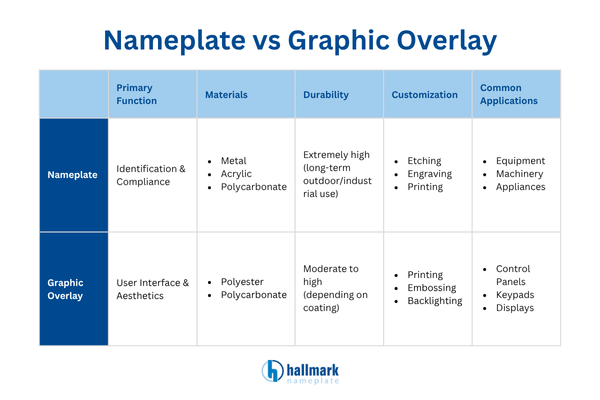
You might wonder, what’s the difference between a graphic overlay and a nameplate? While both enhance a product or workspace, choosing the right solution depends on your goal: durability and regulation vs. user experience.
Nameplates
Nameplates are primarily used for product identification, branding, and compliance labeling. They’re designed to last, often made from durable materials like aluminum, stainless steel, or polycarbonate, with permanent markings achieved through etching, engraving, or Metalphoto imaging.
They display essential information such as serial numbers, manufacturer data, certifications, and safety warnings. Because they often serve regulatory or operational roles, longevity and legibility are their top priorities.
Graphic Overlays
Graphic overlays act as the user interface layer on control panels, keypads, or touchscreens. They are typically printed on durable substrates such as polyester or polycarbonate and laminated to the surface of electronic devices or control systems.
Unlike nameplates, overlays focus on usability and aesthetics. They guide users through operation, protect internal components from dust or moisture, and display icons, colors, or backlit labels that enhance the overall user experience.
Best used for:
- Control panels
- Touch interfaces
- Machinery dashboards
- Electronic devices
Types of Nameplates
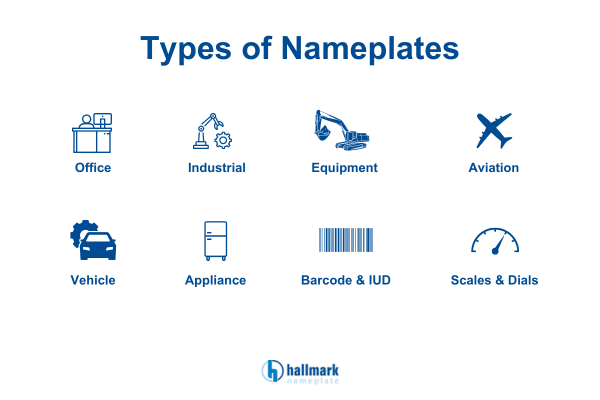
Nameplates come in a variety of forms, each designed to serve a specific purpose. Understanding the different types helps businesses choose the right nameplate for their needs, improving efficiency, compliance, and professionalism.
Here are the most common types of nameplates and where and why each is used.
1. Office Nameplates
Office nameplates are the most common type you’ll encounter, and the most well-known. They help create an organized, professional environment by clearly displaying employee names, titles, and departments.
Materials range from engraved metal and acrylic to laminated plastic. Some offices even add magnetic or interchangeable inserts to update names easily.
By maintaining a consistent design across desks and doors, companies present a polished and cohesive image.
Key Information Displayed
An effective office nameplate should balance clarity and branding by including:
- Employee name
- Job title
- Department or office location
- Company logo or branding elements
Why They Matter
Office nameplates do more than display names; they help create structure and strengthen your company’s image:
- Improve navigation for visitors and staff
- Reinforce corporate branding through logos and colors
- Elevate workplace professionalism
Pro Tip: Incorporating your brand colors in office nameplates subtly reinforces your company identity every time someone walks through your space.

2. Industrial Nameplates
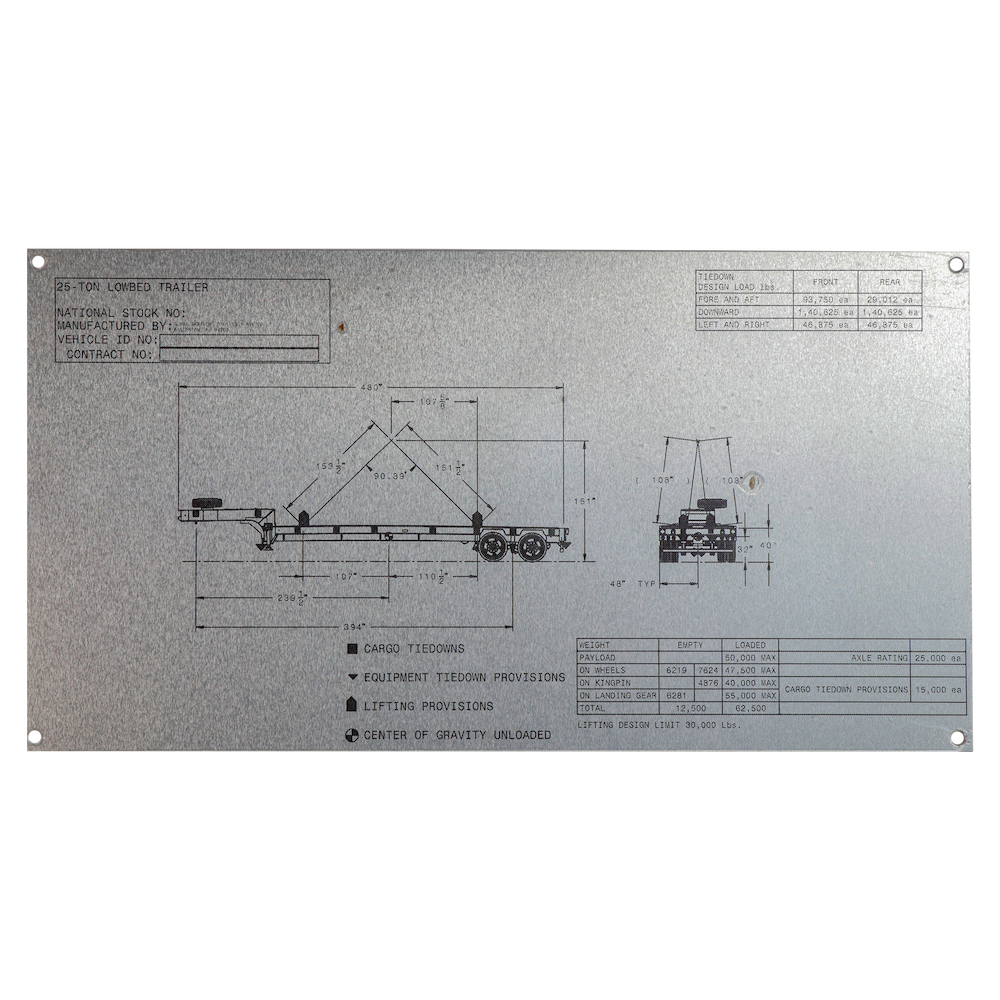
Industrial nameplates are engineered for durability in tough environments such as factories, plants, and manufacturing facilities. Safety and compliance are non-negotiable, making these plates essential.
They are typically made from aluminum, stainless steel, or polycarbonate, designed to withstand heat, moisture, chemicals, and vibrations.
According to OSHA reports, workplace injuries cost businesses approximately $1 billion each week in workers’ compensation expenses. Permanent, clear markings help reduce errors and enhance workplace safety.
Key Information Displayed
An effective industrial nameplate communicates vital details at a glance:
- Safety warnings and hazard symbols
- Operating limits and capacity
- Maintenance instructions or schedules
- Manufacturer or facility details
Why They Matter
Industrial nameplates play a critical role in maintaining workplace safety and productivity:
- Ensure employee safety by clearly communicating hazards and operating limits
- Maintain compliance with industry regulations
- Reduce costly errors and operational downtime
Want to know the secret to industrial efficiency? It starts with the right nameplate. Durable materials and legible engravings reduce downtime and ensure employees can quickly reference critical information.
3. Equipment Nameplates
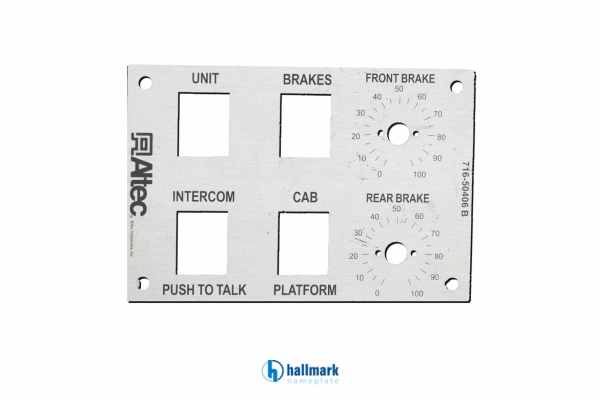
Equipment nameplates provide a permanent record of a product’s identity and specifications. They are found on machinery, electronics, and tools, ensuring details remain legible for the product’s lifespan.
Durable techniques such as etching, engraving, or Metalphoto imaging prevent fading, corrosion, or abrasion.
Key Information Displayed
An effective equipment nameplate provides all the details needed to safely and efficiently operate and maintain the device:
- Model and serial numbers
- Manufacturer details
- Voltage, capacity, or operational ratings
- Certification marks
Why They Matter
Equipment nameplates help keep operations smooth and compliant:
- Facilitate maintenance, repair, and warranty tracking
- Ensure compliance with regulatory standards
- Help prevent misuse or incorrect installation
Pro Tip: Choose a technique based on the environment. Metalphoto nameplates, for example, excel in high-heat or chemically corrosive environments.
4. Aviation Identification Nameplates
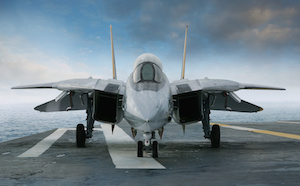
Aviation nameplates carry critical information for aircraft identification, safety, and regulatory compliance. They are required to endure extreme temperatures, vibration, and weather exposure.
Materials like anodized aluminum or stainless steel are standard for aviation-grade durability.
Key Information Displayed
These small yet powerful plates convey critical details:
- Aircraft registration numbers
- Manufacturer and model information
- Weight limitations
- Certification and compliance data
Why They Matter
Aviation nameplates ensure safety and compliance at every stage:
- Ensure pilot and maintenance teams can safely operate aircraft
- Comply with aviation regulations and standards
- Reduce the risk of costly errors and accidents
By combining durability and precision, aviation nameplates are indispensable for safe, compliant, and efficient aircraft operation.
5. Vehicle Nameplates
Vehicle nameplates are more than decorative badges; they communicate essential identification and regulatory information.
Durable materials such as stainless steel, aluminum, and plastics ensure readability despite sun exposure, road debris, and moisture.
Key Information Displayed
A proper vehicle nameplate includes all relevant specifications:
- VIN (Vehicle Identification Number)
- Manufacturer and model details
- Engine specifications and capacity
- Safety and regulatory compliance marks
Why They Matter
Vehicle nameplates contribute to safety, compliance, and value:
- Verify vehicle identity and specifications for resale or service
- Ensure compliance with government regulations
- Support warranty claims and safety inspections
Pro Tip: Accurate, durable nameplates help preserve vehicle value and maintain compliance over time.
6. Appliance Nameplates
Appliance nameplates are vital for both consumers and service professionals. They provide identification, repair guidance, and safety information.
Commonly made from metal or durable plastic, appliance nameplates must resist heat, moisture, and abrasion, ensuring readability throughout the appliance’s life.
Key Information Displayed
Effective appliance nameplates include:
- Model and serial numbers
- Electrical requirements
- Manufacturer information
- Safety certifications
Why They Matter
Appliance nameplates support efficient service and user safety:
- Enable fast, accurate service and repairs
- Provide essential safety information to users and technicians
- Ensure appliance identification for warranty and registration purposes
Ever struggled to find your appliance model when calling tech support? That small nameplate holds the key to fast, accurate service.
7. Barcode and User Identification (UID) Nameplates
Barcode and UID nameplates are designed for tracking, identification, and efficient data management. They are commonly found on machinery, tools, electronic devices, and even industrial equipment.
These nameplates are essential for asset management, inventory tracking, and regulatory compliance. They often use durable materials such as aluminum, stainless steel, or polycarbonate, ensuring the barcode or UID remains legible even in harsh environments.
Key Information Displayed
These nameplates typically include:
- Unique identification numbers (UIDs)
- Barcodes or QR codes for digital tracking
- Product or equipment model and serial numbers
- Maintenance history or operational logs
Why They Matter
Barcode and UID nameplates help streamline operations and compliance:
- Improve efficiency in maintenance and operations
- Enable quick scanning for inventory and workflow management
- Ensure accurate record-keeping for compliance and audits
Want to reduce errors in tracking assets or equipment? Barcode and UID nameplates are the smart solution that keeps your operations organized and reliable.
8. Scales and Dials Nameplates
Scales and dials nameplates are specifically designed to provide clear, permanent labeling on measurement instruments.
They are commonly used on:
- Weighing scales
- Pressure gauges
- Thermometers
- Industrial meters and dials
Durable materials such as anodized aluminum, stainless steel, or laminated plastics are used to ensure visibility and longevity, even in high-traffic or industrial environments. Precise printing or engraving prevents fading and ensures accuracy over time.
Key Information Displayed
These nameplates support precision and safety:
- Measurement units and ranges
- Calibration marks
- Manufacturer and model details
Why They Matter
Essential details displayed on scales and dials include:
- Maintain accuracy and readability for operators
- Reduce measurement errors and improve safety
- Enhance the professional appearance of instruments
Get High-Quality Nameplates
Now that you understand what a nameplate is and the various types available, it’s clear how these small yet powerful tools impact branding, safety, and efficiency.
Are your current nameplates serving your business effectively, or is it time for an upgrade?
Partner with Hallmark Nameplate to create custom, durable nameplates that elevate professionalism, ensure compliance, and showcase your brand. Explore our wide range of office, industrial, and equipment nameplates today and make every detail count.
Want to learn more? Read The Complete Guide to Custom Nameplates: Types, Materials, and Applications.
Related Resources from Hallmark Nameplate
Frequently Asked Questions About Nameplates
What is the definition of a nameplate?
A nameplate is a durable plate fixed to a product or piece of equipment that carries identifying information intended to last the life of the asset. Typical content includes manufacturer name, model and serial number, electrical or performance ratings, certification marks and safety text. The defining characteristic is permanence: a nameplate is specified to remain legible for as long as the equipment is in service.
What is the difference between a nameplate and a data plate?
The terms overlap heavily and are often used interchangeably. Where a distinction is drawn, a data plate emphasises technical and regulatory data, ratings, capacities, compliance markings, and is the term favoured in aerospace, military and heavy equipment. Nameplate is the broader commercial term and may include branding as well as data. In aviation specifically, the data plate is a regulated item with defined required content, so there the distinction carries legal weight.
What is the difference between a nameplate and a label?
Construction and expected life. A nameplate is typically a rigid or semi-rigid plate in metal or thick plastic, mechanically fastened or bonded with a high-performance adhesive, specified for the full service life of the equipment. A label is typically a thinner pressure-sensitive film applied to a surface, suited to shorter life, lower cost, higher volume, or information that may need to change. Many machines carry a permanent nameplate plus several labels.
What is the difference between a nameplate and a tag?
A tag usually hangs or attaches temporarily and often carries changeable information, such as inspection dates, lockout status or asset tracking during a specific period. A nameplate is permanently fixed and carries information that does not change. Metal asset tags blur the line: they are permanent in construction but called tags because of their tracking function.
What materials are nameplates made from?
Metal options are aluminum (anodized, MetalPhoto or screen printed), stainless steel (typically 304 or 316), and brass. Plastic options are polycarbonate, polyester and vinyl. Choice follows the environment: anodized aluminum and MetalPhoto for long outdoor life, 316 stainless for saltwater and heavy chemical exposure, polycarbonate where abrasion resistance matters on a handled surface, polyester where flexibility and chemical resistance matter more than rigidity.
How are nameplates attached to equipment?
Pressure-sensitive adhesive is the most common method and works well when the adhesive is matched to the substrate, since low-surface-energy plastics and textured powder coats defeat general-purpose adhesives. Mechanical fastening through drilled holes with rivets or screws is specified where vibration, heat or regulatory requirements demand it. Welding or stud mounting is used on heavy industrial and marine equipment. The mounting method should be decided at the same time as the material, because it affects plate thickness and hole placement.
What does a nameplate cost?
Cost is driven by material, marking method, size, quantity and whether tooling is required. Screen-printed aluminum at volume sits at the low end; etched or engraved stainless in small quantities sits at the high end. Hallmark Nameplate applies no minimum piece quantity and a $250 minimum order value, which makes prototype and short runs practical. Accurate pricing needs the drawing and the environment, since two plates of identical size can differ several-fold in cost.