

Which Nameplate Substrate is Right for You?
Ever noticed the small tags or plates on products, machines, or equipment that seem to effortlessly communicate vital information? Those are nameplates, and they do much more than identify; they protect, inform, and enhance the user experience.
Choosing the right nameplate substrate can make all the difference in durability, readability, and overall impact. Industry studies show that materials with proper resistance to heat, chemicals, and UV exposure drastically extend the life of a nameplate.
In this guide, you’ll discover the main substrate options, their applications, and how to select the perfect material for your next nameplate project.
Key Takeaways:
- Choosing the right substrate is essential for durability, readability, and performance in your specific environment.
- Metal nameplates like stainless steel, aluminum, brass, and bronze offer superior longevity, corrosion resistance, and professional appeal.
- Different metals excel in different conditions, for example, stainless steel for harsh environments, brass for aesthetics, and aluminum for cost-effective versatility.
- Working with an experienced manufacturer ensures your nameplates are designed with the ideal material, finish, and thickness for your unique application.
What Is a Nameplate Substrate?
A nameplate substrate is the foundational layer of your nameplate. It’s the surface on which printing, etching, or engraving takes place. This material impacts every aspect of the nameplate, its appearance, resilience, and suitability for your environment.
Think of it as the backbone of your brand identification. The substrate you choose determines whether your nameplate thrives outdoors under the sun, indoors on machinery, or on high-heat equipment.
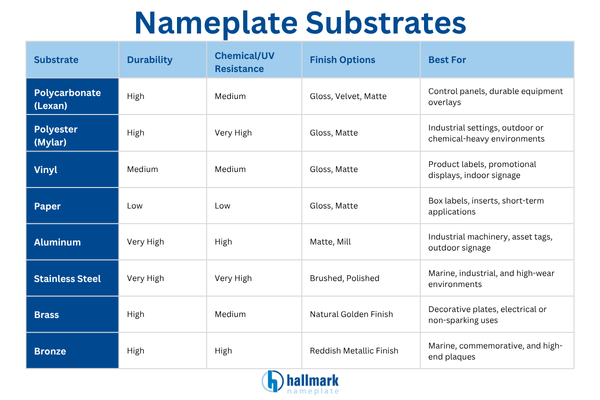
Let’s break down the five main types of nameplate substrates and how to pick the right one for your needs.
1. Substrate: Polycarbonate (Lexan)
If versatility is your top priority, polycarbonate, also known as Lexan, is your best friend. It’s one of the most commonly used substrates for both indoor and outdoor applications.
Why? Because it’s tough, adaptable, and can handle almost anything.
- Temperature Tolerance: Works across a wide range of temperatures without cracking or discoloration
- Flame Resistance: Rated from UL VTM-2 to UL94V0, making it suitable for applications where safety and compliance matter
- Finish Options: Choose between gloss, velvet, or matte for a customized look and feel
- Thickness Range: From .005” to .025”, depending on your design requirements
- Best For: Equipment overlays, durable control panels, and outdoor branding
Pro Tip: If you want a clear or textured finish that still holds up to wear and tear, Lexan delivers reliability without sacrificing aesthetics.
2. Substrate: Polyester (Mylar)
Looking for unbeatable resistance to chemicals or harsh sunlight? Go with polyester or Mylar.
Polyester is highly resistant to ultraviolet rays and is used in nameplates that are expected to stay outside in the sun. It also has a high tensile strength that allows the nameplate to be stretched and not break. The lightweight material is easy to cut while still being resistant to scratches and chemicals.
- Chemical and UV Resistance: Outperforms most plastics in harsh environments
- Durability: Maintains print clarity even after years of exposure
- Finish Options: Gloss or matte available
- Thickness Range: .003” to .010”
- Best For: Industrial settings, outdoor labeling, or chemical-heavy environments
Mylar substrate is built for performance in tough environments, factories, labs, or outdoor machinery. It resists fading, corrosion, and chemical degradation, maintaining its form and color even under stress.

3. Substrate: Vinyl
Need something that bends, literally, to your creative needs? Vinyl substrates are as flexible as your imagination.
This material can be produced as either rigid or flexible, giving you room to play with design and form. It’s highly customizable with various finishes and colors.
- Thickness Range: .004” to .030”
- Finish Options: Gloss or matte
- Application: Primarily indoor, but can be adapted for outdoor use with a UV overlaminate
- Best For: Product labels, promotional displays, or indoor signage where vibrant visuals matter
While vinyl may not be as rugged as metal, it’s ideal for projects needing eye-catching visuals at an affordable price point.
Destructible Vinyl
Destructible vinyl nameplates are used for special purposes like sealing cargo doors going through customs or door panels on electrical equipment, where you need to tell if an unauthorized person tried to break into an HVAC unit or cargo trailer. The vinyl nameplates are practically impossible to remove without tearing and breaking apart.
4. Substrate: Paper
If you’re producing high-volume items like packaging labels, flyers, or inserts and are looking to add pizzazz, paper substrates might be the perfect fit. While paper isn’t as durable as metal or plastic, it offers unmatched print quality and cost-efficiency for short-term or decorative applications.
- Available Weights: 60-pound to 100+ pound paper stock
- Customization: Full-color printing, gloss or matte coatings, and a variety of adhesive backings
- Best For: Box labels, promotional tags, or informational inserts
Paper substrates let you showcase creativity with vibrant colors and unique finishes, without the engineering complexity of other materials. While labels may seem simple, a manufacturer with in-house design and color experts can ensure every detail is perfect.
5. Substrate: Metal
When your application demands maximum durability, heat resistance, and a premium finish, metal substrates are the way to go. Metals not only deliver unmatched longevity, but they also provide a sleek, professional look that enhances your brand’s visibility.
Whether you need rugged identification plates for industrial equipment or elegant plaques for high-end products, metal nameplates offer a combination of strength, precision, and lasting appeal.

Here are your metal options.
Aluminum
Aluminum nameplates are typically used for metal appliances and machines since it is a cost-effective option over other metals, while having the versatility to mimic them, so you get the same look you want if you used the other metals.
Aluminum is also malleable, so it can easily be shaped into different designs. The graphics on aluminum nameplates outshine stainless steel in the sharpness of designs embossed onto the material.
They are more “rugged” and can withstand weather, abrasion, and corrosion while maintaining a clean, professional appearance.
- Thickness Range: .003” to .032”
- Finish Options: Matte or mill
- Durability: Pre-anodized for superior resistance to oxidation, corrosion, and fading
- Best For: Industrial machinery, asset tags, serial plates, or outdoor signage
Pro Tip: Pre-anodized aluminum adds an extra layer of protection, helping your nameplate look new even after years of exposure.
Stainless Steel
Stainless steel is extremely strong, long-lasting, tarnish-proof, and rust-resistant. Its durability and corrosion resistance make it a top choice for demanding applications.
- Composition: Mostly low-carbon steel with chromium; nickel, titanium, and molybdenum can enhance strength
- Thicknesses: .018”, .030”, .050”, .062”, .125”
- Grades: 304 series (common), 316 series (extra corrosion resistance)
- Best For: Industrial, marine, and high-use environments
Their strength and longevity set them apart from other metals.
Brass
Brass is an attractive and affordable alternative to classic gold nameplates. Made from a copper and zinc alloy, it’s corrosion-resistant and non-sparking, perfect for decorative and industrial uses.
- Thicknesses: .020”, .025”, .032”, .064”, .125”
- Finish: Natural golden hue
- Applications: Plumbing, electrical, and environments where sparks are a concern
- Best For: Decorative nameplates, functional signage, and non-sparking requirements
Brass nameplates combine aesthetic appeal with practicality.
Bronze
Bronze nameplates are rustproof, tarnish-proof, and highly resistant to saltwater corrosion. Composed mostly of copper and tin, bronze has a reddish tone and is both malleable and dense.
- Thicknesses: .032”, .064”, .125”
- Applications: Custom plaques, badges, signage, and marine environments
- Key Feature: Non-sparking and durable
- Best For: Seaside applications, high-end plaques, and marine or outdoor signage
Bronze offers longevity and a distinctive look that stands out.
Get High-Quallity Nameplate
The options available for your next nameplate project are aplenty, but that doesn’t mean that the decision-making process has to be confusing for you. We are leaders in the industry and make it our mission to walk you through the entire length of your project, and we won’t leave you wondering which substrate is best.
With more than 55 years of experience in the industry, we’re always thinking of all the options you have when it comes to designing your next nameplate. When it’s time to begin working on your next project, our team will be able to walk through the entire development process with you to ensure that your nameplate is created to suit your specific needs and applications.
Ready to get started? Contact Hallmark Nameplate today and bring your next project to life with precision, expertise, and quality that lasts.
Want to learn more? Read The Complete Guide to Custom Nameplates: Types, Materials, and Applications.