


How to Choose the Best Manufacturer for Nameplates, Overlays, PCBs, and Switches
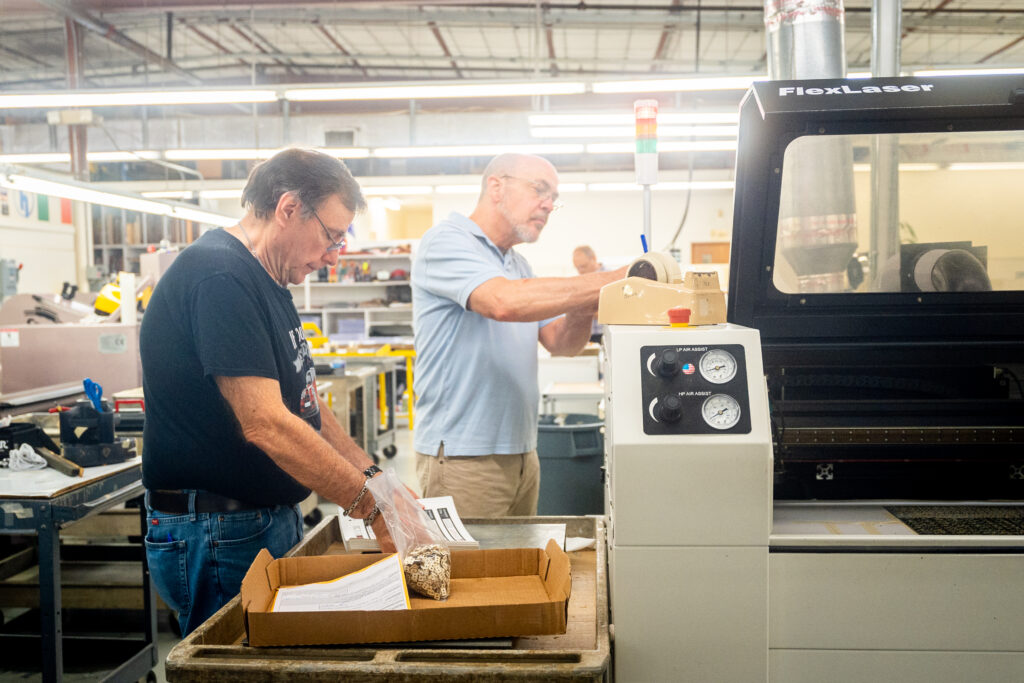
Get a FREE Product Sample Box!
Order a product sample box to feel the quality of our work before deciding to make a batch order.
When your products need to perform flawlessly, the manufacturer you choose can make or break your project.
Many businesses underestimate the impact of selecting the right partner, resulting in delays, costly revisions, or even product recalls. The proof is clear: companies that invest in top-tier manufacturers enjoy superior quality, faster turnaround, and fewer defects.
In this guide, we’ll walk you through everything you need to know to select the best nameplate manufacturer, graphic overlay manufacturer, PCB manufacturer, or membrane switch manufacturer, so your products are built to last.
Key Takeaways:
- The right manufacturer should understand your industry needs, whether medical, military, industrial, or consumer, to ensure materials and construction meet performance and compliance requirements.
- Reliable manufacturers conduct thorough inspections and testing, from X-ray and AOI to environmental and electrical tests, ensuring long-term durability and consistent product performance.
- Look for certifications like ISO 9001, ISO 13485, UL, and ITAR to confirm a manufacturer’s commitment to safety, quality, and industry standards.
- Your manufacturer should offer flexibility in materials, finishes, colors, and production volumes to meet specific design and functional needs.
Small but experienced manufacturers often provide faster turnaround, personalized support, and stronger relationships, without compromising on quality or compliance.
Why Choosing the Right Manufacturer Matters
Selecting the right manufacturer can make or break your product’s success. A skilled, reliable partner doesn’t just produce your parts; they help you maintain consistency, efficiency, and brand reputation.
In short, choosing the right manufacturer isn’t just a procurement decision; it’s a long-term investment in your product’s performance, profitability, and brand credibility.

Consistent Quality
Partnering with an experienced manufacturer ensures every product meets exact specifications and industry standards. These manufacturers follow stringent quality control procedures, using advanced inspection tools and standardized testing to detect defects early.
This consistency results in products that perform reliably under demanding real-world conditions, whether they’re exposed to heat, moisture, vibration, or daily wear. Consistent quality also reduces returns, warranty claims, and customer dissatisfaction, protecting your reputation and bottom line.
Faster Turnaround & Fewer Delays
Time is critical in manufacturing, and a skilled partner understands that delays can disrupt your entire supply chain. The right manufacturer leverages automation, streamlined workflows, and efficient scheduling to minimize bottlenecks and shorten production cycles.
Their experience allows them to anticipate potential issues and maintain clear communication, ensuring your products are delivered on time, even for complex or custom orders.
Reduced Costs Over Time
High-quality manufacturing isn’t just about precision; it’s about efficiency. A reliable manufacturer reduces waste through optimized material usage, accurate fabrication, and consistent processes that eliminate costly rework.
Over time, these efficiencies lower your overall production costs, reduce downtime, and extend product lifespan, ultimately providing a stronger return on investment.
Expert Guidance & Support
A dependable manufacturer is more than a production partner; they’re a valuable resource throughout your project’s lifecycle. Their expertise allows them to review your designs, recommend suitable materials, and identify opportunities to enhance durability or reduce costs.
This proactive collaboration can prevent costly redesigns, improve product performance, and accelerate your path to market.
Stronger Brand Reputation
Quality products build trust, and trust builds loyalty. When your customers know they can rely on your products, your brand reputation strengthens.
Partnering with a manufacturer that consistently delivers dependable, high-performing parts helps you maintain that trust across every order. In competitive markets, that reliability can be the key differentiator that keeps customers coming back and recommending your brand to others.
Things to Consider When Selecting a Manufacturer
Choosing the right manufacturer is about more than just price or location; it’s about finding a partner who can deliver quality, reliability, and expertise. The wrong choice can lead to delays, costly defects, or products that fail to meet regulatory or performance standards.
In this section, we’ll break down the key factors to evaluate before committing to a manufacturer. From certifications and technology to customization capabilities and team experience, these considerations will help you make an informed decision and ensure your products perform flawlessly every time.
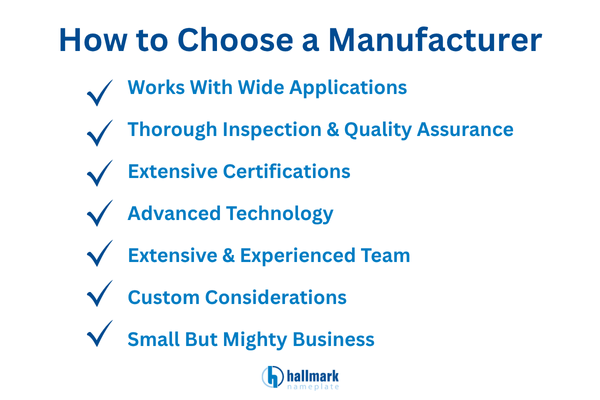
1. Wide Applications
Choosing the right manufacturer starts with understanding how your product will be used. Applications dictate materials, manufacturing techniques, and quality standards.

Medical Facilities
Healthcare products face extreme demands. Surfaces are cleaned with powerful disinfectants multiple times daily. Nameplates, overlays, and switches must resist chemicals while remaining durable.
A qualified nameplate manufacturer or graphic overlay manufacturer will provide materials tested for chemical resistance. For instance, polycarbonate overlays with UV coating can survive repeated sterilization without yellowing.
A poorly selected overlay can peel, fade, or fail in just weeks, compromising safety and reputation.
Manufacturers with experience in healthcare applications also provide documentation of compliance with FDA standards, ISO 13485, or medical-grade material specifications. This proof ensures you’re sourcing components that meet strict regulatory requirements.
Military Technology
Military-grade electronics face extreme heat, humidity, vibration, and impact. A PCB manufacturer or membrane switch manufacturer must meet MIL-STD specifications to guarantee reliability.
- Shock and vibration testing: Ensures components survive transport and operational conditions
- Temperature cycling: Confirms performance across a broad range of temperatures
- Electromagnetic compatibility testing: Prevents interference with sensitive military systems
Always request past case studies or references for military-grade production; they show the manufacturer’s capability in demanding environments.
Industrial & Manufacturing Equipment
In factories and production facilities, equipment faces continuous operation, high heat, dust, and mechanical wear. Durable nameplates and overlays are essential for labeling controls, identifying machinery, and providing safety instructions that remain readable for years.
An industrial-grade nameplate manufacturer will use materials like anodized aluminum or stainless steel for long-term durability, along with industrial adhesives rated for extreme temperatures and exposure.
Look for manufacturers offering chemical etching, laser engraving, or sub-surface printing; these methods prevent fading or abrasion in high-use environments.
Aerospace & Transportation
Aerospace and transportation applications require components that perform reliably in motion and at altitude. Lightweight materials, flame resistance, and vibration tolerance are critical.
A trusted PCB manufacturer or graphic overlay manufacturer for aerospace systems will use low-weight substrates, conductive adhesives, and precision assembly techniques. These ensure safety and long-term performance in aircraft, vehicles, or navigation systems.
Ask about compliance with AS9100, ITAR, or FAA-relevant standards to confirm the manufacturer’s aerospace-grade expertise.
Consumer Electronics & Smart Devices
Consumer and smart devices require sleek, responsive, and visually striking components. Whether it’s a backlit membrane switch or a printed control overlay, precision and aesthetics matter as much as function.
A membrane switch manufacturer specializing in consumer applications will offer custom tactile feedback options, LED integration, and color-matched overlays that align with your brand identity.
Consumer electronics have an average failure rate of 2.5%. While that seems like something that can be overlooked, you can damage customer trust and increase returns, costing your business.
Architectural & Construction
Architectural and construction projects require components that are both durable and visually striking. Nameplates, signage, and control panels must withstand daily wear, environmental exposure, and heavy traffic.
A qualified nameplate manufacturer or graphic overlay manufacturer will recommend materials like anodized aluminum, polycarbonate, or high-grade acrylic for long-lasting performance indoors and outdoors.
Experienced manufacturers can handle custom shapes, finishes, and engraving, giving your designs a premium, tailored look without sacrificing function. As well as add UV coatings, anti-graffiti finishes, or fire-rated substrates to protect both appearance and performance in demanding environments.
General Business Use
Even everyday consumer products require precise finishes. A graphic overlay manufacturer that provides sharp graphics, vibrant colors, and consistent registration ensures your branding looks professional.
A versatile manufacturer can handle both high-volume industrial runs and smaller, custom orders. This flexibility can save you time and money while maintaining quality.
2. Thorough Inspection & Quality Assurance
Quality control is the backbone of a reliable manufacturer. It’s not enough to produce components; consistent quality ensures your product functions as intended.
Testing is proof that a manufacturer stands by their work. It demonstrates reliability under the conditions your product will face.
20-30% of manual inspections have errors, which is why it is not enough for manufacturers to visually check the product, but to use high-tech testing.
Reliable testing helps you avoid costly field failures and recalls, saving both money and reputation.
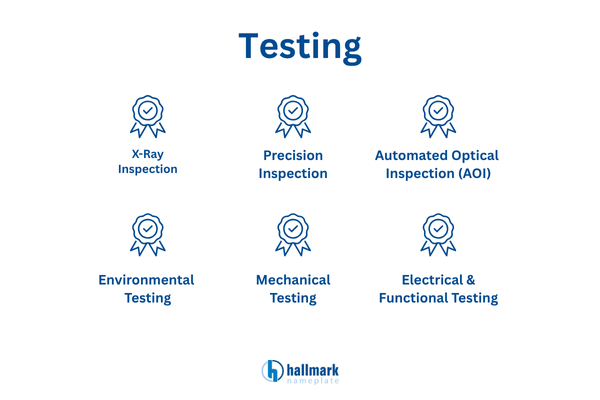
X-Ray Inspection
X-ray systems allow PCB manufacturers to detect hidden defects, such as solder voids, misaligned vias, or internal short circuits. Defects invisible to the naked eye can lead to catastrophic product failures.
Precision Inspection
For nameplates and overlays, precision inspection measures dimensions, registration, and adhesion accuracy. This ensures graphics align perfectly and the product fits the intended equipment.
Auto Optical Inspection (AOI)
AOI automates defect detection for both PCBs and membrane switches, catching visual errors faster than manual inspection. Don’t overlook this step; automated inspection drastically reduces human error, ensuring consistency and repeatable quality.
Environmental Testing
Manufacturers may subject components to extreme temperatures, humidity, or UV exposure. This ensures overlays don’t fade, membranes maintain tactility, and PCBs function across temperature ranges.
Mechanical Testing
Repetitive presses, bending, or vibration tests simulate real-world use for membrane switches and nameplates.
Electrical and Functional Testing
PCBs and switches are subjected to current, voltage, and continuity testing. A PCB manufacturer or membrane switch manufacturer should provide detailed test reports.
3. Extensive Certifications
Certifications are more than just credentials; they reflect a manufacturer’s commitment to quality, safety, and industry standards.
Partnering with a certified nameplate manufacturer, graphic overlay manufacturer, PCB manufacturer, or membrane switch manufacturer ensures your products meet regulatory requirements, reduce the risk of recalls, and instill confidence in your clients.
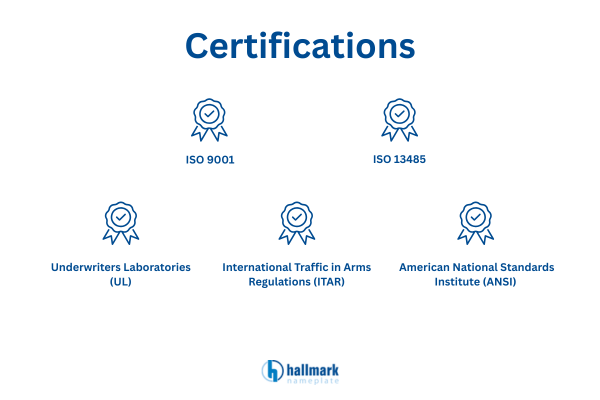
ISO Certifications
- ISO 9001: A global standard for quality management systems. It ensures the manufacturer has consistent processes in place to deliver high-quality products.
- ISO 13485: Specific to medical device manufacturing. Essential if you’re sourcing overlays, membrane switches, or PCBs for healthcare applications. This certification confirms compliance with medical safety standards and regulatory requirements.
Industry-Specific Certifications
- UL (Underwriters Laboratories): Ensures your electronic components meet safety and fire-resistance standards. Critical for PCBs and membrane switches in consumer electronics and industrial equipment.
- ANSI (American National Standards Institute): Confirms compliance with U.S. performance and safety standards, particularly for mechanical or tactile components.
- ITAR (International Traffic in Arms Regulations): Required for manufacturers producing defense-related components. ITAR compliance ensures the secure handling of sensitive military designs and materials, safeguarding national security.
4. Advanced Technology
In today’s competitive market, a manufacturer’s technology directly impacts product quality, precision, faster delivery, and consistency. Choosing a nameplate manufacturer, graphic overlay manufacturer, PCB manufacturer, or membrane switch manufacturer with advanced technology ensures your components meet exacting standards and look flawless.

UV Digital Printer
UV digital printing uses ultraviolet light to cure inks directly onto the substrate. This method is ideal for graphic overlays and nameplates requiring vibrant colors and intricate designs.
Benefits:
- High-resolution, photo-quality graphics
- Resistant to fading, scratching, and chemicals
- Compatible with a wide variety of substrates, including polycarbonate, acrylic, and metal
UV printing is perfect for applications where brand visibility and visual appeal are critical, such as control panels, consumer electronics, or medical devices.
Flatbed Digital Printing
Flatbed printers allow manufacturers to print directly onto rigid materials without the need for transfer films. This is commonly used for nameplates, overlays, and signage.
Benefits:
- Prints on thick or irregular substrates
- Enables complex, multi-color designs
- Reduces setup time and waste compared to traditional methods
Flatbed printing ensures every label, overlay, or panel looks exactly as intended, even on unusually shaped surfaces.
Screen Printing
Screen printing is a traditional but highly versatile method, especially for high-volume production of graphic overlays, membrane switches, and nameplates.
Benefits:
- Excellent durability and opacity
- Ideal for tactile surfaces or textured substrates
- Cost-effective for large production runs
Screen printing works well when durability is more important than photographic detail, such as industrial panels, outdoor signage, or heavy-use switches.
Laser Cutting and Fabrication
Laser technology allows manufacturers to cut, engrave, or etch materials with extreme precision. This is vital for PCBs, membrane switches, and custom overlays.
Benefits:
- Highly precise cuts for complex shapes or tight tolerances
- Minimal material waste and clean edges
- Enables engraving, marking, and perforations on virtually any material
Laser cutting ensures perfect alignment of holes, edges, and features, essential for components that must fit machinery or electrical assemblies exactly.
5. Extensive & Experienced Team
When choosing a manufacturer, experience matters just as much as equipment. A company’s track record often speaks louder than its capabilities on paper.
The best nameplate manufacturers, graphic overlay manufacturers, PCB manufacturers, and membrane switch manufacturers have teams that combine decades of expertise with cutting-edge innovation.
An experienced team understands how to navigate the unique challenges of your project, from complex material specifications to tight deadlines and compliance requirements. They’ve seen it all and know how to prevent problems before they happen.
Decades of Proven Experience
With decades of experience serving clients worldwide, established manufacturers bring deep expertise across industries like aerospace, medical, and industrial equipment.
It means consistent quality, reliable delivery, and solutions built on decades of proven success. A long-standing manufacturer has mastered materials, compliance standards, and production techniques, saving you time, cost, and stress.
Reputation & Reviews
Experience should come with proof. Reputable manufacturers showcase their success through client reviews, case studies, and testimonials that highlight:
- On-time delivery
- Superior product quality
- Strong customer relationships
A trustworthy manufacturer doesn’t just claim excellence; they have satisfied clients who confirm it.
6. Custom Considerations
Not every manufacturer can meet unique design requirements. Choose a manufacturer willing to adapt to your exact specifications without compromising quality.
Custom materials and finishes
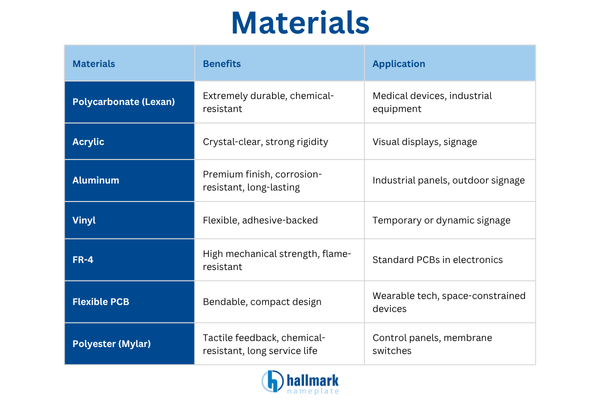
The materials you choose directly impact durability, appearance, and functionality. Your manufacturer should advise on the best option for your specific application and be able to provide it.
Nameplates and Overlays
- Polycarbonate: Extremely durable, chemical-resistant, ideal for medical or industrial environments
- Acrylic: Crystal-clear appearance, strong rigidity, excellent for visual displays
- Aluminum: Offers a premium finish, corrosion resistance, and longevity
- Vinyl: Flexible and adhesive-backed, great for temporary or dynamic signage
Using the wrong substrate can lead to fading, peeling, or mechanical failure under normal use conditions.
PCBs and Membrane Switches
- FR4 (PCB substrate): High mechanical strength, flame-resistant, and widely used
- Flexible PCBs: Allow bending for compact designs and wearable technology
- Polyester or polycarbonate (membrane switches): Provides tactile feedback, chemical resistance, and long service life
A capable PCB manufacturer or membrane switch manufacturer will recommend materials based on electrical, mechanical, and environmental requirements.
Colors
Color is more than aesthetics; it’s part of usability, branding, and user experience.
- Color Matching: Ensures brand consistency across products. Critical for logos, overlays, and control panels.
- Color Control: Maintains uniformity across production runs, even for multi-batch projects.
The right color choices can influence perception, usability, and engagement. For example, red may signal warnings on control panels, while green indicates safe operation.
A manufacturer experienced in color management can help you maintain precise brand colors and functional color coding across all components.
Unique Designs
Some projects require unusual shapes, patterns, or layered functionality. A flexible manufacturer can:
- Produce custom contours, cutouts, and tactile designs for membrane switches or overlays
- Combine multiple materials or finishes for complex visual or functional effects
- Implement innovative features like backlighting, embossing, or textured surfaces
Manufacturers that support unique designs allow your product to stand out while meeting functional requirements, critical in competitive markets like industrial controls, medical devices, or military equipment.
Even better, they should have a full-service in-house design team that can work side-by-side with engineers to optimize your design for durability and performance while ensuring it visually aligns with your brand.
Flexible Production Volumes
Customization isn’t just about materials or design; it also applies to production scale. Your manufacturer should handle:
- Prototypes: Rapid development and testing to validate designs and functionality before committing to mass production
- Small Batches: Limited runs for specialized applications or early market testing
- Mass Production: High-volume orders with consistent quality, precise color control, and rigorous quality assurance
Choosing a manufacturer capable of scaling production ensures that, whether you’re launching a prototype or mass-producing for global distribution, quality and consistency remain uncompromised.
7. Small But Mighty Business
Many people assume that bigger is better when selecting a manufacturer. However, smaller, specialized companies often provide advantages that larger corporations cannot match.
Partnering with a smaller nameplate manufacturer, graphic overlay manufacturer, PCB manufacturer, or membrane switch manufacturer can lead to better service, faster turnaround, and stronger relationships.

Long-Lasting Relationships
Smaller manufacturers place a high value on each client. You’re not just another order number; they focus on building long-term partnerships.
This means:
- Personalized support and attention throughout your project
- Dedicated points of contact who understand your specifications
- Greater consistency and reliability in production and communication
Strong relationships make troubleshooting, design adjustments, and future projects far easier and more efficient.
Exclusive Attention
A small business is more likely to prioritize your project over others. Unlike large corporations that juggle hundreds of clients, a smaller manufacturer can offer:
- Priority scheduling for your production runs
- Exclusive solutions tailored to your unique needs
- Flexibility to adapt processes or materials for specialized requirements
Exclusive relationships can translate into higher quality and more responsive service throughout the production lifecycle.
Greater Customer Leverage
Working with a smaller manufacturer gives you more influence over the production process. You can:
- Suggest modifications to improve design or functionality
- Request specific materials or custom finishes
- Influence scheduling, quality control measures, and testing procedures
Greater leverage ensures your project is handled exactly the way you want, reducing errors and enhancing overall product performance.
Turnaround Time & Production Volume
Your project’s timeline is just as important as quality. Reliable small manufacturers:
- Deliver prototypes quickly for testing and approval
- Maintain consistent quality across large production runs
- Provide contingency plans for urgent orders
Small businesses often have leaner processes and more agile workflows. This flexibility allows them to respond quickly to changes or custom requests, giving you a significant advantage over slower, larger competitors.
Cost Considerations
Price is important, but don’t let it override quality.
- Evaluate the total cost of ownership, not just the unit price
- Consider the potential costs of defects, rework, and recalls
- Balance between price, quality, and customization flexibility
Cheaper isn’t always better. Investing slightly more in a reputable small manufacturer often saves money in the long run, reducing costly delays and product failures.
Questions to Ask Before Selecting a Manufacturer
Before you sign on the dotted line, asking the right questions separates a capable manufacturer from a great one. Whether you’re working with a nameplate manufacturer, graphic overlay manufacturer, PCB manufacturer, or membrane switch manufacturer, use the checklist below to vet your partner.
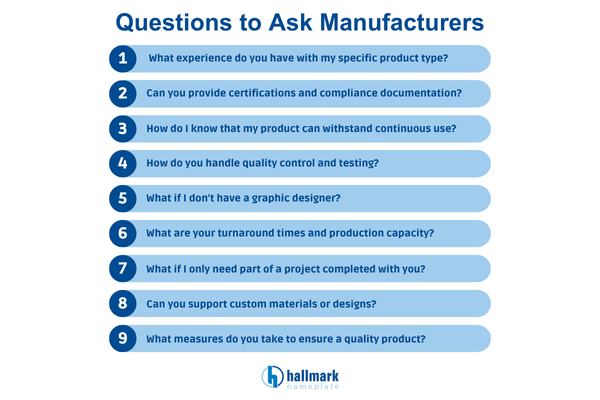
1. What experience do you have with my specific product type?
You’ll want a manufacturer who has produced components like yours, nameplates, overlays, PCBs, or switches before.
Experience means they’ve tackled the challenges you’re likely to encounter. Ask for case studies or samples of similar work.
2. Can you provide certifications and compliance documentation?
Certifications like ISO 9001, ISO 13485, ITAR, or UL approval signal that your partner has formal processes in place, which is important for medical, military, or industrial-grade applications.
Request copies of current certification documents; outdated or missing certifications are red flags.
3. How do I know that my product can withstand continuous use?
Durability is key, especially for overlays in high-use environments or switches rated for millions of actuations. For example, some manufacturers have membrane switches that are designed to endure over 5 million actuations.
Ask for sample parts so you can see the quality for yourself.
4. How do you handle quality control and testing?
You should understand the manufacturer’s inspection and testing protocols: what they inspect, how they measure defects, and how often they audit.
A strong manufacturer will walk you through their QC workflow and provide documentation or in-process inspection reports.
5. What if I don’t have a graphic designer?
Some manufacturers provide in-house design support, helping you create artwork, match brand colors, and optimize overlays or graphics for durability and visual clarity.
If you need design assistance, ensure the manufacturer can handle design, proofing, and production all in one place.
6. What are your turnaround times and production capacity?
Your timeline matters as much as quality. You’ll need to know: how long prototypes take, typical production lead-times, what their capacity is for large runs, and how they handle rush jobs.
Get a realistic schedule and understand any potential bottlenecks or minimum-order requirements.
7. What if I only need part of a project completed with you?
Sometimes you may need just one component (e.g., overlays) rather than the full assembly. A flexible partner will support partial engagement or phased production.
Ask about modular services and if they can handle a single part of the job and integrate smoothly with other vendors.
8. Can you support custom materials or designs?
If your product demands unique substrates, finishes, or tactile features (e.g., for a membrane switch or specialized nameplate), ensure the manufacturer has the capability and willingness to customize.
Look for manufacturers who offer options like polycarbonate, flexible PCBs, or specialty coatings and who are open to working with unusual specifications.
9. What measures do you take to ensure a quality product?
This is your final checkpoint. Ask about certifications, inspection processes, sample production, failure rates, corrective actions, and how they track quality over time. For example, some manufacturers emphasize design to end-use durability and a strong quality culture.
A reputable manufacturer will provide transparent answers, show you proof, and address what they do when things don’t go perfectly.
Want some of your questions answered? Our team put together a couple of answers.
Work With The Best Manufacturer
Transitioning from research to selection is crucial. You now understand the factors that make a manufacturer trustworthy: quality, materials, testing, certifications, customization, and communication.
Ask yourself, is your current supplier delivering the precision, reliability, and expertise your products deserve? If not, it’s time to partner with a manufacturer that elevates your brand and ensures every component performs flawlessly.
Contact us today to explore our full range of manufacturing solutions. From nameplates and overlays to PCBs and membrane switches, we deliver precision, quality, and reliability tailored to your project needs.