


There probably isn’t a business person anywhere who doesn’t believe that when it comes to their product or service, achieving quality is one of their primary goals. If not their only goal. After all, when you have a quality product, the world will beat a path to your door, right?
The trouble with this philosophy is that although there isn’t a lot of debate when a business achieves the lofty goal of producing a quality product, how do you get to that stage? How do you go from having a product that might be, let’s say less than stellar into one that really knocks the competition out of the park?
The answer to this dilemma is quality control.
The trouble is how do you take that concept and make it real? How do you take it from a philosophy to a quantitative reality?
Employ a method that turns the idea into a rigorous methodology employed by a company to ensure consistent quality of products.
What is Quality Control & How Do You Implement It?
Quality control (QC) is actually only one part of an overall quality management program. The other element is quality assurance, which is the part of management that focuses on the fulfillment of quality requirements. Quality control, on the other hand, is the part of management that focuses on fulfilling quality requirements.
Quality assurance is the aspect that sets up how a process is performed and a product is made. Whereas quality control is aimed more at the inspection aspect of overall quality.
ERP Systems Boost Quality Control
Set the standard for quality control with robust enterprise resource planning (ERP) with quality assurance to deliver the highest quality.
This approach will ensure that you have the tools needed to effectively manage your quality objectives. Your ERP will lead to a QC program that will ensure that products are defect-free and are of better quality.
Why is Quality Control Important?
Happier Clients
It is difficult, if not impossible, to separate quality products from happy customers. This is why it is so important to pay close attention to ERP and quality control program implementation.

Furthermore, these steps should be implemented at every stage of the production process–from design to distribution. These systems also allow teams to better monitor all systems and sub-systems in the production cycle.
Better Workflow & Reduced Costs
Not only can forecasts be produced more accurately, but the resulting workflow is also smoother and costs less. Good ERP provides more and better business analytics that can more quickly and easily pinpoint problems in the production process. This allows for better decision-making and reduces costs.
In fact, according to one recent study, better information about business operations that allow for smarter decisions can account for nearly 23% lower production costs and 22% in administrative costs.
Compliance
Quality control that begins with the ERP stage results in keeping regulations. An ERP ensures you meet standards whether implemented by the company or regulatory agencies. An example of these is the standards that agencies such as OSHA health and safety standards.
A good ERP and quality control program prevents workplace hazards and also facilitates related reports. This also creates the ability to create and implement safety testing procedures that more accurately fit the needs of individual businesses as opposed to more generalized testing.
Customer Loyalty
When you implement effective quality management programs, better products result. Which can only end up with better and repeat customers. Even better, these benefits will accrue over time.
Manufacturers can make customers even happier by providing them with the quality control information on the products they purchase. This results in the perception of total commitment to the quality of the product and the resulting satisfaction of the customer.
Produce Quality Products with Hallmark Nameplate
Want to begin producing top-notch quality controlled products? We are here to help!
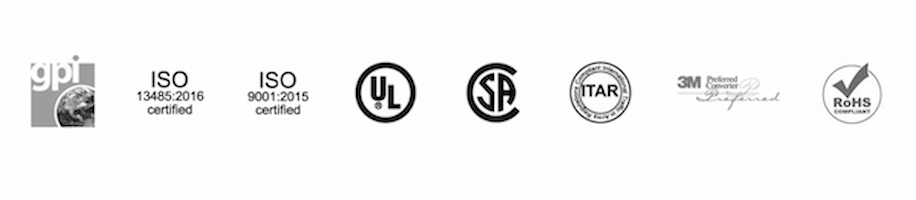
At Hallmark Nameplate we infuse quality into every stage of each process without increasing costs to the client. Through automated optical inspections (AOIs) we ensure our PCB assembly and fabrication meets all standards.
To learn more about our quality control management or request a quote visit our website.
Frequently Asked Questions About Quality Control
What is quality control?
Quality control is the set of operational activities used to verify that a product meets its specified requirements. It includes incoming material inspection, in-process checks, final inspection and test, measurement and calibration, documentation of results, and corrective action when a nonconformance is found.
Why is quality control important?
Quality control catches defects before they reach the customer, where the cost of failure is highest. It reduces scrap and rework, protects on-time delivery, supplies the documented evidence regulated industries require, and prevents the field failures and recalls that damage both cost structure and reputation.
Why is quality control important in business?
Consistency is what customers actually buy in B2B relationships. A controlled process produces predictable lead times, stable yields, and parts that fit the first time, which lowers total cost of ownership for the buyer and makes a supplier worth keeping rather than requalifying.
Why would a business review testing results to refine its quality control process?
Because test data shows where defects actually originate. Reviewing results identifies recurring failure modes, distinguishes common-cause variation from special causes, and directs corrective action at the process step responsible rather than at the inspection that caught it. That is what shifts a quality system from detection to prevention.
What is the difference between quality control and quality assurance?
Quality control is product-focused and detective: it inspects and tests output to confirm conformance. Quality assurance is process-focused and preventive: it establishes the procedures, training, and controls that make conforming output likely. ISO 9001 registration addresses the assurance system; inspection records address control.
What is the purpose of quality control inspection records?
Records provide traceability. They document what was measured, when, by whom, against which revision, and with which calibrated equipment. That evidence supports warranty investigation, regulatory audit, and root cause analysis, and in aerospace, defense, and medical work it is a contractual deliverable.
What are the key elements of an effective quality control program?
Clear written specifications and acceptance criteria, calibrated measurement equipment, trained inspectors, defined sampling or 100 percent inspection plans, documented records, a closed-loop corrective action process, and management review of the resulting data on a regular cadence.