

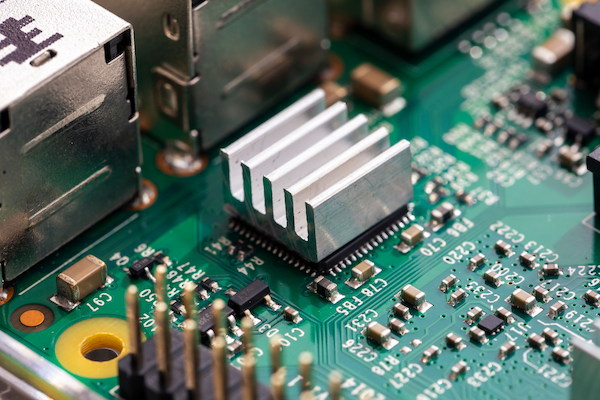
Surface mount technology (SMT) revolutionized the electronics industry by allowing for the creation of smaller, faster, and more reliable devices. Unlike traditional through-hole assembly, the SMT process directly mounts components onto the surface of a printed circuit board (PCB), streamlining production and boosting efficiency.
SMT plays a pivotal role in modern manufacturing, from consumer gadgets to industrial machinery. In this blog, we will dive into the fundamentals of SMT, explore its advantages, outline the SMT process, and explain why it’s a game-changer for original equipment manufacturers (OEMs).
Let’s uncover how SMT shapes today’s electronics!
What is Surface Mount Technology (SMT)?
Surface Mount Technology, also called Planar Mounting, emerged during the 1960s and 1970s as electronics manufacturers sought more efficient ways to assemble components onto circuit boards. Traditional through-hole methods, which required drilling and manual insertion of components, were time-consuming and limited in their ability to support miniaturization.
In 1960, IBM became the first to apply surface mount technology in a small-scale computer system that later guided the Saturn IV and Saturn V vehicles.
SMT revolutionized the industry by enabling components to be placed directly onto the PCB surface. By the 1980s, SMT gained widespread adoption. This fueled the growth of compact consumer electronics like personal computers and mobile devices.
Advantages of SMT
As mentioned above, Surface Mount Technology has revolutionized electronics manufacturing with its efficiency and precision. So, let’s explore the key advantages that make SMT the preferred choice for modern electronic assembly.
- Compact Design: The SMT process places components directly on the PCB, significantly reducing the size and weight of electronic devices.
- Improved Performance: Shorter electrical paths minimize resistance and inductance to improve performance and signal integrity.
- Cost Efficiency: Automation reduces labor costs and speeds up production. SMT also uses smaller components, which often cost less.
- High Component Density: SMT enables more components to fit onto a PCB, allowing for advanced functionality in smaller spaces.
- Reliability: SMT provides better resistance to vibrations and shocks, making it ideal for industries that need durable electronics.
SMT vs SMD
Surface Mount Devices (SMD) are closely related to SMT but are distinct concepts. We know that SMT refers to the manufacturing process of mounting electronic components directly onto the surface of a printed circuit board.
SMD, on the other hand, refers to the actual components designed for SMT. While SMT is the method, SMDs are the parts—such as resistors, capacitors, and microchips—that attach to the board.
When put together, SMT and SMD revolutionize electronics manufacturing by creating smaller, more reliable products.
The 5 Main Steps of the SMT Process
In order to make sure components are accurately and securely placed on the PCB, the SMT process involves several key steps. Generally, the process can be categorized into three stages: solder paste printing, components placement, and reflow soldering.
However, to provide a more detailed explanation of the manufacturing process, we’ve outlined the five main steps.
1. SMC and PCB Preparation
The first step involves preparing both the Surface Mount Components (SMCs) and the printed circuit board. In this phase, the components are selected and the PCB is designed.
The PCB is thoroughly cleaned to remove dust, oils, or other contaminants that could interfere with the soldering process. Any oxidation on the board’s surface is removed to ensure proper adhesion of the solder paste.
Meanwhile, SMCs are sorted, inspected, and prepared for assembly. This stage also involves verifying component placement through design files to maintain compatibility and alignment.
2. Solder Paste Printing
Next, a thin layer of solder paste is applied by a printer to the PCB in specific areas where components will sit. This is accomplished using a stencil that matches the circuit design, ensuring precision in the application.
The paste is a mixture of powdered solder and flux, designed to hold components temporarily in place and establish a reliable electrical connection once heated. The quality and accuracy of this step are critical for strong bonds and minimizing defects later.
3. Placing the Components
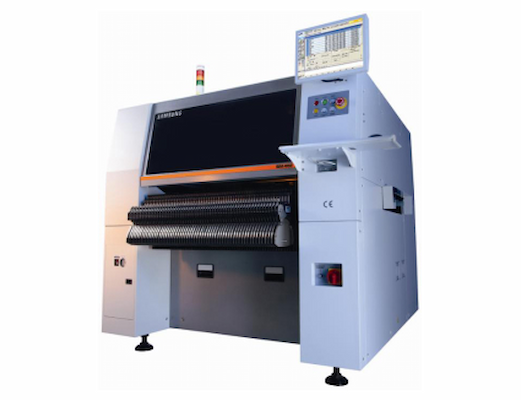
In this stage, a high-speed pick-and-place machine positions the components onto the solder-pasted areas of the PCB. These machines use advanced vision systems to detect, align, and place components with incredible precision. Some machines can operate at speeds up to 200,000 components per hour!
Because even minor misalignments can cause connectivity issues during soldering, this step demands incredible accuracy.
4. Reflow Soldering
After placing the components, the assembled PCB passes through a reflow oven, where it is subjected to carefully controlled heat profiles. This heat melts the solder paste, forming a solid bond between the PCB and the components.
The oven gradually heats the board to avoid thermal stress, then cools it down to solidify the connections. Reflow soldering forms a durable and reliable bond that can withstand the rigors of operation.
5. Cleaning and Inspection
After soldering, the board undergoes cleaning to remove flux residues and other contaminants. Next, the inspection process follows, which may involve automated optical inspection (AOI), X-ray testing, or manual checks. These techniques verify that components are correctly placed, solder joints are secure, and no defects exist, such as bridges or open circuits.
As you can see, the SMT process guarantees that PCBs meet the high standards required for modern electronics. Each step is a vital link in creating reliable and efficient devices.
The Future of SMT
With the demand for smaller, more powerful electronic devices, the future of SMT will evolve to accommodate ultra-miniature components and multi-functional PCBs. Automation, including AI and machine learning, will enhance precision in component placement and defect detection to improve efficiency and reduce errors.
Additionally, the electronics industry is exploring eco-friendly materials and processes to address environmental concerns. These innovations will ensure SMT remains vital in the rapidly evolving electronics landscape.
SMT Solutions Tailored for Your Business
As you can see, Surface Mount Technology has transformed how electronic devices are manufactured, delivering efficiency, precision, and adaptability. From the careful preparation of components and PCBs to the high-tech processes of solder paste application, reflow soldering, and inspection, SMT ensures reliability and performance. With its evolving potential to meet modern demands, SMT remains at the forefront of innovation.
Looking for a trusted partner for surface mount technology assembly? Hallmark Nameplate offers comprehensive PCB assembly manufacturing services using advanced SMT processes for OEM customers.
At Hallmark Nameplate, we are proud to support your manufacturing needs with expert solutions and unmatched quality. Let us help you stay ahead—visit our website for a free quote today!
Want to learn more? Read our complete guide to PCBs and electronic assembly.
Related Resources from Hallmark Nameplate
- X-ray inspection for PCB assemblies
- PCB manufacturing and assembly in the USA
- The PCB assembly process
- SMT vs. THT assembly
- What a box build is
- Wave soldering vs. selective soldering
Frequently Asked Questions About the SMT Process
What is SMT (Surface Mount Technology)?
Surface mount technology is a method of assembling electronic circuits in which components are soldered directly onto the surface of a printed circuit board, rather than having leads inserted through drilled holes. It is the dominant assembly method in modern electronics because it allows far smaller components, higher density, double-sided placement and full automation.
What are the steps in the SMT process?
The line runs in a fixed sequence. Solder paste, a suspension of solder alloy particles in flux, is screen-printed onto the board pads through a laser-cut stencil. Pick-and-place machines position components onto the wet paste at high speed. The board passes through a reflow oven on a controlled thermal profile that melts the paste and forms the solder joints. Automated optical inspection checks placement and joint quality, with X-ray inspection used for joints hidden beneath BGA and QFN packages. Electrical test confirms function. Boards with mixed technology then go through a separate through-hole and selective soldering operation.
What is an SMT machine?
SMT machine usually refers to the pick-and-place machine, the centrepiece of the line. It uses vacuum nozzles and vision systems to pick components from reels, trays or tubes and place them on the board to tight positional tolerance at rates reaching tens of thousands of placements per hour. In broader use the term can cover the whole line, including the stencil printer, reflow oven and inspection systems.
What is the difference between SMT and through-hole assembly?
Through-hole components have wire leads inserted through drilled holes and soldered on the opposite side, producing a strong mechanical bond well suited to connectors, transformers and parts that take physical stress. Surface mount components sit on pads on the board face with no hole required, allowing much smaller packages, components on both sides and full automation. Most boards today are mixed technology: surface mount for the bulk of the circuit, through-hole where mechanical strength or high current demands it.
What is SMT in manufacturing?
In a manufacturing context SMT describes both the technology and the production line built around it. An SMT line is a sequence of linked machines, printer, placement, reflow and inspection, run as a single flow with controlled setup, feeder management and process monitoring. Capability is usually described by the number of lines, placement rate, minimum component size the line can handle, and the inspection methods available.
What are the most common SMT defects?
The recurring ones are solder bridging between adjacent pads, usually traced to excess paste or stencil misalignment; tombstoning, where a small two-terminal component lifts at one end because the two joints wet at different times; insufficient or starved joints; voiding within joints, most consequential under thermal pads and BGAs; and component misplacement or rotation. The majority originate in paste printing rather than placement, which is why stencil design and printer setup receive disproportionate attention on a well-run line.
Who provides SMT assembly services in the USA?
Hallmark Nameplate provides surface-mount, through-hole and mixed-technology PCB assembly in the United States for industrial, medical, aerospace and defense OEMs, including automated optical and X-ray inspection, electrical test and full box build. We are ISO 9001 certified, ISO 13485:2016 certified for medical devices, and ITAR registered, and we support prototype through sustained production volumes from our Florida facility.