

What an ISO 9001 Certification Is and What It Means to You and Your Business
When evaluating companies that provide nameplates and manufacturing services, quality is one of the most important factors in your decision. Savvy buyers look beyond basic claims by reading reviews, seeking recommendations, and carefully researching potential partners.
That’s because they know that the presence or absence of quality management within an organization affects everything they do.
Your business runs best when it’s partnered with vendors who understand this.
Late shipments or inferior products mean delays that you, as a business leader, cannot afford.
That’s why when you’re looking for a manufacturing partner, you want one that is ISO 9001 Certified.
What is the ISO?
The ISO is the International Organization for Standardization. As a business leader, you know the importance of standardization. When clear policies and procedures are in place, your organization runs more smoothly.
Without strict international standards, companies that buy goods and services within the global marketplace would not know what they are buying and what to expect from the company. They must know this whether the company is in Hong Kong or the middle of America. The ISO researches, collaborates with industry experts, and establishes standards across industries. Independent accredited certification bodies, not ISO itself, certify that companies are meeting those standards.
What is an ISO 9001 Certification?
It is important to understand what ISO 9001 is and the standard that it sets. ISO 9001 is the certification that specifies the requirements for establishing quality management systems that exceed industry standards worldwide.
It applies to all levels of the organization, from executive leadership to entry-level employees and contract labor.
Organizations that utilize this standard do so in order to demonstrate competency in providing products and services that meet customer needs at a high level and provide real benefits. Of all the standards in the ISO 9000 series, it is by far the most used and the most popular.
Understanding the Benefits of ISO 9001 Certification
When a company is ISO 9001 certified, it means its quality management system has been audited and verified against the ISO 9001 standard. In a nutshell, being ISO 9001 certified simply means that an organization or company has fulfilled all requirements in ISO 9001.
An organization that can demonstrate competency within a Quality Management System (QMS) with a focus on meeting or exceeding customer expectations is a strong candidate for accreditation.
Improved Customer Satisfaction
The goal of meeting ISO 9001 requirements should be to deliver 100% customer satisfaction in all areas of operations. This would include creating quality products, prompt deliveries, fair pricing, effective and regular communication, and establishing a smooth process that the customer can easily understand.
Willingness to Improve
It also includes a willingness and plan of action for improving all areas of the company, including facilities, staffing, and production.
Continuous evaluation and improvement demonstrate to the customer that you value their business and the product that you are selling. Improved customer satisfaction benefits all parties involved, including the company, its employees, partnerships, and customers.
Regulation Compliance
ISO 9001 also ensures that a company is meeting all legal and industry regulations in order to maintain safety and security in all daily work procedures. It benefits the company as well as all those who are interested in the company’s products.
Comparing ISO 9001 Quality Management to Basic Management Systems
How does 9001 quality management compare to general management systems? While there are similarities, ISO 9001 focuses specifically on quality management processes that improve customer satisfaction and operational consistency.
It helps companies zero in on more narrow areas in an attempt to win over and keep loyal clients in the long run. It is part of a much larger package that an organization can use to establish its reputation in the community.
What Professional Areas Does ISO 9001 Cover?
ISO 9001 is designed based on a very specific methodology:
- Plan
- Do
- Check
- Act
This approach provides a structured framework for reviewing and documenting procedures, organizational structure, and responsibility assignments. It is intended to help an organization achieve high-level management in a manner that is both efficient and beneficial to the customer.
What Are The Areas That ISO 9001 Covers?
Here are a few areas that ISO 9001 covers:
- Company operation manual documentation
- Document flow and control throughout a system
- Developing strategies for process interactions
- Assigning upper-level management responsibilities
- Management and distribution of resources, including the workforce and work environments
- Product development and completion from start to finish
- Measured assessment of progress, including how the process benefits the customer
- Audit preparedness and correction
- Preventative measures to pass future audits, both internally and from customer reviews
How Does a Company Become ISO 9001 Certified?
To obtain this prestigious certification, a company must demonstrate the compliance of its quality management systems. The qualification looks at procedures related to:
- People
- Facilities
- Equipment
- Training
- Services
The qualification is strenuous, and the certification is hard-earned.
A company that has obtained this certification has:
- Researched 9001 standards
- Aligned its own policies and procedures with the ISO
- Extensively self-audited to ensure its own compliance
- Applied to become a part of the certification process
- Undergone a formal external audit from an ISO-approved auditor
- Obtained certification
But the process does not stop there. Quality is not just about meeting a goal and then remaining stagnant. Quality is about continual growth.
Because of this, organizations that have been approved must have processes in place to continually work to identify needed improvements and make them, to benefit the customer.
What Does This Mean For You as A Customer?
This certification means that we have the policies and procedures in place to provide you with the highest quality product and service. Our quality standards have undergone rigorous testing to ensure we constantly exceed expectations.
Let’s look at how these standards impact the individual products or services you may request.
Nameplates
Every nameplate is designed to strictly meet specifications. You can expect the materials to meet or exceed durability expectations for that material, colors to be consistent, and images to be crisp.
Our nameplates are the face of your products and they should live up to their role in the success of your business.
Graphic Overlays
Graphic overlays are more complex than nameplates. But their complexity can be no excuse for inconsistent quality. You can expect all embossing, trans-color displays, and textures to be clearly defined and exact.
Our graphic overlays are engineered to withstand extreme temperatures and demanding environments. You tell us the conditions your overlay will face, and we engineer it to last.
Membrane Switches
With membrane switches, breaches are unacceptable. Our non-tactile switches are robust and completely sealed, able to withstand over 5 million actuations.
Our tactile switches are internally vented for a complete seal, and even with the increased wear and tear they’ll endure, you can trust that they will last.
Electronic Assemblies
Electronic assemblies include control panels, circuit boards, and box assemblies, where precision is critical. Our electronic assemblies are of the highest quality and the most reliable in the industry. That’s why we’re the premier provider for some of the biggest manufacturers in the world.
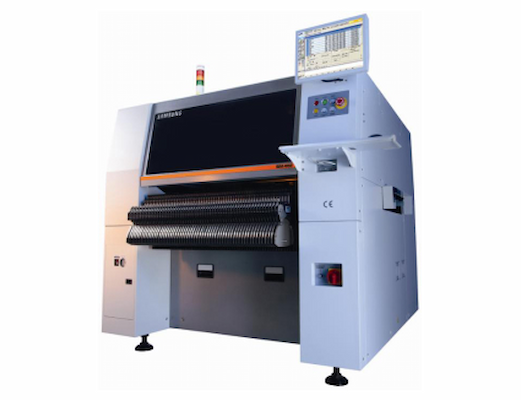
With our state-of-the-art equipment, we can provide through-hole, surface, or mixed PCB assembly. Just like everything else we do, we have the systems in place to assure consistent quality throughout.
Your Provider Should be ISO 9001 Certified
If you need overlays for your control panels, contact Hallmark Nameplate today. We’re proud to be able to provide our customers with high-quality products. At Hallmark Nameplate, quality isn’t simply our goal; it’s our culture.
We can custom-design your nameplates to your exact specifications and have them ready when you need them. We engineer all types of overlays, including abrasion-resistant overlays.
Call us today at 800-874-9063 or get a quote and let us help you get your next overlay project off the ground.