

Do you ever stop to think about everything modern electronics make possible? When you consider how much more we can do now compared to just a few years ago, it’s truly astonishing.
Take, for example, the Internet. To most people, doing some research on the Internet involves only making a few keystrokes on a computer, and voila! Information at your fingertips.
And that’s only the beginning. It doesn’t matter whether you want to talk about using the Internet or turning on your television; it’s all too easy.
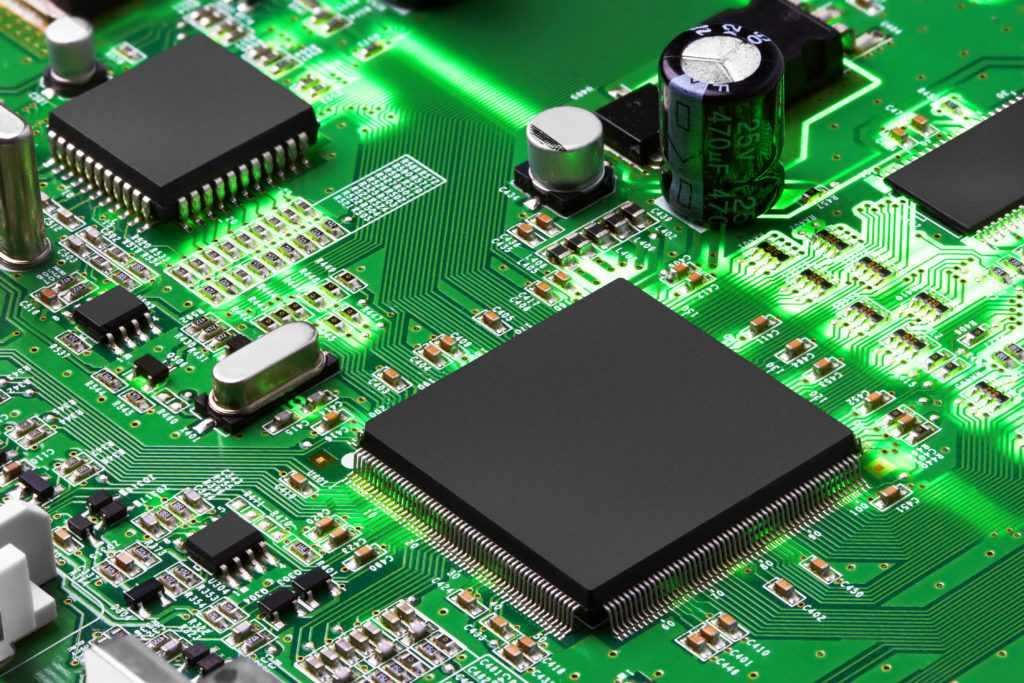
The truth is that no matter how easy it may seem to call up information on your computer, flip channels on your television, or accomplish any number of other tasks, it’s anything but easy. Regardless of the level of your actions, behind all of that seemingly wizardry is electronics, and if it involves electronics, chances are very good that it involves circuit boards of some type.
You might not see them, but they are there.
Circuit Boards are Everywhere
Before you say, “Surely, they’re not everywhere,” they are. In fact, it doesn’t take much looking before you will find a circuit board in literally every electronic device you use
They could be simple or highly complex, but they are there, each performing its functions to bring to you all the marvels you need at the command you issue.
PCB Uses
Printed circuit boards are found in nearly every modern electronic device. In fact, many products contain several PCBs working together to power different functions.

1. Consumer Goods
PCBs are essential in everyday household electronics.
Computers
Your computer likely contains multiple PCBs, one in the main system unit, another inside the keyboard, one in the mouse, and several more inside components like the monitor and storage devices.
These boards manage everything from processing information to delivering power to connected peripherals.
Cameras & Smart Devices
Digital cameras, smartphones, tablets, and smart home devices rely on small, densely packed PCBs. Their compact size makes it possible to fit powerful technology into slim, portable designs.
PCBs also replace the need for bulky wiring, making devices more reliable and visually streamlined.
2. Medical Devices
Modern healthcare depends heavily on PCBs for accuracy and safety. They power critical equipment such as:
- Heart rate monitors
- MRI and CT scanners
- Pacemakers
- Insulin pumps
- Diagnostic tools
Medical-grade PCBs must meet strict standards for precision, cleanliness, and reliability, as even small errors can impact patient health.
3. Aerospace
Aerospace applications require PCBs that can withstand extreme temperatures, vibration, and radiation. They are used in:
- Navigation systems
- Communication equipment
- Control panels
- Satellites
- Flight instrumentation
These PCBs often use high-performance materials designed for durability in demanding environments.
4. Automotive
Modern vehicles rely heavily on electronics, and PCBs help control many of their advanced systems, including:
- Engine management systems
- Infotainment systems
- Airbag and safety modules
- Advanced driver assistance systems (ADAS)
- Electric vehicle battery management
Automotive PCBs must be rugged and resistant to heat, moisture, and vibration.
5. Telecommunications
PCBs are critical to fast, reliable communication networks. They support devices such as:
- Routers and modems
- Cell towers and 5G equipment
- Radio systems
- Satellite communication devices
They’re designed to handle high-frequency signals with minimal interference.
6. Military & Defense
Military electronics require high-reliability, ruggedized PCBs that meet strict standards like ITAR compliance. They are used in:
- Guidance and targeting systems
- Radar and communication equipment
- Drones and surveillance devices
- Armored vehicle electronics
- Weapon control systems
These PCBs must perform flawlessly in harsh and unpredictable conditions.
Circuit boards are not only everywhere, but they are also essential to many of the tasks that we call on them to do every day.
Why They Are Used Everywhere
Printed circuit boards are essential to modern life. Without them, most of the technology we rely on, both at home and in industry, simply wouldn’t function.
Even products that don’t appear “electronic” often depend on equipment built with PCBs during the manufacturing process. Their efficiency, reliability, and versatility are what make PCBs the universal choice across industries.

Compact Design
PCBs make it possible to fit complex electronic functions into incredibly small spaces. Compared to older point-to-point wiring, which took up a lot of room and was prone to failure, PCBs allow manufacturers to place many components on a single compact board.
This miniaturization is what enables slim smartphones, lightweight medical devices, compact automotive sensors, and small yet powerful consumer electronics.
Cost-Effective Manufacturing
PCBs help companies reduce production costs without compromising performance. Because they can be manufactured in large quantities with consistent quality, they eliminate the labor and time involved in manually wiring components.
Their efficiency also means:
- Fewer materials needed
- Lower assembly costs
- Fewer errors and defects
- More affordable end products for consumers
This is why PCBs are integral to making electronics smaller, cheaper, and easier to produce at scale.
Easy to Install & Maintain
Using a circuit board is much easier to install than literally any other method. Manufacturers can design boards that slide into compartments, snap into place, or attach with minimal fasteners.
For technicians and engineers, PCBs are also easier to:
- Integrate
- Troubleshoot
- Upgrade
- Repair
- Swap out when components fail
Their standardized formats and clear labeling make them user-friendly for both assembly lines and field maintenance.
Get High-Quality PCBs
Whether you realize it or not, chances are good that your life is being made easier by the use of this technology. In fact, it’s probably a safe bet that, whether you know it or not, chances are good that many things in your home or office employ circuit boards.
And if they don’t, chances are very good that they will in the near future. Whoever might not be using the technology now will be driven to do so in the future to keep up with their competition.
Need a high-quality PCB? With decades of experience, we can design and manufacture the perfect PCB for all uses.
Want to learn more about PCBs and electronic assembly? Read our complete guide.
Frequently Asked Questions About PCB Uses and Applications
What are printed circuit boards used for?
Printed circuit boards are used wherever electronic components need to be held in place and connected reliably. In industrial settings that means machine controllers, motor drives, sensor interfaces, instrumentation and control panels. In medical devices it covers diagnostics, monitoring and therapy equipment. Aerospace and defense use them in avionics, navigation and communications. Automotive, telecom, energy and consumer products all depend on them. Any product with a power source and a control function almost certainly contains at least one.
What are some examples of products that use printed circuit boards?
The obvious ones are computers, phones and televisions. The less obvious ones matter more in industrial contexts: elevator controllers, HVAC thermostats and building automation, commercial kitchen equipment, pool and spa controllers, medical infusion pumps and patient monitors, aircraft instrumentation, traffic signal controllers, industrial scales, and the motor drives inside almost every piece of powered plant equipment.
How many circuit boards are in a typical piece of industrial equipment?
More than most people expect. A single machine often contains a main controller board, a separate power supply board, one or more I/O or sensor interface boards, a display or HMI board behind the operator panel, and a membrane switch circuit layer behind the keypad. Each is a distinct assembly with its own bill of materials and failure profile, which is why equipment manufacturers increasingly consolidate board assembly and box build with one supplier.
What industries rely most heavily on custom PCB assemblies?
The ones where off-the-shelf electronics cannot meet the requirement. Medical device manufacturers need ISO 13485 traceability and IPC Class 3 acceptance. Aerospace and defense need ITAR-controlled handling and mil-spec construction. Industrial equipment builders need boards that survive vibration, temperature extremes and electrical noise that would destroy a commercial-grade assembly. In each case the driver is a regulatory or environmental requirement that a generic board cannot satisfy.
What is the difference between a custom PCB and an off-the-shelf board?
Control and lifecycle. A custom board is designed to your specification, so you control component selection, form factor, connector placement and change management, and no competitor has the same design. An off-the-shelf board is faster and cheaper to adopt but constrains your mechanical design, leaves component sourcing and obsolescence outside your control, and offers no differentiation. Regulated products usually require custom because design control is a compliance obligation.
How do PCBs connect to the rest of a machine?
Through connectors, harnesses and interface layers rather than directly. Board-to-board connectors link stacked assemblies. Wire harnesses carry power and signals to motors, sensors and actuators. Flexible printed circuits and heat-seal or ZIF connectors link the main board to membrane switches and displays behind the operator panel. Those interface points are a frequent failure location, which is why connector selection and strain relief deserve attention at design stage rather than after field returns start.