


Custom Metal Nameplates and Quality Fabrication
Durable custom metal nameplates and fabrication that showcase your business with a professional finish.
- Free Sample Kit Offered
- 60+ Years of Experience Across All Industries
- Short Lead Times With 100% Satisfaction Guaranteed
- Huge Selection of Materials and Colors, Made in the U.S.A.
- Hands-On Engineering & Design Support
High-Quality Custom Metal Plates & Aluminum Nameplates for Equipment
When it comes to finding a renowned custom metal nameplate manufacturer and fabricator, look no further than Hallmark Nameplate. Whether you need durable metal nameplates for equipment, long-lasting aluminum nameplates, or intricately designed custom metal plates, we’ve got you covered.
With a diverse array of metals, thicknesses, finishes, adhesives, and designs, we are equipped to meet the demands of even the most challenging applications. We collaborate closely with you to craft durable metal nameplates tailored to your precise requirements.
Discover our range of custom metal name plates, including engraved options and custom aluminum nameplates designed to leave a lasting impression. Partner with us to ensure your brand stands out with premium metal nameplates.
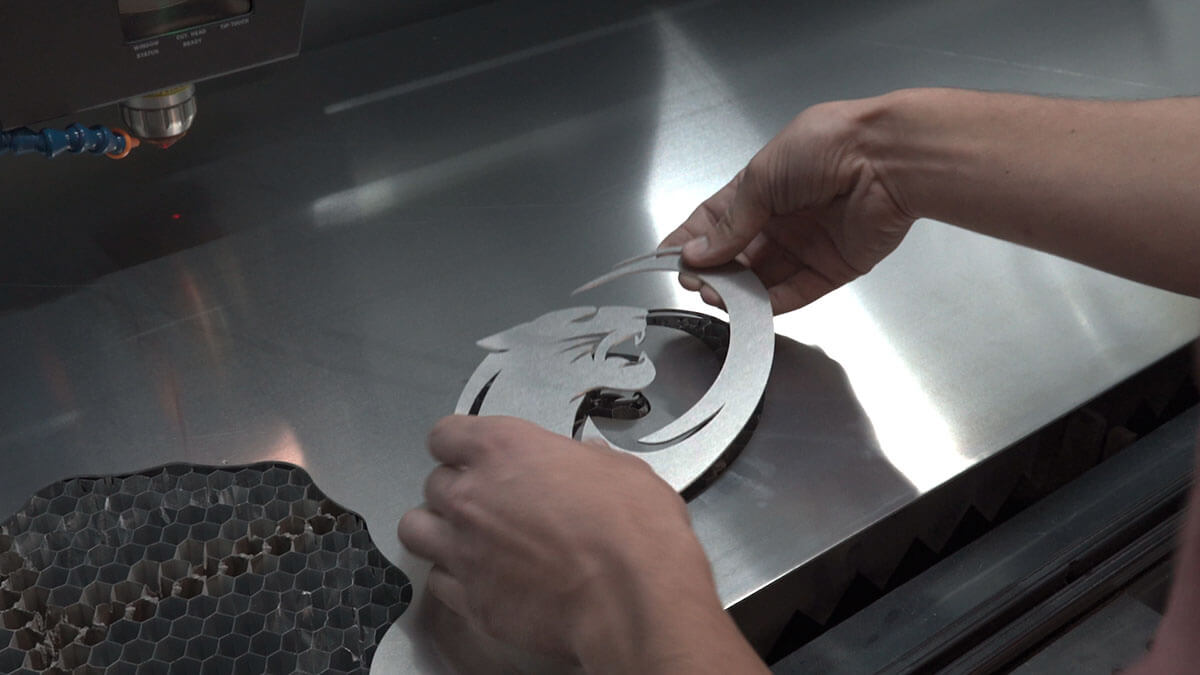
Intricate Metal Designs Redefined with Cutting-Edge Technology
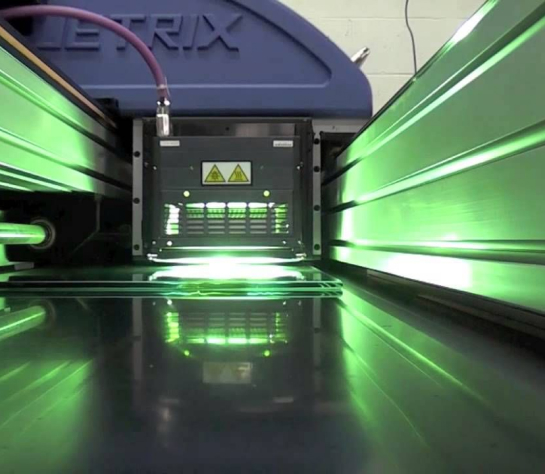
Our cutting-edge tag fabrication technology allows us to create high-quality designs for your custom aluminum nameplates and other metal nameplates for equipment.
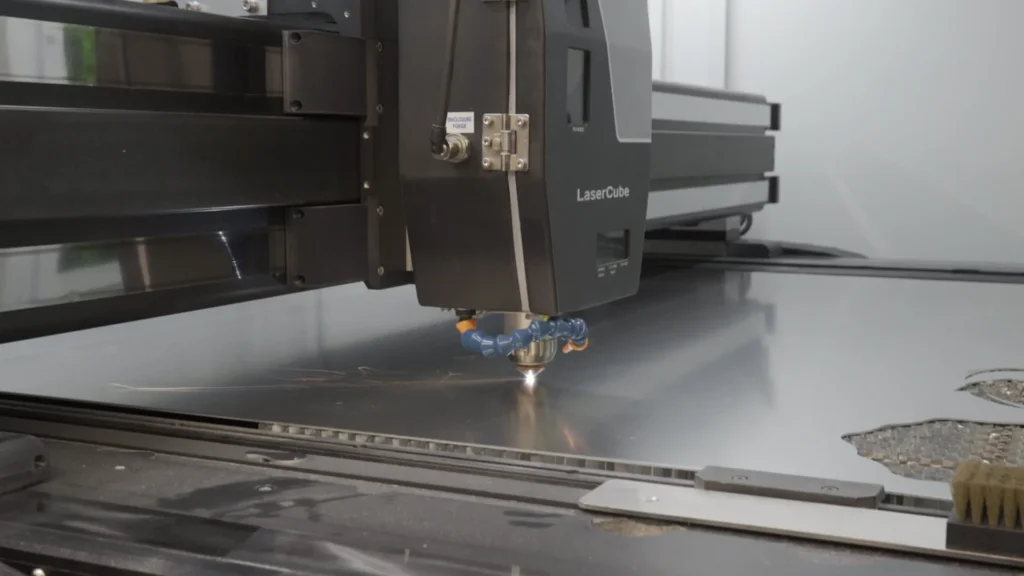
With this new machine, Hallmark can create more intricate and decorative custom nameplate designs faster than ever. Our fiber laser allows us to cut individual tags precisely, every time.
This is perfect for manufacturing parts for many industries, including:
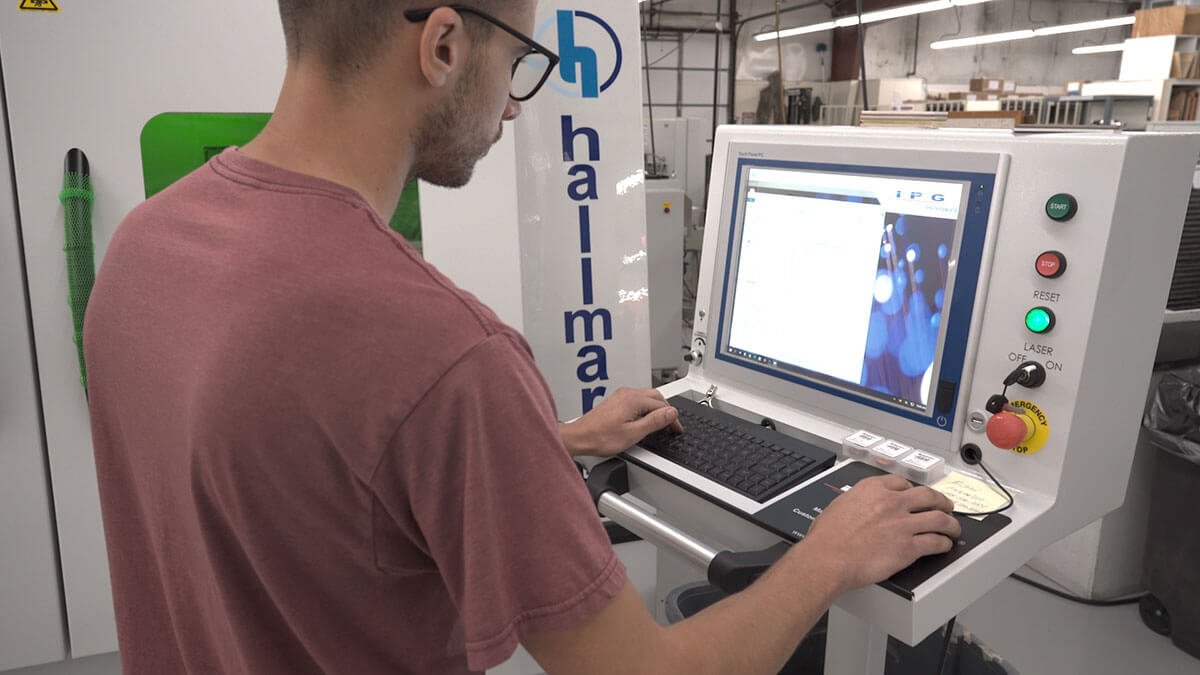
IPG Photonics LaserCube - The latest addition to our state-of-the-art technology. This fiber laser offers 2 kW average power and 4 kW max peak power, which allows us to expand our metal fabrication thickness, such as the fabrication of stainless steel.
We can custom fabricate any intricate design; just give us a call!
Advanced laser cutting technology helps streamline production, allowing intricate metal nameplates and components to be fabricated faster without sacrificing precision.
Automated, precision-driven fabrication helps reduce unnecessary production steps and improves consistency from one part to the next.
Efficient cutting, reduced material waste, and streamlined production can help lower overall manufacturing costs, especially for complex or repeat production runs.
Precise fabrication helps maximize material usage and minimize scrap, supporting a more resource-efficient manufacturing process.
High-precision laser cutting allows us to consistently produce detailed components to exact specifications, even when designs require tight tolerances or intricate shapes.
Greater precision and repeatability help produce clean edges, accurate dimensions, and consistent finished parts that meet demanding quality requirements.
Make Your Business Stand Out
We understand how important it is for your business to make a good impression. That's why we use machines that allow us to create custom metal nameplates that are made to order.
We have a robust inspection department to ensure that every nameplate we produce meets your specifications perfectly. From rugged metal nameplates for equipment to sleek custom aluminum nameplates, each product is crafted to enhance durability and brand presence.
Plus, we offer first article inspection so you can be confident that you're getting the best possible product.
Custom Metal Fabrication Solutions for Every Industry
Hallmark Nameplate specializes in crafting custom metal nameplates for diverse applications, including Permanent Product Identification, Equipment ID Tags, Serial Number Nameplates, and Product Nameplates.
We deliver precision-crafted solutions with state-of-the-art equipment, from simple designs to intricate engravings. Whether you need custom metal name plates, engraved metal plates, or custom aluminum nameplates, we exceed expectations.
Simplify Your Selection Process with Expert Metal Nameplate Guidance
Finding the perfect nameplate can be overwhelming, so we're committed to guiding you through every step of the process. We provide detailed information about industrial nameplate metals, finishes, special processes, fabrication, and printing options, complete with benefits and recommended uses for each.
When selecting the best nameplates for your application, factors like usage, environment, and information needs come into play. Our team takes the time to learn about your specific requirements so we can propose custom solutions that meet your needs and deliver the highest quality metal nameplates. With our expertise and guidance, finding the perfect nameplate is easy. Trust Hallmark Nameplate to be your partner in achieving excellence.
Metal Nameplates We Offer
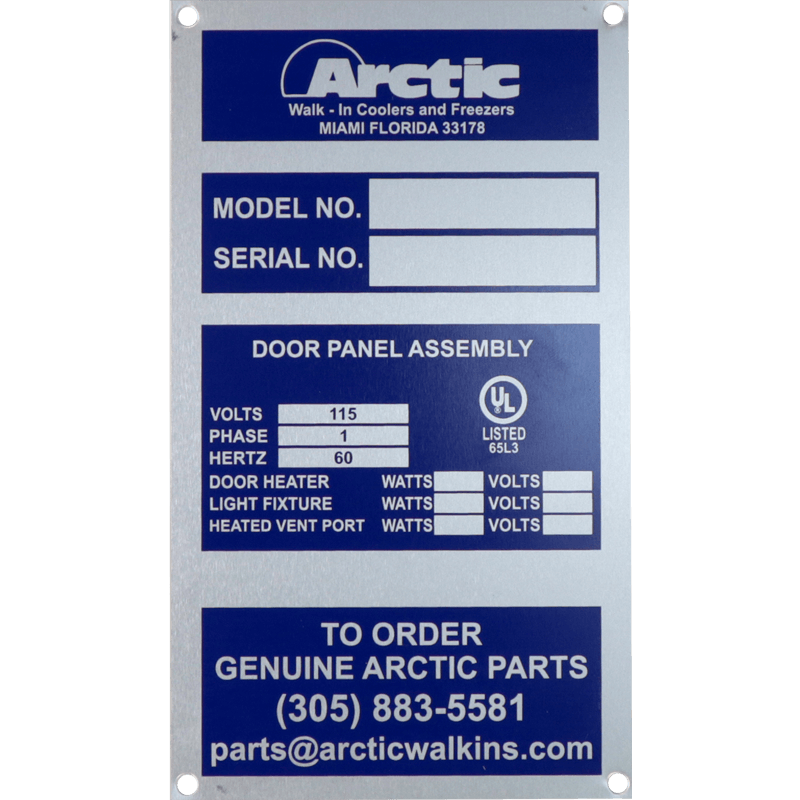
Screen Printed Nameplates
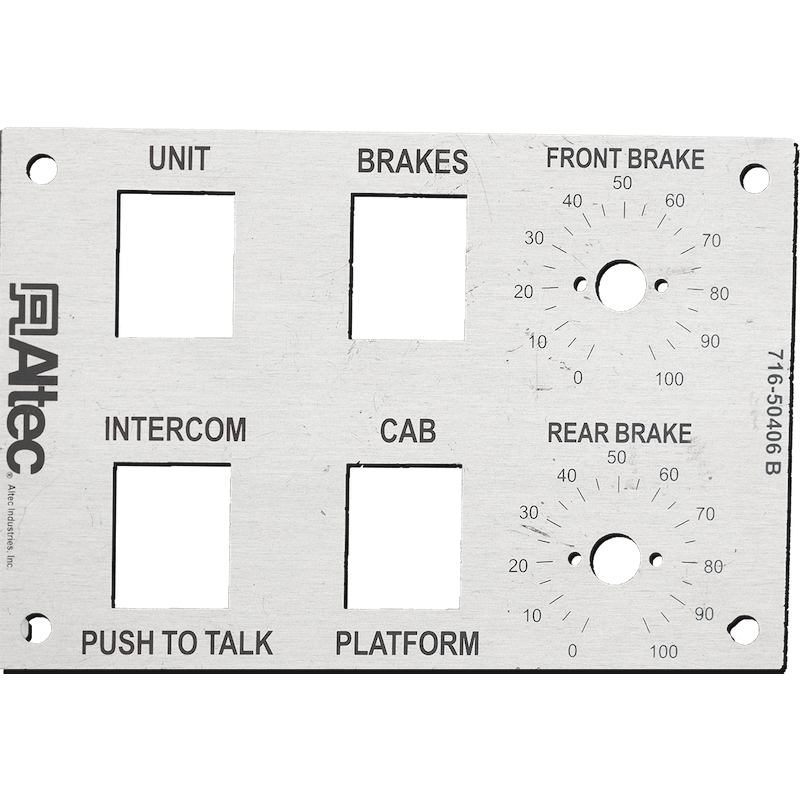
Military Nameplates
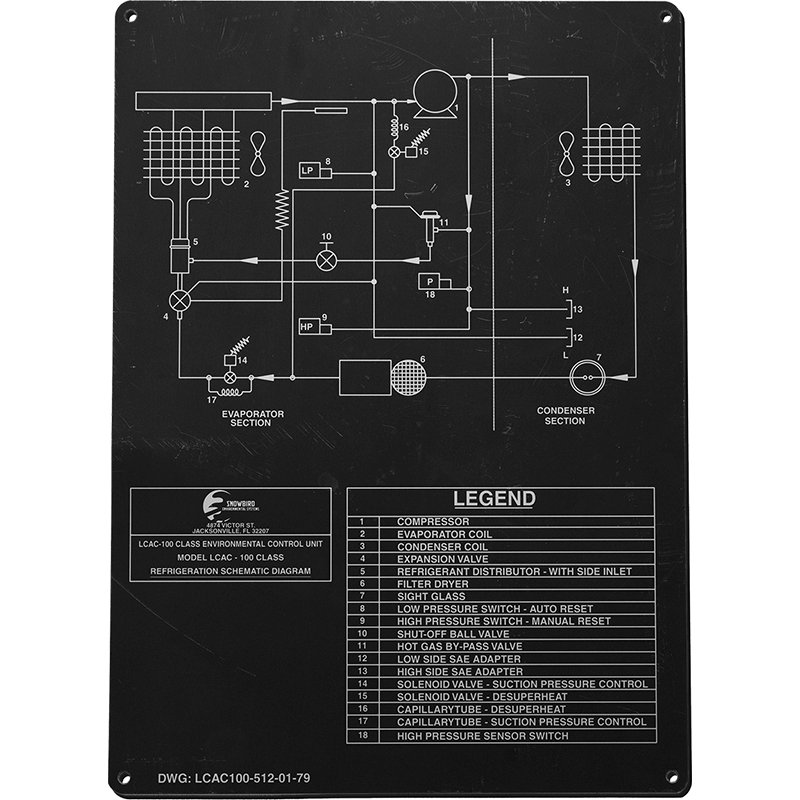
Metalphoto Aluminum Nameplates
Industry Certifications and Compliances for Military Nameplates & Asset Labels
As a reliable and trusted supplier, we are UL certified, RoHS and ITAR compliant, and a 3M Preferred Converter. Other notable certifications we have include ISO 13485:2016, ISO 9001:2015, and GPI. We're also a major supplier of Military Asset Labels, which are designed to meet the strictest MIL SPEC requirements.
With all of these things, you can be assured that you're working with a reputable company when you partner with us.
Our Certifications







Martin Winston
CEO of Beam 4K, Inc.
“I love ‘Made In USA’ solutions, and I love our relationship with Hallmark Nameplate – highly cooperative, supportive, and easy to work with. I asked for samples that I could test for durability and survivability, got them immediately, and they took a heck of a beating with me never defeating their ability to stay legible.”
Nameplate Metals & Finishes
Aluminum
Custom Aluminum Nameplates
Aluminum is the most widely specified nameplate metal, and for most industrial applications it is the default recommendation. It is lightweight at roughly one-third the weight of stainless steel, naturally corrosion-resistant, easy to die-cut into complex shapes, and it holds finer graphic detail than any other metal substrate we offer.
Why Engineers Specify Aluminum
• Lightweight without sacrificing durability, which matters on aerospace and portable equipment
• Sharpest graphic reproduction of any metal, including fine barcode and micro text
• Lowest cost per plate across most thicknesses and volumes
• Highly formable, so complex die-cut shapes and curved-surface installs add little cost
• Anodized finishes deliver excellent UV and corrosion resistance
Common Applications
Equipment asset tags and serialized ID plates, control panels and instrument bezels, barcode and UID labels, aerospace identification plates, rating and data plates, legend plates, and circuit breaker panel tags.
Alloys and Thicknesses
We stock 1100, 1145, and 5005 alloys in-house. 1100 is commercially pure and general-purpose. 1145 is ultra-pure and ultra-formable for thin-gauge and insert applications. 5005 carries magnesium for marine-grade corrosion resistance and the best anodizing response. Thicknesses run .003″ to .125″, with .020″ the most popular general-purpose gauge.
Finishes and Marking
Mill finish, brush anodized clear sealed, undyed unsealed anodized for military specifications, photo sealed anodized in chrome and silver, and MetalPhoto®. Graphics are applied by screen printing, digital printing, or MetalPhoto® sub-surface imaging. Aluminum nameplates can be designed to meet military, ANSI, UL, and CSA specifications.
Stainless Steel
Strong Stainless Steel
Stainless steel is what engineers specify when the plate has to outlast the equipment it is mounted on. It resists rust, chemicals, saltwater, and extreme temperatures, and it handles heat far beyond what aluminum tolerates — up to roughly 1500°F for 304 and 316 grades.
Why Engineers Specify Stainless Steel
• Highest temperature tolerance of any nameplate metal we offer
• Native corrosion resistance from the chromium oxide layer, with no finishing required
• Long outdoor service life in most environments
• Food-grade and washdown-safe in 316 grade
• Etched and laser-marked graphics are recessed or fused into the metal, so they cannot rub off
Common Applications
High-heat engine and exhaust plates, chemical processing equipment, marine and offshore identification, food service and pharmaceutical washdown environments, valve tags, structural ID plates, and surgical instrument marking.
Grades And Thicknesses
304 is the default for general industrial use. 316 adds 2–3% molybdenum for superior chloride and acid resistance — the marine, food-grade, and medical washdown choice. 430 is a lower-cost magnetic ferritic grade for decorative and indoor work. Thicknesses run .005″ to .125″.
Marking Methods
Chemical acid etching recesses graphics below the surface for maximum wear resistance. Laser marking and annealing produce high-resolution serial numbers, barcodes, and UID codes without breaching the surface, which suits medical instruments. Electrochemical etching, epoxy screen printing, and embossing are also available. Finishes include brushed satin, mirror polished, and bead-blasted matte.
Learn More About Stainless Steel Nameplates
Stainless steel has 3 main classifications: Austenitic, Ferritic, and Martensitic.
Austenitic stainless steel carries 200 and 300 series numbers, while ferritic and martensitic classes belong in the 400 series. Nameplates often use the 304 series, which is the most common stainless steel grade and has a composition of 18% chromium and 8% nickel. We also carry 316 series stainless steel, which includes additional molybdenum that helps raise its resistance to more types of corrosion. If you have other alloys in mind for your stainless steel nameplates, these can be made available upon request.
Metalphoto
Photosensitive Anodized Aluminum Labels
MetalPhoto® is not a printing method. It is a photographic process that seals the image inside the anodized layer of the aluminum itself, which is why it behaves differently from every other option on this page. There is no ink on the surface to scratch, fade, or wear off, because the graphic is part of the metal.
Why Engineers Specify MetalPhoto®
• Rated by the manufacturer for 20+ years of outdoor exposure
• Photographic resolution, which supports the smallest barcodes, micro text, and security watermarks
• Sustained heat tolerance to roughly 650°F, above standard anodized aluminum
• Supports serialization, 1D and 2D barcodes, QR codes, and UID marking
• Specified by defense and aerospace programs for more than 65 years
Common Applications
Asset tags and UID plates under MIL-STD-130, aerospace and defense identification, control panels and faceplates, rating and load plates, service schematics, VIN and trailer plates, caution and warning plaques, and any application where the marking has to remain scannable for the service life of the asset.
MetalPhoto® tags are in use on everything from offshore oil rigs to the International Space Station.
How The Process Works
Graphics are designed and output to a high-contrast film negative. An anodized MetalPhoto® plate, saturated with photosensitive silver compounds, is exposed to that negative in a darkroom. Exposed areas turn black while unexposed areas stay the color of the aluminum, similar to conventional black and white photography. The image is developed, fixed, and rinsed, then the anodized layer is sealed, locking the graphic inside the hard oxide layer. The plate is then fabricated and finished to your specification.
Alloys and Thicknesses
Material is 1100 alloy anodized aluminum in thicknesses from .003″ to .125″, fabricated to any size or shape. Finishes are matte for barcode legibility, satin for equipment panels and nameplates, #4 brushed for a stainless steel appearance, and gloss for plaques and awards.
Finishes and Marking
The sealed image resists abrasion, accelerated light and weather, accelerated oxygen aging, acids, cleaning solutions, fungus, graffiti, moisture, organic solvents, saltwater corrosion, stains, thermal shock, and UV radiation. The aluminum base is rigid and will not crack, peel, or delaminate.
Metalphoto Features
Durable and Long-Lasting – The image, which is silver-halide based, is embedded and sealed inside the anodized aluminum. This image remains clear and readable even after long-term exposure to harsh environmental conditions like extreme weather, sunlight and UV, heat, chemicals, oil, abrasion, accelerated light and weather, accelerated oxygen aging, acids, cleaning solutions, fungus, graffiti, moisture, organic solvents, saltwater corrosion, stains, and thermal shock. The aluminum base is extremely rigid and won’t crack, peel, or delaminate.
Photographic Resolution – High image resolution enables the printing of small marks, with the option to print security features like watermarks and micro text to verify authenticity. This also allows for very small printing where surface area is limited.
Supports Variable Information – Metalphoto nameplates and labels can be used for unique serialized data, barcodes with any type of symbols or special instructions. This ability streamlines asset tracking and reduces the chance of data entry errors.
Brass
Decorative Industrial Brass Nameplates
Brass is a copper and zinc alloy with a warm golden tone, natural corrosion resistance, and a finished appearance that reads as premium without the cost of solid gold plating. It sits between decorative and industrial: specified as often for how it looks as for how it performs.
Why Engineers And Designers Specify Brass
• Its non-sparking properties make it well suited in environments where ignition risk is a real constraint
• Naturally corrosion resistant without additional finishing
• Distinctive gold tone that differentiates a branded plate from standard silver-toned metals
• Accepts screen printing, so full-color logos and Pantone-matched brand colors can be applied directly
• Machines and engraves cleanly for recessed or filled detail
Common Applications
Brass shows up in two distinct places. On the industrial side, it is specified for plumbing and electrical equipment identification, valve and line tags, and any environment where a non-sparking material is required.
On the branded side, it is used for logo plates, commemorative and dedication plaques, control panel labels, equipment badges, and product identification where the plate is part of how the product presents.
Thicknesses And Temperature Range
Available in .020″, .025″, .032″, .064″, and .125″. Operating temperature range runs from –325°F to 400°F. Lighter gauges suit adhesive-mounted plates and labels. Heavier gauges are specified for plaques, badges, and mechanically fastened plates where rigidity and heft are part of the intent.
Marking And Finishing
Brass takes screen printing with epoxy inks for multi-color graphics and logos. Engraving and etching recess the graphics into the metal for a permanent mark that resists wear. Plates can be supplied with adhesive backing, or fabricated with bolt, rivet, and screw holes. Custom die-cut shapes are available in any gauge.
Closing
Bronze
Corrosion-Resistant Bronze Nameplates
Bronze is a copper and tin alloy with a deeper, redder tone than brass. It is rustproof and corrosion-resistant, and its standout property is resistance to saltwater corrosion, which makes it the metal of choice for coastal, marine, and offshore identification where salt air is constant.
Why Engineers And Designers Specify Bronze
• Excellent resistance to saltwater corrosion among the metals on this page
• Temperature range of –450°F to 750°F
• Non-sparking, like brass, for environments where ignition risk matters
• Dense and substantial, giving plaques and badges a weight that reads as permanent
• Rustproof and corrosion-resistant with no additional finishing required
Common Applications
Marine and coastal equipment identification, offshore and dockside asset tags, exterior signage exposed to salt air, custom bronze plaques and dedication markers, commemorative badges, and architectural identification.
Bronze is also specified where a plate has to survive a corrosive outdoor environment for the service life of the asset and look intentional doing it.
Thicknesses And Temperature Range
Available in .032″, .064″, and .125″. The gauge range is heavier than brass because bronze is most often specified where mass and rigidity are wanted rather than for thin adhesive-mounted labels. Operating temperature range runs from –450°F to 750°F.
Marking And Finishing
Bronze is malleable and machines well, so engraving and etching produce clean recessed detail that can be paint-filled for contrast. Plates can be die-cut to custom shapes and fabricated with bolt, rivet, or screw holes, which is the typical mounting method at these gauges. Adhesive backing is available for lighter applications.
How to Choose the Right Metal for Your Nameplate
Most metal nameplate projects come down to four questions. Answer these and the material choice usually answers itself.
1. What environment will the plate live in?
Indoor equipment in a climate-controlled facility gives you the widest range of options. Outdoor exposure narrows it. Salt air, chemical washdown, UV, and wide temperature swings narrow it further.
- Aluminum handles most outdoor industrial conditions well and stays lightweight.
- Stainless steel adds strength and corrosion resistance for washdown and high-temperature environments.
- Bronze is the strongest performer against saltwater corrosion, which makes it the common choice for marine and coastal work.
- MetalPhoto® is specified when the graphics themselves, not just the substrate, have to survive the environment.
2. How long does the marking need to stay readable?
This is the question that separates a printed plate from a photosensitive one. Screen printed and digitally printed plates cover the majority of industrial applications and are the most cost-effective route for most projects.
When the marking has to remain legible for the service life of the asset, such as serialized barcodes, UID plates, and MIL-STD-130 data matrix marks, MetalPhoto® seals the image inside the anodized layer rather than applying it to the surface.
3. Is appearance part of the specification?
For equipment ID tags and asset tags, function leads. For branded product nameplates, logo plates, and plaques, finish matters.
- Brass delivers a gold tone.
- Bronze reads warmer and redder.
- Stainless steel gives a modern brushed look.
- Anodized aluminum can be color-matched to your brand palette, and engraved detail is available across our metal substrates.
4. Are there compliance or safety constraints?
Non-sparking requirements point toward brass or bronze. Military and government programs frequently call out specific substrates and marking methods, and thickness and mounting method are often driven by the equipment surface rather than by preference. Bring the specification to the quote, and our team will build to it.
The Hallmark Difference
At Hallmark Nameplate, we pride ourselves on our team of experts who have more than 60 years of experience in nameplate development. We will work closely with you to ensure that your metal nameplates meet your specific needs and requirements.
Whether you’re looking for metal nameplates for equipment or branded custom metal plates, our team is ready to help.
Contact us now for a comprehensive quote and let us know what your project is all about. We look forward to hearing from you!
METAL NAMEPLATE SAMPLE KIT
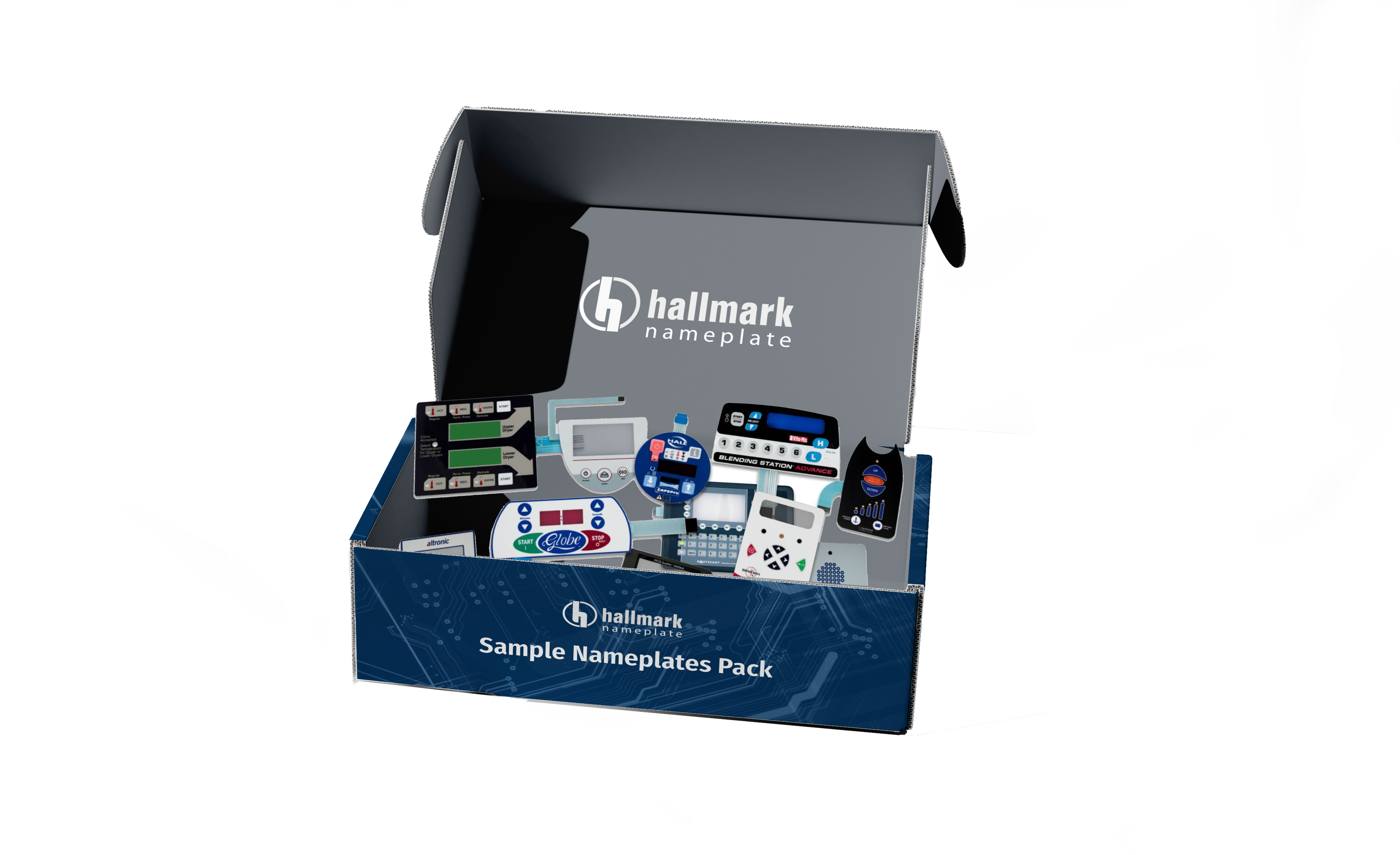
Explore a diverse selection of our metal nameplate samples of different styles and finishes free of charge.
Witness the exceptional quality, practicality, and resilience of our metal nameplates firsthand. In person, you can feel the meticulous craftsmanship and sturdiness that our products are known for.
Don't hesitate; order your metal nameplate sample kit today!