


As your resource for graphic overlays, our engineering and design team collaborate in order to manufacture a product that is not only visually appealing but also protected from the elements. Comparable to nameplates, our graphic overlays are either screen or digitally printed.
However, graphic overlays demand further processing, including trans-colored display windows, selective texturing, or embossing.
Because of their importance in usability and branding, selecting or designing a graphic overlay requires thoughtful consideration. In this blog, we break down the most important factors to keep in mind.
Factors To Consider When Developing A Graphic Overlay Design
When companies need specific overlay graphics for their products, there are a few elements they need to consider to achieve the optimal design for the product’s application. So, let’s explore some of the main design elements for choosing the perfect graphic overlay.

1. Size, Shape, and Material Thickness
The foundation of a great graphic overlay begins with understanding the physical dimensions. Before exploring design options, it’s essential to determine the size, shape, and placement of your overlay.
These specifications influence almost every other decision in the design process, from the printing method to the type of material used. Additionally, the thickness of the overlay material can significantly affect how users interact with the product, especially if the overlay includes tactile elements like buttons or embossed areas.
2. Environmental Considerations
The environment in which your product will operate plays a significant role in determining the best materials, finishes, and construction for your graphic overlay. Because overlays are used in everything from indoor electronics to outdoor machinery and medical equipment, the conditions they face can vary widely.

Environmental factors to consider include:
- Temperature extremes: Both high heat and freezing temperatures can cause certain materials to warp, crack, or lose adhesion.
- Moisture and humidity: Overlays used in damp or wet environments need moisture-resistant materials and strong adhesives to prevent peeling or fogging.
- UV exposure: Direct sunlight can cause colors to fade or materials to degrade unless UV-stable inks and protective coatings are used.
- Dust and debris: Overlays in industrial or outdoor settings may need additional durability to resist abrasion and wear.
By understanding these environmental conditions early in the design process, you can choose materials that maintain their appearance, tactile feel, and functionality over time. This ensures your overlay performs reliably, no matter how demanding the environment may be.
3. Chemical Exposure
In certain industries, including medical, industrial, and laboratory settings, graphic overlays are frequently exposed to cleaning agents, disinfectants, solvents, and other chemicals. Without proper material selection, this exposure can lead to fading, discoloration, or even physical deterioration of the overlay over time.
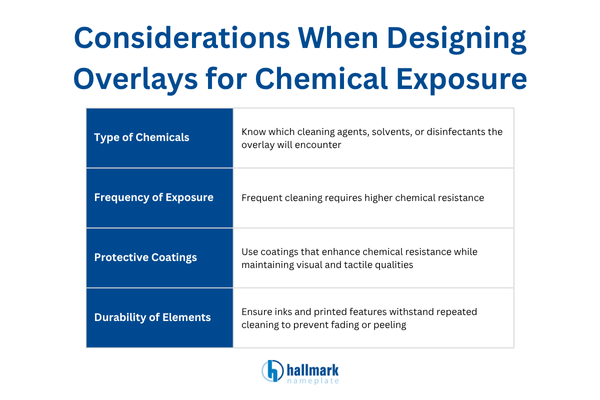
When designing overlays for chemical-prone environments, it’s important to consider:
- Type of chemicals: Some solvents or disinfectants are more aggressive than others, so knowing which substances the overlay will encounter is essential.
- Frequency of exposure: Overlays cleaned multiple times per day require higher resistance than those exposed occasionally.
- Protective coatings: Certain coatings can enhance chemical resistance while preserving the visual and tactile qualities of the overlay.
- Durability of printed elements: Ensuring that inks and printed features can withstand repeated cleaning or solvent exposure prevents fading or peeling.
By choosing chemical-resistant materials and protective finishes, you can maintain both the appearance and functionality of your graphic overlay, reducing the risk of product failure and prolonging the life of your device in demanding environments.
4. Features and Functional Enhancements
Graphic overlays are not just about aesthetics; they are also about functionality and user experience. Custom features can elevate your product and reinforce your brand.

Some options to consider include:
- Windows and Display Areas: Should the overlay include a trans-colored display window for LEDs or screens?
- Selective Texturing: Raised or textured areas can guide user interaction and improve ergonomics.
- Embossing: Adds tactile and visual depth for branding or functional purposes.
- LED Illumination and Dead-Front Panels: Enhance usability and make your product more intuitive to operate.
Carefully evaluating the features you need will help you create a product that is both user-friendly and visually striking.
5. Frequency of Use
How often the product will be used also affects design choices. Overlays for high-touch devices need materials that resist wear and fading, while products with lower usage may allow for more decorative elements without sacrificing durability.
High Use
How often your product will be touched or interacted with plays a major role in determining the right materials, finishes, and protective features for your graphic overlay. High-use equipment requires overlays that can withstand repeated contact without degrading, while low-use products offer more flexibility in design.
For high-touch applications, such as control panels, medical devices, or industrial equipment, it’s important to choose:
- Abrasion-resistant materials that won’t scratch or wear down
- UV-stable inks that prevent fading over time
- Hard-coat or textured finishes that protect the print layer underneath
- Durable embossing that maintains its shape even after thousands of actuations
Low Use
On the other hand, products that experience minimal daily interaction can incorporate more decorative or specialty design elements, such as metallic inks, unique textures, or intricate embossing, without compromising performance.
By assessing how frequently the device will be used, you can select an overlay construction that maintains clarity, functionality, and visual appeal throughout its intended lifespan.
6. Mounting Surface
The surface your graphic overlay will adhere to plays a major role in determining the right material and adhesive system. Different substrates have different bonding requirements, so selecting the correct adhesive ensures long-term durability and prevents lifting or bubbling.

Common mounting surfaces include:
- Plastics (ABS, polycarbonate, low-surface-energy plastics): May require aggressive adhesives for a strong bond.
- Metal (aluminum, stainless steel, powder-coated finishes): Typically pairs well with high-surface-energy adhesives.
- Glass: Often needs adhesives designed for smooth, nonporous surfaces.
- Curved or textured surfaces: Benefit from flexible materials that can conform without wrinkling.
Evaluating both the surface type ensures your overlay stays firmly in place and maintains a clean, professional appearance throughout its lifespan.
Create Your Graphic Overlay Design Perfectly
Graphic overlays play a vital role in the performance and longevity of your product, which is why they often require more processing time than standard nameplates. From selecting the right materials to incorporating the functional features your users rely on, each step matters in creating a durable and intuitive interface.
At Hallmark Nameplate, we’re committed to guiding you through every stage of the process, from initial concept to finished product. Our team ensures that your graphic overlay not only meets your specifications but also enhances your product’s functionality, branding, and user experience.
We’re ready to help bring your graphic overlay design to life and deliver a final product that performs flawlessly while looking exceptional. Request your quote today!
Want to learn more? Read our guide, Graphic Overlays Explained: Design, Benefits, and Manufacturing Process.