

Creating high-quality nameplates takes the right machinery, knowledge, and experience. At Hallmark Nameplate, we use laser cutting and die cutting processes to produce nameplates, electronic assemblies, and other products. Deciding which process to use depends on a number of factors, including how much of a product you are ordering at one time, the materials you are cutting, and how many orders you will place over time.
Here are 5 things you should know about laser cutting and die cutting methods before you place your next order for nameplates, electronic assemblies, membrane switches, and graphic overlays.
1. When to Use Laser Cutting
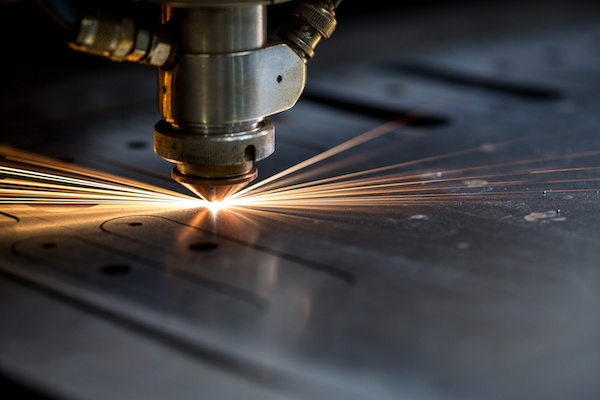
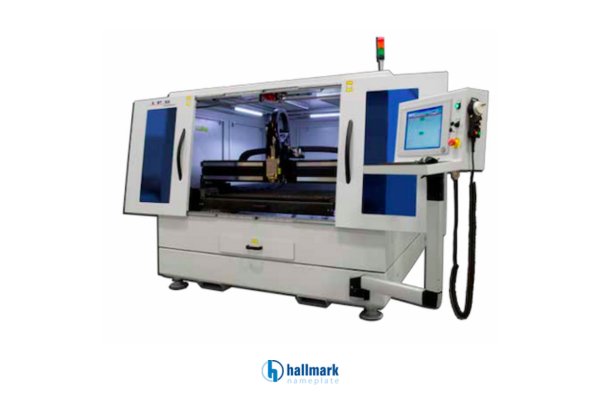
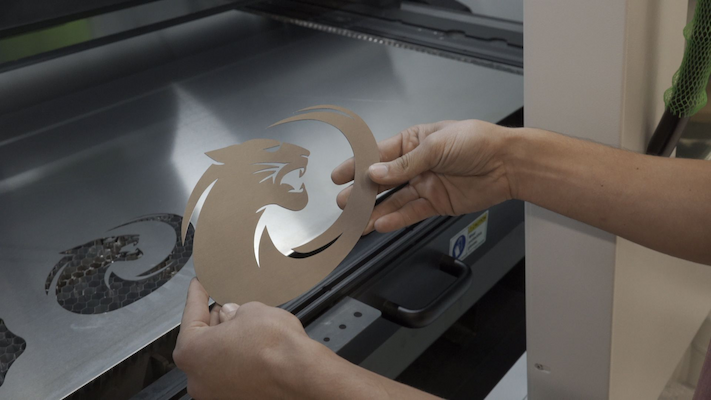
The use of lasers is required when you need small, precise cuts in the materials you are ordering and want to keep your overall costs down on the project. If you need intricate shapes for your order, you’ll want to have the job done using a laser cutter.
2. When to Use Die Cutting
Die cutters are best used when the nameplate or other products don’t need intricate shapes. Creating things like outer shapes and inner holes is best cut with a die cutter since it is quicker than a laser.
3. How the Job is Set Up
Laser cutters use computer programs to work. The specifications are programmed into the computer, and then the computer operates the laser. The dies for the die cutters need to be made using molds, and creating the molds normally takes significantly longer to do than programming a computer.
4. Advantages of Both
Laser cutters and die cutters can work together. The laser can make the precise cuts after the die cutter makes the large cuts.
Laser Cutters
Lasers don’t heat up the materials like a die-cutting machine does when the material gets cut. The heat created by die cutters has a tendency to warp the materials, and this can produce excess waste for the project. Lowering the amount of wasted material will reduce the overall cost of the project.
Laser machines also don’t wear out as die-casts will over time, since the laser mechanism does not directly touch the material. Instead, a beam of light does all the work. With die cutters, the die wears down from the friction when it grinds down against the materials, and it will have to be replaced with a new die in time.
Another advantage of laser cutters is that you don’t need the space to store individual orders, as you do with dies. Once an order has been completed, a die needs to be stored on a shelf. This can take up precious space in a facility, and the die might have to be disposed of after the completion of an order to make sure there is space to work in a building. Laser orders are stored in the computer and take up an insignificant amount of space.
The laser cutter can be adjusted if something is wrong with the computer program, but once a die is made, it can’t be changed.
Die Cutters
Die cutters are really good for projects when there are many layers that have to be cut through at one time. The die cutter can make the cuts with a single stroke. Lasers are much more limited in cutting through many layers at a time. Die cutters are also faster at cutting material where precision cutting is not necessary.
5. Turnaround Times on Orders
Lasers use computer technology to store the cutting sequences. Once the cutting sequences are stored, they can be easily programmed into the computer, and the cutting process can start right away. You will get your order quicker with laser cutting than with die cutting in most cases.
The turnaround time on die cutter orders takes a bit longer because of the length of time it takes to create the molds or the order. Also, as previously stated, dies wear out over time, and an order may have to be stopped while a new die is created and placed on the cutting machine.
Work With A High-Quality Manufacturer
At Hallmark Nameplate, we offer state-of-the-art laser and die-cut fabrication and are known for being one of the highest quality plants in the United States today. Using the finest equipment available, our engineering team ensures quality control that meets ISO 9001: 2008 standards from the beginning of each project through quality inspection and shipment.
We can custom-fabricate any intricate design with precise cuts for our customers every time, and can die cut or laser cut many different substances for custom applications. The die cut fabrication or laser selection can be applied to EMI/RFI shields, gaskets, mashers, moisture seals, partitions, and thermal shields.
The extensive materials utilized include all plastics, conductive compounds, EMI/RFI, foams, rubber, and sponge with a thickness of up to 0.060″.
No matter the end use you have in mind, our laser-cut and die process can customize the materials you need at the budget you require for the product you’ve designed. Ready to get started? Visit our website or call 352-383-8142 to request a free quote.